
Creatine monohydrate,
does it really help with Improvement of persistent fatigue and difficulty concentrating in long COVID?
research showsCreatine for long-COVID fatigue and concentration difficulty is graded D because the only six-month double-blind randomized trial enrolled just 12 people. Some positive changes in general fatigue and concentration difficulty were reported, but treatment-by-time interactions across the principal fatigue subdomains were not significant, and diet and activity were insufficiently controlled. This indication is separate from verdict 1040 on aging and from muscle or exercise uses of creatine; the present verdict applies only to persistent long-COVID symptoms.
ads claimMarketing may turn increased tissue creatine and large effect sizes from a 12-person pilot into a confirmed long-COVID treatment. The evidence is hypothesis-generating and does not replace evaluation of other causes of fatigue or established symptom management.
Useful facts when choosing a product
- The tested formulation was creatine monohydrate 4 g/day, and the findings cannot be transferred automatically to mixed products or high-dose regimens.
- Recommended doses are generally well tolerated in healthy adults, but body water, weight, and gastrointestinal discomfort can increase.
- Creatine can raise serum creatinine and complicate interpretation of estimated kidney function, so use should be disclosed before laboratory testing.
- People with kidney disease, pregnancy or breastfeeding, complex medication use, or severe long-COVID symptoms should seek medical assessment rather than self-treat.
Chamgap Semantic Classification Code
Candidate index · review held
S.creatine-monohydrate.UNK.persistent-fatigue-and-difficulty-concentrating-in-long-covid.improve.placeboSupplements and nutraceuticals > Creatine monohydrate > Unknown > persistent fatigue and difficulty concentrating in long COVID > Improvement claim > Placebo
An automated migration candidate, not an issued permanent code; exact claim scope remains under review. This machine-generated migration candidate helps retrieval but is not a permanent assignment. The original verdict ID and URL remain authoritative.
What the research actually shows
The six-month study assigned six participants each to creatine 4 g/day or inulin placebo and measured tissue creatine, MFI-20, concentration difficulty, and several other symptoms. General fatigue decreased from baseline at three months and a large effect size for concentration difficulty was reported, but treatment-by-time interactions for the main fatigue subdomains were not significant, and physical activity and dietary creatine were not controlled. The authors called for additional trials in other long-COVID cohorts. Recommended-dose creatine is generally well tolerated, but general safety evidence does not confirm efficacy in long COVID.
Why this is classified as D (28)
A direct double-blind trial means the grade is not unknown, but a single 12-person pilot with subjective outcomes, multiple comparisons, null interactions on principal fatigue domains, and no replication cannot confirm benefit. The long-COVID indication receives D with 28 points.
Counterpoint. The general safety profile at standard doses supports further clinical research, but it does not establish treatment of long-COVID fatigue or concentration problems.
Rejudgment record. Cross-check applied — Classified the claim as D rather than unknown because a direct human intervention trial exists, but incorporated the total sample of 12, subjective outcomes, multiple comparisons, null interactions across principal fatigue subdomains, and absence of independent replication while separating this indication from aging, muscle, and exercise uses
Sub-claim grades by effect
This ingredient is marketed for several effects. A single overall grade blends strong and weak claims together, so each effect is graded separately here. The overall grade reflects the strongest disconfirming or core claim.
| Effect (sub-claim) | Grade | Basis |
|---|---|---|
| Improvement of persistent long-COVID fatigue with creatine | D | A 12-person pilot found selected changes, but main fatigue-subdomain interactions were not significant and replication is absent. |
| Improvement of long-COVID concentration difficulty with creatine | D | A large effect size was reported, but a subjective rating from six people per group is extremely unstable. |
| Overall improvement of long-COVID-related symptoms with creatine | D | Only exploratory multiple comparisons across several symptoms are available, requiring a confirmatory trial. |
Cross-check — AI research and Codex final gate
Evidence Table
| Study | Design | Sample | Funding | Endpoint | Result | Weight |
|---|---|---|---|---|---|---|
| Slankamenac J et al. 2023 | Parallel-group randomized double-blind placebo-controlled pilot trial | 12 patients with post-COVID fatigue; six per group | Serbian provincial public funding and creatine manufacturer Alzchem GmbH | Six-month tissue creatine, MFI-20 fatigue, concentration difficulty, and other symptoms | Selected general-fatigue and concentration measures improved, but treatment-by-time interactions across five MFI-20 subdomains were not significant and the sample was extremely small. | Only direct human pilot |
| Antonio J et al. 2021 | Evidence review of creatine efficacy and safety | Review of more than 500 peer-reviewed publications | Academic expert review with author disclosures of relevant industry relationships | Recommended-dose tolerability, body water, and kidney-function concerns | Doses of 3 to 5 g/day are generally well tolerated in healthy people, but this general safety evidence is not evidence of efficacy in long COVID. | Supporting safety evidence |
Receipt — 2 References
All 2 cited sources were verified for existence at the original page (as of 2026-07-23).
Final verification and publication gate: Codex · Evidence date: 2026-07-23 · Corrections: none
Cite this verdict
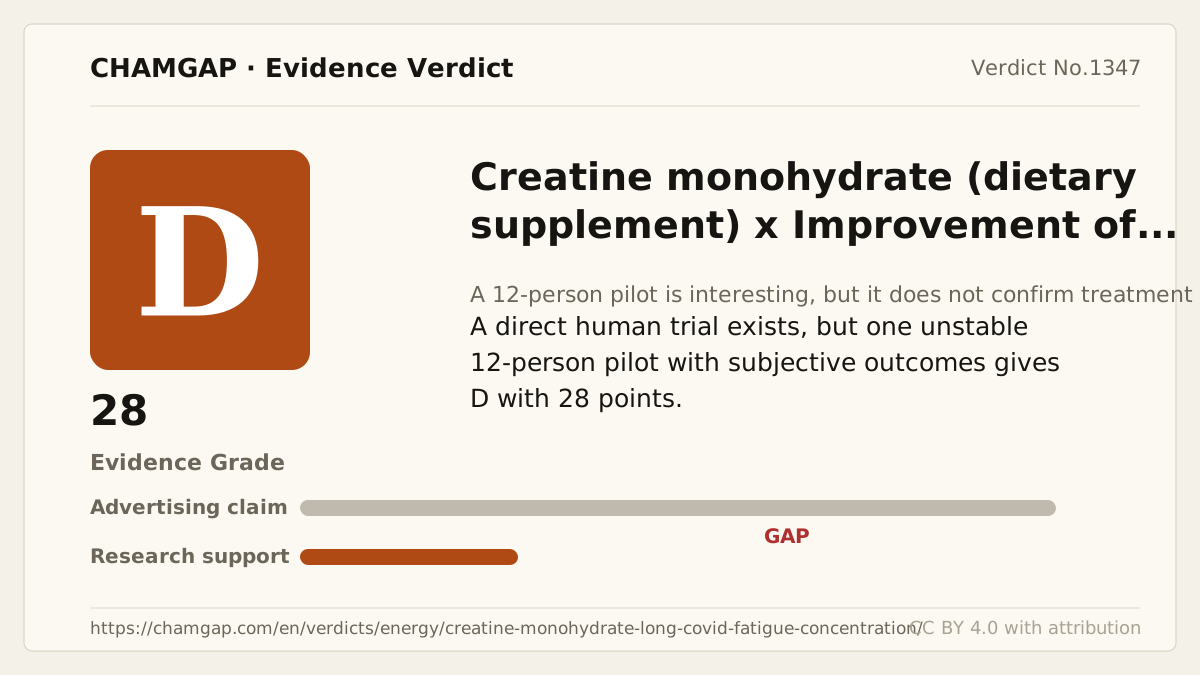
[Chamgap] Creatine monohydrate x improvement of persistent fatigue and concentration difficulty in long COVID — Evidence Grade D·28. 2 cited sources checked. Source: https://chamgap.com/en/verdicts/energy/creatine-monohydrate-long-covid-fatigue-concentration/ · CC BY 4.0CC BY 4.0 — free to use with attribution; do not distort grades, numbers, or verdict meaning.
What this document does and does not do
Chamgap is an information source. It reports what research has and has not confirmed; it does not tell readers what to take or buy. That decision belongs to readers and, when needed, medical or legal professionals. This verdict reflects literature available up to the search date and may change as new research appears. Nothing here is medical advice.