
Coenzyme Q10,
does it really help with Reduction of subjective fatigue in adults with heterogeneous causes and diseases?
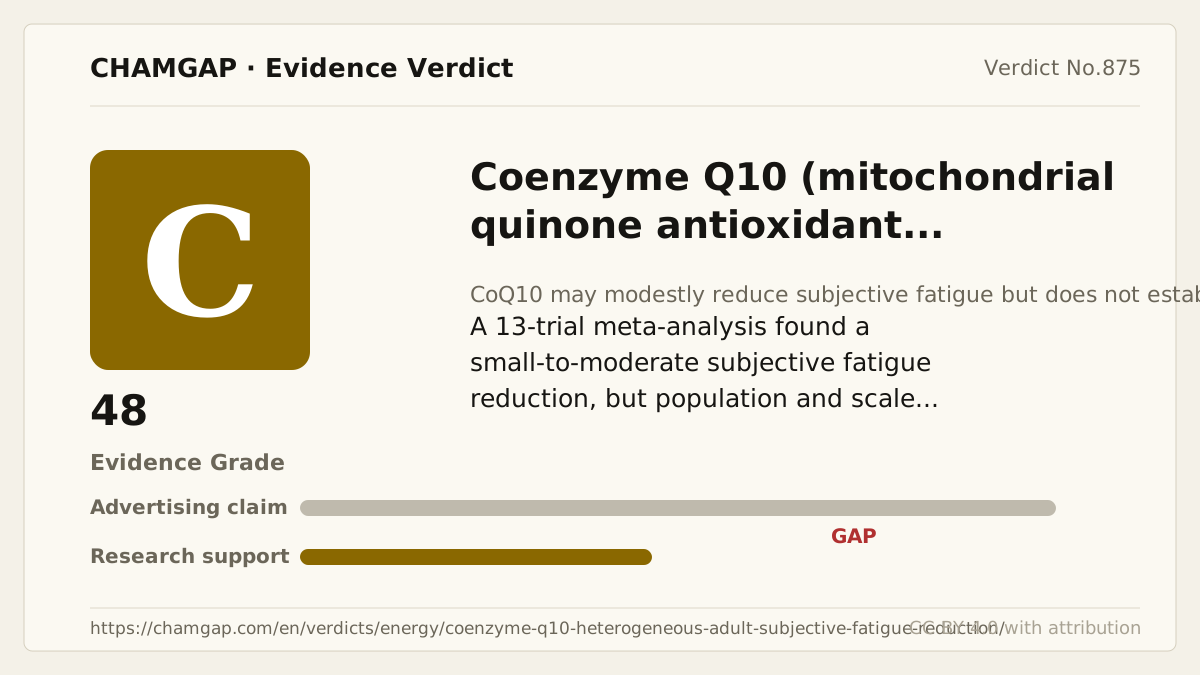
research showsCoenzyme Q10 is rated C because it may produce a small average reduction in subjective fatigue across adults with heterogeneous causes and diseases. A 2022 meta-analysis of 13 randomized trials and 1,126 participants reported Hedges' g −0.398 versus placebo (95% CI −0.641 to −0.155; P=0.001). Participants ranged from healthy people to those with multiple sclerosis, cancer treatment, fibromyalgia, and other conditions, while fatigue scales, doses, and durations varied substantially and outcomes were subjective. An independent placebo-controlled trial in 236 patients with newly diagnosed breast cancer found no fatigue benefit from 300 mg daily for 24 weeks. The pooled positive signal is accepted, but subjective-only outcomes, heterogeneity, and a negative individual trial cap the grade at C with 48 points. This fatigue axis is distinct from prior verdicts on blood pressure, sperm, ovarian response, migraine, and statin muscle symptoms.
ads claimPromotion can turn a mitochondrial energy-production mechanism into a claim that everyone gains vitality or that chronic fatigue is corrected at its source. Evidence only supports a modest average change in subjective fatigue across mixed groups and does not replace evaluation for anemia, sleep disorders, depression, infection, or cardiopulmonary disease.
Useful facts when choosing a product
- Coenzyme Q10 is sold as the fat-soluble forms ubiquinone or ubiquinol, and formulations, doses, and absorption conditions differed across trials.
- Most fatigue evidence consists of subjective questionnaire scores and does not establish improved objective activity or strength.
- CoQ10 is generally well tolerated, but nausea, abdominal discomfort, diarrhea, headache, or insomnia can occur.
- Potential reduction of warfarin anticoagulation and interactions with blood-pressure or glucose-lowering medicines should be reviewed. Persistent or severe fatigue requires evaluation of the cause first.
Chamgap Semantic Classification Code
Candidate index · review held
S.coenzyme-q10.UNK.subjective-fatigue-with-heterogeneous-causes-and-diseases.reduce.placeboSupplements and nutraceuticals > Coenzyme Q10 > Unknown > subjective fatigue with heterogeneous causes and diseases > Reduction claim > Placebo
An automated migration candidate, not an issued permanent code; exact claim scope remains under review. This machine-generated migration candidate helps retrieval but is not a permanent assignment. The original verdict ID and URL remain authoritative.
What the research actually shows
Tsai and colleagues in 2022 pooled 13 randomized placebo-controlled trials with 1,126 participants through January 2022 and reported a subjective fatigue reduction of Hedges' g −0.398. Participants included healthy people and multiple disease groups, and no post-treatment durability data were available. In a very small three-period crossover trial, Mizuno and colleagues found that eight days of 300 mg improved subjective fatigue after a fatigue-inducing task and one physical-performance measure in 17 healthy volunteers. In contrast, Lesser and colleagues' double-blind trial in 236 newly diagnosed breast-cancer patients found no improvement in fatigue or quality of life with 300 mg for 24 weeks. Disease-specific differences prevent interpretation as treatment of the underlying cause.
Why this is classified as C (48)
Thirteen trials with 1,126 participants produced a positive Hedges' g of −0.398, but outcomes were subjective and populations, diseases, forms, and doses were heterogeneous, while a 236-person breast-cancer trial was negative. The subjective-only and heterogeneity ceiling gives C with 48 points. Mild gastrointestinal effects and warfarin interaction are separate safety issues.
Counterpoint. New or persistent fatigue accompanied by weight loss, dyspnea, chest pain, fever, bleeding, or severe depression warrants medical evaluation rather than a supplement trial. When a cause is identified, standard treatment of that condition comes first.
Rejudgment record. New verdict — Accepted the significant Hedges' g of −0.398 in the 13-trial meta-analysis, but applied the subjective-outcome ceiling because populations, diseases, scales, formulations, and doses were heterogeneous and an independent breast-cancer trial was negative
Sub-claim grades by effect
This ingredient is marketed for several effects. A single overall grade blends strong and weak claims together, so each effect is graded separately here. The overall grade reflects the strongest disconfirming or core claim.
| Effect (sub-claim) | Grade | Basis |
|---|---|---|
| Reduction of subjective fatigue across adults with heterogeneous causes and diseases | C | The 13-trial average was positive, but causes of fatigue and measurement scales were highly heterogeneous. |
| Reduction of short-term task-induced subjective fatigue in healthy adults | C | The positive 300-mg crossover result involved only 17 participants and eight days. |
| Reduction of disease- or treatment-related subjective fatigue in adults | C | Some disease groups were positive, but a 236-person breast-cancer trial was negative, so this cannot be treated as efficacy against the underlying disease. |
Cross-check — AI research and Codex final gate
Evidence Table
| Study | Design | Sample | Funding | Endpoint | Result | Weight |
|---|---|---|---|---|---|---|
| Tsai IC et al. 2022 | Systematic review and meta-analysis of randomized placebo-controlled trials | 13 randomized trials and 1,126 participants | Taiwanese public and academic funding; some included trials had industry links | Various self-reported fatigue scales | Fatigue decreased versus placebo with Hedges' g −0.398 (95% CI −0.641 to −0.155; P=0.001). | Key positive synthesis with substantial heterogeneity |
| Lesser GJ et al. 2013 | Randomized double-blind placebo-controlled trial | 236 patients with newly diagnosed breast cancer | United States NCI and Wake Forest public and academic support | Self-reported cancer-treatment fatigue and quality of life | CoQ10 300 mg for 24 weeks did not improve fatigue or quality of life beyond standard education. | Independent medium-sized negative trial |
| Mizuno K et al. 2008 | Randomized double-blind placebo-controlled three-period crossover trial | 17 healthy adults | Japanese academic and product-development-associated context | Visual-analog fatigue and bicycle performance after a fatigue task | Eight days of 300 mg improved subjective fatigue and one performance measure, but the sample was very small and follow-up brief. | Positive but limited mechanistic short-term evidence |
Receipt — 3 References
All 3 cited sources were verified for existence at the original page (as of 2026-07-20).
Final verification and publication gate: Codex · Evidence date: 2026-07-20 · Corrections: none
Cite this verdict
[Chamgap] Coenzyme Q10 x reduction of subjective fatigue in adults with heterogeneous causes and diseases — Evidence Grade C·48. 3 cited sources checked. Source: https://chamgap.com/en/verdicts/energy/coenzyme-q10-heterogeneous-adult-subjective-fatigue-reduction/ · CC BY 4.0CC BY 4.0 — free to use with attribution; do not distort grades, numbers, or verdict meaning.
What this document does and does not do
Chamgap is an information source. It reports what research has and has not confirmed; it does not tell readers what to take or buy. That decision belongs to readers and, when needed, medical or legal professionals. This verdict reflects literature available up to the search date and may change as new research appears. Nothing here is medical advice.