
Black tea with an iron-containing meal,
does it really help with Reduced single-meal fractional nonheme-iron absorption?
research showsThe grade is C. In a nonrandomized sequential study, fractional absorption was 5.7% with water, 3.6% with simultaneous tea, and 5.7% when tea followed one hour later. Simultaneous versus delayed tea differed at P=0.046, but water versus simultaneous tea did not at P=0.398. This was a single-meal absorption measure, not long-term iron deficiency or anemia, giving C with 54 points.
ads claimThe evidence supports lower one-meal absorption with simultaneous versus delayed tea. It did not measure long-term ferritin, anemia, or fatigue.
Useful facts when choosing a product
- The tea used one 3-g bag in 200 mL boiling water for three minutes plus 12 mL semi-skimmed milk.
- The porridge was labeled with 4 mg of stable-isotope iron as 57FeSO4.
- Absorption was 5.7%, 3.6%, and 5.7% in the water, simultaneous-tea, and delayed-tea conditions.
Chamgap Semantic Classification Code
Candidate index · review held
F.porridge-meal-labeled-with-iron-isotope-taken-with-black-tea.oral.single-meal-fractional-nonheme-iron-absorption.reduce.UNKFoods and beverages > porridge meal labeled with iron isotope taken with black tea > Oral > single-meal fractional nonheme-iron absorption > Reduction claim > Unknown
An automated migration candidate, not an issued permanent code; exact claim scope remains under review. This machine-generated migration candidate helps retrieval but is not a permanent assignment. The original verdict ID and URL remain authoritative.
What the research actually shows
Fuzi et al. gave 12 iron-replete, nonanemic women water, simultaneous tea, and tea one hour after the meal in a fixed sequence separated by 14 days. Both the registry and article identify a nonrandomized single-group sequential design. All completed. Absorption with tea one hour later was 5.7%, the same as with water. This was not evidence from a group at risk of iron deficiency. The University of Chester and UK Medical Research Council supported the work.
Why this is classified as C (54)
A human absorption difference with a paired standardized effect of about 0.65 was observed, but it rests on an acute surrogate in 12 participants with nonrandomized sequencing, giving C with 54 points.
Counterpoint. Its long-term importance in iron-deficient patients or people taking therapeutic iron remains unresolved.
Rejudgment record. Cross-check applied — A nonrandomized 12-person acute nonheme-iron absorption surrogate with a paired standardized effect of about 0.65
| Endpoint | S | Surrogate marker - laboratory or imaging measures |
| Replication | R1 | Single confirmatory trial |
| Independence | I2 | Decisive evidence is publicly or non-profit funded |
| Effect size | E+ | Meets the clinically important threshold |
Stored derived and displayed grades match; this is not a current recalculation or validity check (C).
Sub-claim grades by effect
This ingredient is marketed for several effects. A single overall grade blends strong and weak claims together, so each effect is graded separately here. The overall grade reflects the strongest disconfirming or core claim.
| Effect (sub-claim) | Grade | Basis |
|---|---|---|
| Simultaneous tea lowers fractional absorption versus tea one hour later | C | The result was 3.6% versus 5.7%, P=0.046. |
| Simultaneous tea causes long-term iron deficiency or anemia | ? | This study did not measure long-term iron status. |
Cross-check — AI research and Codex final gate
Evidence Table
| Study | Design | Sample | Funding | Endpoint | Result | Weight |
|---|---|---|---|---|---|---|
| Fuzi et al. 2017 | Nonrandomized single-group sequential stable-isotope absorption study | 12 enrolled and 12 analyzed | University of Chester and UK Medical Research Council | Fractional iron absorption from erythrocyte isotope incorporation 14 days later | Water 5.7±8.5%, simultaneous tea 3.6±4.2%, delayed tea 5.7±5.4%; simultaneous versus delayed P=0.046, water versus simultaneous P=0.398 | Pivotal acute absorption evidence |
Receipt — 2 References
All 2 cited sources were verified for existence at the original page (as of 2026-08-04).
Final verification and publication gate: Codex · Evidence date: 2026-08-04 · Corrections: none
Cite this verdict
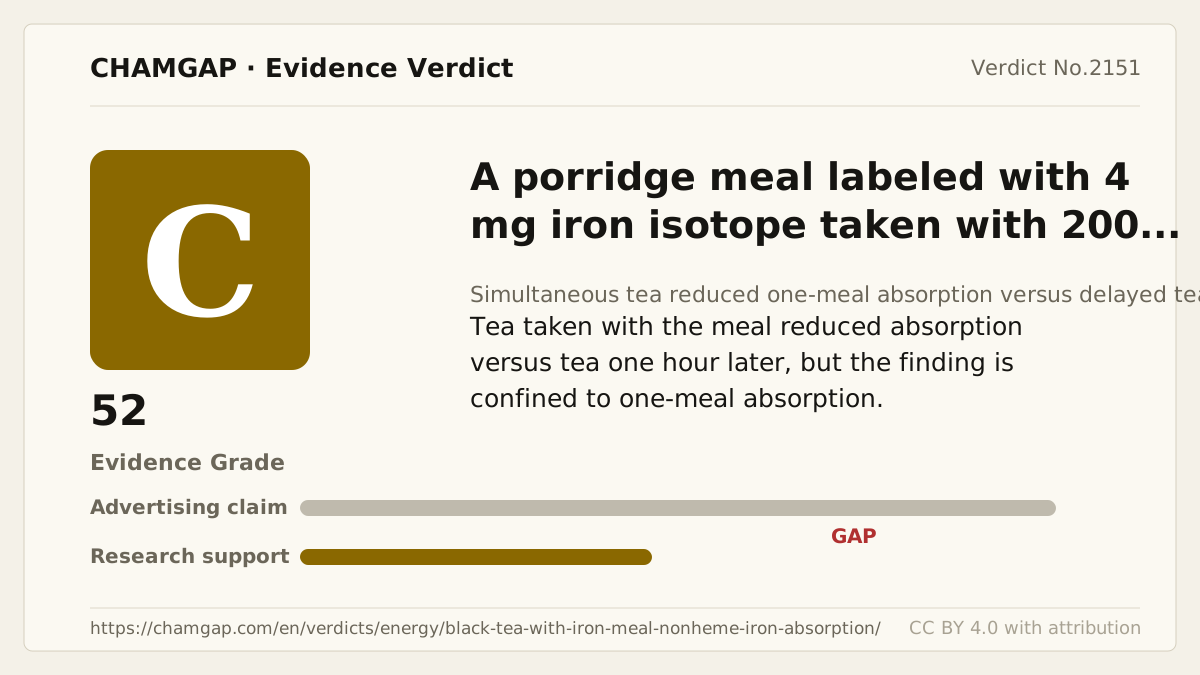
[Chamgap] Black tea with an iron-containing meal x reduced nonheme-iron absorption — Evidence Grade C·54. 2 cited sources checked. Source: https://chamgap.com/en/verdicts/energy/black-tea-with-iron-meal-nonheme-iron-absorption/ · CC BY 4.0CC BY 4.0 — free to use with attribution; do not distort grades, numbers, or verdict meaning.
What this document does and does not do
Chamgap is an information source. It reports what research has and has not confirmed; it does not tell readers what to take or buy. That decision belongs to readers and, when needed, medical or legal professionals. This verdict reflects literature available up to the search date and may change as new research appears. Nothing here is medical advice.