
Bilevel non-invasive ventilation,
does it really help with Prevention of hospital mortality and endotracheal intubation in acute hypercapnic COPD exacerbation?
research showsBilevel NIV is rated B because multiple randomized trials reduced hospital mortality and intubation in acute hypercapnic COPD exacerbation. A Cochrane review of 17 trials and 1,264 participants found RR 0.54 for mortality, with NNT 12, RR 0.36 for intubation, with NNT 5, and a 3.39-day mean reduction in hospital stay. Both hard endpoints were graded moderate certainty because of uncertainty about bias, preventing an A grade. This evidence concerns mask-delivered bilevel pressure support for acute respiratory acidosis, not CPAP for sleep apnea.
ads claimThe BiPAP device name may be expanded to mortality prevention in sleep apnea, fatigue, or every cause of dyspnea. Direct evidence applies to hospitalized acute COPD exacerbation with hypercapnia and respiratory acidosis, with bilevel NIV added to usual care.
Useful facts when choosing a product
- The NIV in this verdict provides different inspiratory and expiratory pressures through a mask to assist ventilation in hospital.
- Evidence concerns addition to usual medicines and oxygen in acute COPD exacerbation with carbon-dioxide retention and respiratory acidosis.
- Mask pressure injury, discomfort, air leak, eye irritation, dry mouth, gastric distension, secretion difficulty, and aspiration can occur.
- Impaired consciousness, inability to protect the airway, hemodynamic instability, or NIV failure requires continuous monitoring and prompt assessment for invasive airway support.
Chamgap Semantic Classification Code
Candidate index · review held
P.non-invasive-bilevel-positive-pressure-ventilation.device.hospital-mortality-and-endotracheal-intubation-in-acute-hypercapnic-copd-exacerbation.prevent.usual-careProcedures, devices and tests > Non-invasive bilevel positive-pressure ventilation > Device delivered > hospital mortality and endotracheal intubation in acute hypercapnic COPD exacerbation > Occurrence-prevention claim > Usual care
An automated migration candidate, not an issued permanent code; exact claim scope remains under review. This machine-generated migration candidate helps retrieval but is not a permanent assignment. The original verdict ID and URL remain authoritative.
What the research actually shows
Osadnik 2017 included 17 randomized trials and 1,264 patients comparing NIV plus usual care with usual care in acute hypercapnic respiratory failure from COPD exacerbation. Mortality in 12 trials had RR 0.54 (95% CI 0.38 to 0.76), with NNT 12; intubation in 17 trials had RR 0.36 (95% CI 0.28 to 0.46), with NNT 5. Hospital stay in 10 trials was shorter by a mean 3.39 days. The 1995 Brochard trial across five ICUs found mask pressure support reduced intubation, complications, length of stay, and hospital mortality. Plant 2000 found early ward NIV across 14 centers reduced invasive ventilation and in-hospital mortality. Cochrane rated mortality and intubation moderate certainty because of bias uncertainty.
Why this is classified as B (78)
In 17 trials and 1,264 participants, Cochrane found RR 0.54 for hospital mortality, RR 0.36 for intubation, and mean hospital stay 3.39 days shorter, with independent replication of hard-endpoint benefit. Both primary outcomes were moderate certainty because of bias uncertainty, giving B with 78 points.
Counterpoint. Treatment intolerance increased by RD 0.11, and failure recognition is essential to avoid delaying required intubation.
Rejudgment record. New verdict — Seventeen randomized trials added bilevel NIV itself to usual care in acute hypercapnic COPD exacerbation and directly reduced hospital mortality and endotracheal intubation, but Cochrane rated both outcomes moderate certainty because of bias uncertainty, imposing the B ceiling
Sub-claim grades by effect
This ingredient is marketed for several effects. A single overall grade blends strong and weak claims together, so each effect is graded separately here. The overall grade reflects the strongest disconfirming or core claim.
| Effect (sub-claim) | Grade | Basis |
|---|---|---|
| Reduction in hospital mortality | B | Twelve trials yielded RR 0.54, but Cochrane rated certainty moderate because of bias uncertainty. |
| Avoidance of endotracheal intubation | B | Seventeen trials yielded RR 0.36, with moderate certainty and possible publication bias. |
| Shorter hospital stay | B | Ten trials found a mean reduction of 3.39 days, with variation in hospital settings and discharge criteria. |
Cross-check — AI research and Codex final gate
Evidence Table
| Study | Design | Sample | Funding | Endpoint | Result | Weight |
|---|---|---|---|---|---|---|
| Osadnik CR et al. 2017 | Cochrane systematic review and meta-analysis of randomized trials | 17 randomized trials and 1,264 participants | Cochrane Airways academic synthesis; funding varied across individual trials | Hospital mortality, endotracheal intubation, and length of stay | Mortality RR was 0.54 (95% CI 0.38 to 0.76; NNT 12), intubation RR 0.36 (95% CI 0.28 to 0.46; NNT 5), and length-of-stay MD -3.39 days. Mortality and intubation were moderate certainty. | Pivotal multiple-trial hard-endpoint synthesis |
| Brochard L et al. 1995 | Prospective randomized trial across five ICUs | 85 patients with acute COPD exacerbation | Academic multicenter research; see the article for detailed funding | Intubation, complications, length of stay, and hospital mortality | NIV reduced intubation, complications (16% vs 48%; p=0.001), length of stay (23±17 vs 35±33 days; p=0.005), and hospital mortality. | Early pivotal direct ICU trial |
| Plant PK, Owen JL, and Elliott MW. 2000 | Multicenter randomized trial across 14 general respiratory wards | 236 patients with mildly or moderately acidotic COPD exacerbations | United Kingdom NHS research and development support | Meeting criteria for invasive ventilation and in-hospital mortality | Early NIV reduced invasive-ventilation requirements and in-hospital mortality and accelerated physiologic improvement. | Independent ward-setting replication trial |
Receipt — 3 References
All 3 cited sources were verified for existence at the original page (as of 2026-07-23).
Final verification and publication gate: Codex · Evidence date: 2026-07-23 · Corrections: none
Cite this verdict
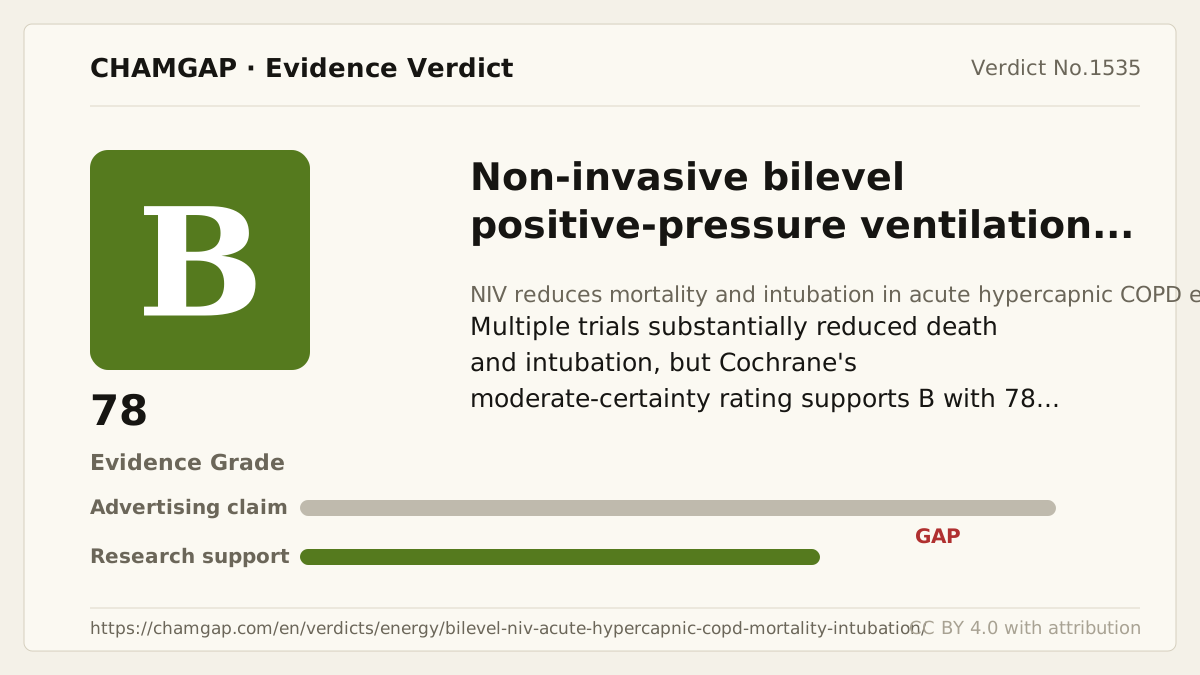
[Chamgap] Bilevel non-invasive ventilation x prevention of death and intubation in acute hypercapnic COPD exacerbation — Evidence Grade B·78. 3 cited sources checked. Source: https://chamgap.com/en/verdicts/energy/bilevel-niv-acute-hypercapnic-copd-mortality-intubation/ · CC BY 4.0CC BY 4.0 — free to use with attribution; do not distort grades, numbers, or verdict meaning.
What this document does and does not do
Chamgap is an information source. It reports what research has and has not confirmed; it does not tell readers what to take or buy. That decision belongs to readers and, when needed, medical or legal professionals. This verdict reflects literature available up to the search date and may change as new research appears. Nothing here is medical advice.