
Ashwagandha root extract,
does it really help with Normalization of TSH, T3, and T4 in asymptomatic or mild subclinical hypothyroidism?
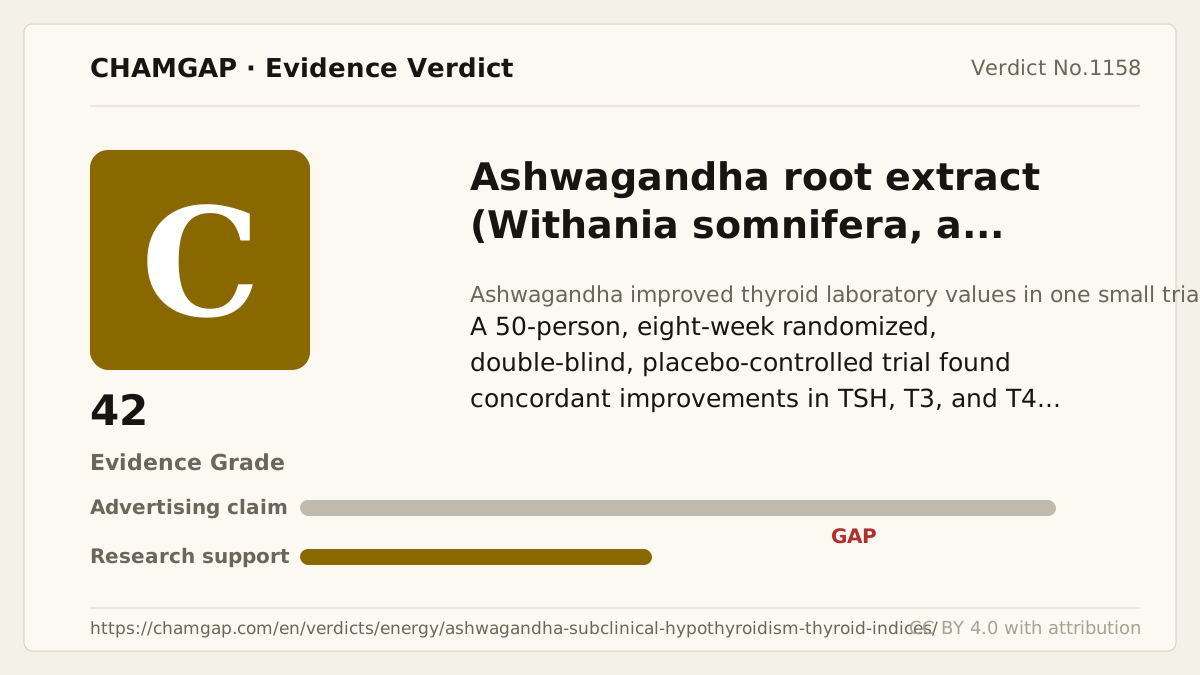
research showsAshwagandha is rated C for normalizing TSH, T3, and T4 in subclinical hypothyroidism. The direct evidence is limited to one randomized, double-blind, placebo-controlled trial of 600 mg/day for eight weeks at a single center with 50 participants, but TSH, T3, and T4 all improved consistently versus placebo. That positive signal makes a D rating unduly low. However, the trial used laboratory surrogates and did not assess symptoms, quality of life, cardiovascular outcomes, progression to overt hypothyroidism, or long-term persistence, and there is no independent replication. The test material was also the single branded KSM-66 product supplied by its manufacturer, Ixoreal Biomed, so treatment benefit cannot be established or generalized to other products. Rare thyrotoxicosis and liver injury have been reported, so this should not be used for self-treatment without testing.
ads claimMarketing expands a pilot laboratory finding into natural normalization of the thyroid, hormone balance without levothyroxine, or restored energy and metabolism. Management of subclinical hypothyroidism depends on cause, TSH level, antibodies, pregnancy plans, and symptoms, and can range from observation to medication.
Useful facts when choosing a product
- The direct trial used KSM-66 ashwagandha root extract supplied by its manufacturer, Ixoreal Biomed, at 600 mg/day for eight weeks. Raw powder, root-leaf mixtures, and extracts with different withanolide concentrations are not necessarily equivalent.
- TSH, free T4, and T3 should be interpreted before and during use by a clinician. People taking levothyroxine should not change its dose or add ashwagandha without considering excessive thyroid-hormone exposure.
- Rare cases of cholestatic or mixed liver injury with jaundice and pruritus and cases of thyrotoxicosis have been reported. Palpitations, tremor, weight loss, jaundice, dark urine, or severe itching warrant discontinuation and medical evaluation.
- Use should be avoided during pregnancy, and breastfeeding, autoimmune disease, liver disease, thyroid disease, or planned surgery require prior clinical advice. Withanolide content and contamination or adulteration can vary across supplements.
Chamgap Semantic Classification Code
Candidate index · review held
S.ashwagandha-root-extract.UNK.normalization-of-tsh-t3-and-t4-in-asymptomatic-or-mild-subclinical-hypothyroidism.assess.placeboSupplements and nutraceuticals > Ashwagandha root extract > Unknown > Normalization of TSH, T3, and T4 in asymptomatic or mild subclinical hypothyroidism > Association or change assessment > Placebo
An automated migration candidate, not an issued permanent code; exact claim scope remains under review. This machine-generated migration candidate helps retrieval but is not a permanent assignment. The original verdict ID and URL remain authoritative.
What the research actually shows
In 2018, Sharma and colleagues randomized 50 people with subclinical hypothyroidism, 25 per group, to ashwagandha 600 mg/day or starch placebo for eight weeks under double blinding. Two participants in each group withdrew before the second visit, and the remaining data showed significant improvements in TSH, T3, and T4 versus placebo. It was a single-center pilot study, did not address clinical symptoms or long-term disease progression, and tested a single branded KSM-66 ingredient supplied by its manufacturer, Ixoreal Biomed. Separately, Björnsson and colleagues described five cases of ashwagandha-associated liver injury with jaundice, pruritus, and cholestatic or mixed injury after two to 12 weeks, while van der Hooft and colleagues reported thyrotoxicosis after a dose increase that resolved after discontinuation. These safety reports do not refute efficacy; they are separate harm signals.
Why this is classified as C (42)
A 50-person, eight-week randomized, double-blind, placebo-controlled trial found concordant improvements in TSH, T3, and T4, making a D rating unduly low. It remains one small single-center pilot limited to laboratory surrogates, without measurements of clinical symptoms, quality of life, or long-term progression and without independent replication. It also tested only manufacturer-supplied KSM-66, so the appropriate rating under the rules is a low C with 42 points. Symptomatic benefit and long-term progression remain unmeasured and retain a ? rating; liver injury, thyrotoxicosis, and pregnancy precautions are safety judgments separate from efficacy.
Counterpoint. Mild subclinical hypothyroidism can normalize spontaneously on repeat testing. Anyone considering a trial of the supplement should establish the cause and baseline values, arrange short-interval retesting, and avoid delaying proven treatment when pregnancy is planned or TSH is rising.
Rejudgment record. Cross-check applied — Treated D as unduly low because a randomized, double-blind, placebo-controlled 50-person eight-week trial found concordant improvements in TSH, T3, and T4, but applied a low C because it was one small single-center pilot limited to laboratory surrogates, did not measure clinical or long-term outcomes, had no independent replication, and tested only manufacturer-supplied KSM-66
Sub-claim grades by effect
This ingredient is marketed for several effects. A single overall grade blends strong and weak claims together, so each effect is graded separately here. The overall grade reflects the strongest disconfirming or core claim.
| Effect (sub-claim) | Grade | Basis |
|---|---|---|
| Normalization of TSH in subclinical hypothyroidism | C | TSH improved in one 50-person, eight-week randomized, double-blind, placebo-controlled trial, but it was a laboratory surrogate and lacks independent replication. |
| Improvement of T3 and T4 in subclinical hypothyroidism | C | T3 and T4 improved concordantly in the same randomized, double-blind, placebo-controlled pilot, but they are surrogate endpoints without known long-term normalization or independent replication. |
| Improvement of symptoms and long-term progression in subclinical hypothyroidism | ? | The direct trial did not assess symptoms, quality of life, progression to overt hypothyroidism, or long-term clinical outcomes. |
Cross-check — AI research and Codex final gate
Evidence Table
| Study | Design | Sample | Funding | Endpoint | Result | Weight |
|---|---|---|---|---|---|---|
| Sharma AK et al. 2018 | Single-center randomized double-blind placebo-controlled pilot trial | 50 randomized; 46 assessed after the second visit | Funding was not reported, but the manufacturer, Ixoreal Biomed, supplied the KSM-66 test product as a gift | Serum TSH, T3, and T4 at eight weeks | Ashwagandha 600 mg/day improved TSH (p<0.001), T3 (p=0.0031), and T4 (p=0.0096) versus placebo, but no clinical endpoint was assessed. | Only direct positive evidence; small and surrogate-based |
| Björnsson HK et al. 2020 | Liver-injury case series from Iceland and the United States DILIN | Five cases | Included public support from the United States NIH and NIDDK DILIN | Latency, phenotype, and recovery of liver injury | Jaundice, pruritus, and cholestatic or mixed liver injury occurred after two to 12 weeks, with normalization in most cases within one to five months. | Rare safety signal separate from efficacy |
| van der Hooft CS et al. 2005 | Case report of thyrotoxicosis | One case | Not reported | Thyrotoxicosis after dose escalation and recovery after discontinuation | A healthy 32-year-old woman developed thyrotoxicosis after increasing the dose; symptoms and laboratory values normalized after discontinuation. | Safety signal for possible thyroid overstimulation |
Receipt — 3 References
All 3 cited sources were verified for existence at the original page (as of 2026-07-22).
Final verification and publication gate: Codex · Evidence date: 2026-07-22 · Corrections: none
Cite this verdict
[Chamgap] Ashwagandha root extract x normalization of thyroid indices in subclinical hypothyroidism — Evidence Grade C·42. 3 cited sources checked. Source: https://chamgap.com/en/verdicts/energy/ashwagandha-subclinical-hypothyroidism-thyroid-indices/ · CC BY 4.0CC BY 4.0 — free to use with attribution; do not distort grades, numbers, or verdict meaning.
What this document does and does not do
Chamgap is an information source. It reports what research has and has not confirmed; it does not tell readers what to take or buy. That decision belongs to readers and, when needed, medical or legal professionals. This verdict reflects literature available up to the search date and may change as new research appears. Nothing here is medical advice.