
Baobab fruit powder,
does it really help with Suppression of the postprandial rise in blood glucose?
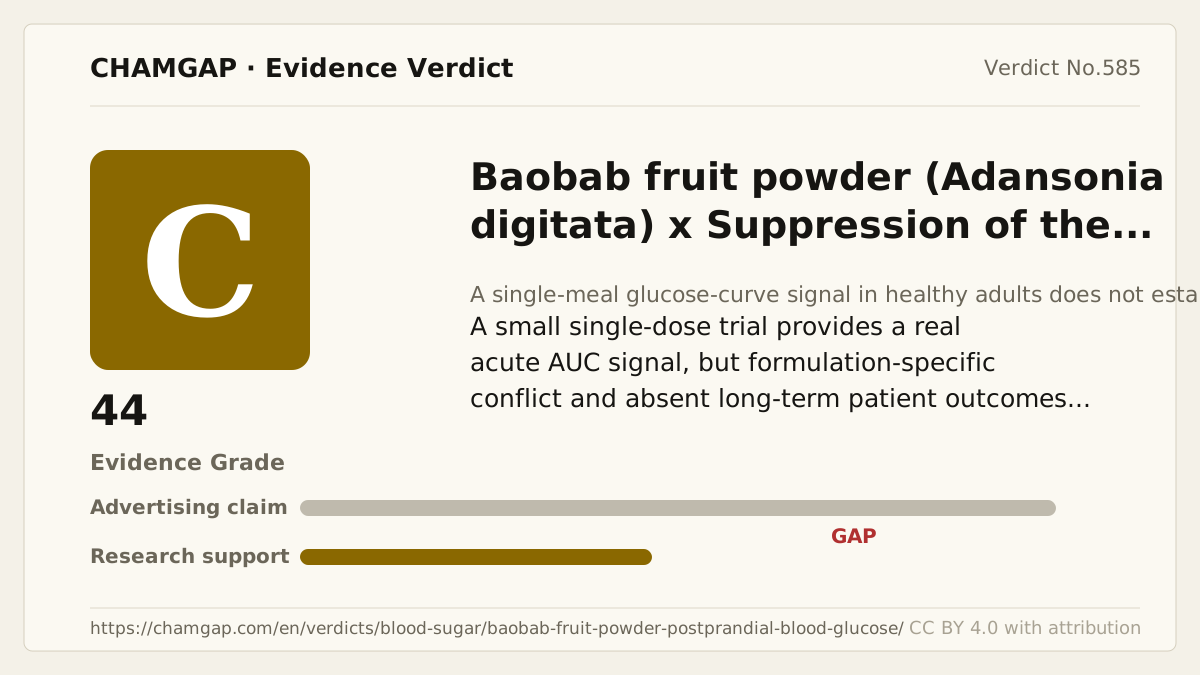
research showsBaobab is rated C because limited human evidence suggests an acute reduction in postprandial glucose AUC in healthy adults. In a 31-person single-dose trial, incremental AUC was 253.68 versus 172.44 (p=0.012) and peak glucose differed at p=0.029, while change in maximum glucose was not significant at p=0.054. A small 2013 study was partly positive, but a 2016 crossover trial in 13 participants found no glycemic benefit from baobab-enriched bread, creating formulation-specific conflict. These are acute surrogates, with no HbA1c or complication evidence in diabetes or prediabetes.
ads claimMarketing expands a lower postprandial glucose AUC into improved diabetes, reduced HbA1c, and prevention of complications. The evidence is closer to a single acute response to a specific high-dose aqueous extract in healthy adults, and repeated-use efficacy of typical commercial powder has not been established.
Useful facts when choosing a product
- Baobab fruit powder is a food ingredient containing fiber, organic acids, and polyphenols, not a medicine or a treatment for diabetes.
- Trials used 18.5-g to 37-g aqueous extracts or a 250-mL drink at 0.1333 g/mL, exposures that differ from capsules, small scoops of powder, and enriched bread.
- Origin, processing, fiber content, and polyphenol content can vary, so results from a specific extract cannot be applied to every commercial baobab product.
- People using diabetes medicines or insulin should not replace treatment or change doses without glucose monitoring and clinical guidance, and gastrointestinal symptoms or unexpected hypoglycemic symptoms warrant review.
Chamgap Semantic Classification Code
Candidate index · review held
S.baobab-fruit-powder.UNK.suppression-of-the-postprandial-rise-in-blood-glucose.assess.UNKSupplements and nutraceuticals > Baobab fruit powder > Unknown > Suppression of the postprandial rise in blood glucose > Association or change assessment > Unknown
An automated migration candidate, not an issued permanent code; exact claim scope remains under review. This machine-generated migration candidate helps retrieval but is not a permanent assignment. The original verdict ID and URL remain authoritative.
What the research actually shows
Rita and colleagues in 2022 randomized 31 healthy adults to a 16-person oral-glucose control group or a 15-person group receiving 250 mL of aqueous baobab extract after the glucose load. The 120-minute incremental AUC was lower at p=0.012 and peak capillary glucose at p=0.029, while change in maximum glucose was not significant; exposure was single dose. Coe and colleagues in 2013 gave healthy participants 18.5-g or 37-g aqueous baobab drinks with white bread and reported reductions in selected AUC periods. In a 2016 crossover trial of 13 participants, Coe and Ryan found that bread containing 1.88% baobab extract did not reduce glycemic response, although insulin AUC fell.
Why this is classified as C (44)
A 31-person single-dose trial in healthy adults produced a positive postprandial AUC result, while the maximum-glucose change was borderline and a 13-person enriched-bread crossover trial was null. Limited positive human evidence with formulation-specific conflict supports C with 44 points for the acute surrogate. HbA1c, sustained glycemia, and diabetic complications remain untested, and long-term high-dose safety remains separately unknown.
Counterpoint. This verdict does not argue against eating baobab as a food in reasonable amounts. For postprandial glucose management, total carbohydrate, dietary fiber, activity, weight management, and validated treatment have more direct evidence.
Rejudgment record. Reassessment (cross-check reflected) — Accepted the positive small single-dose AUC signal in healthy adults as C-level acute surrogate evidence while separating formulation-specific conflict from absent HbA1c and complication trials in diabetes
Sub-claim grades by effect
This ingredient is marketed for several effects. A single overall grade blends strong and weak claims together, so each effect is graded separately here. The overall grade reflects the strongest disconfirming or core claim.
| Effect (sub-claim) | Grade | Basis |
|---|---|---|
| Reduction of acute postprandial glucose AUC in healthy adults | C | Small single-dose trials are positive, but the surrogate conflicts across formulations. |
| Improvement of HbA1c and long-term glycemia in diabetes or prediabetes | ? | No long-term efficacy trial in patients was identified. |
| Prevention of diabetic complications | ? | No clinical-outcome trial was identified. |
Cross-check — AI research and Codex final gate
Evidence Table
| Study | Design | Sample | Funding | Endpoint | Result | Weight |
|---|---|---|---|---|---|---|
| Rita K et al. 2022 | Randomized controlled single-dose oral-glucose-load trial | 31 healthy adults; 16 control and 15 intervention | Supported by Portuguese national funds through FCT; authors reported no conflicts | 120-minute incremental glucose AUC and peak capillary glucose | Incremental AUC and peak glucose were lower, while change in maximum glucose was not significant. | Key small acute surrogate trial |
| Coe SA et al. 2013 | Acute postprandial crossover study with in-vitro starch-digestion experiments | Small sample of healthy women; exact number not stated in the accessible abstract | Oxford Brookes University and United States post-9/11 GI Bill support | Postprandial glycemic-response AUC after 18.5-g and 37-g aqueous drinks | Reported reductions in selected postprandial glycemic responses with both doses. | Supportive acute signal with small sample |
| Coe S and Ryan L 2016 | Randomized crossover meal trial | 13 healthy participants | Academic nutrition research | Three-hour glucose and insulin AUC and satiety | Bread enriched with 1.88% baobab did not lower glycemic response, although insulin AUC decreased. | Direct conflicting formulation evidence |
Receipt — 3 References
All 3 cited sources were verified for existence at the original page (as of 2026-07-19).
Final verification and publication gate: Codex · Evidence date: 2026-07-19 · Corrections: none
Cite this verdict
[Chamgap] Baobab fruit powder x suppression of the postprandial rise in blood glucose — Evidence Grade C·44. 3 cited sources checked. Source: https://chamgap.com/en/verdicts/blood-sugar/baobab-fruit-powder-postprandial-blood-glucose/ · CC BY 4.0CC BY 4.0 — free to use with attribution; do not distort grades, numbers, or verdict meaning.
What this document does and does not do
Chamgap is an information source. It reports what research has and has not confirmed; it does not tell readers what to take or buy. That decision belongs to readers and, when needed, medical or legal professionals. This verdict reflects literature available up to the search date and may change as new research appears. Nothing here is medical advice.