
Trimethylglycine,
does it really help with Slowed biological aging and extended healthspan through DNA methylation and homocysteine regulation?
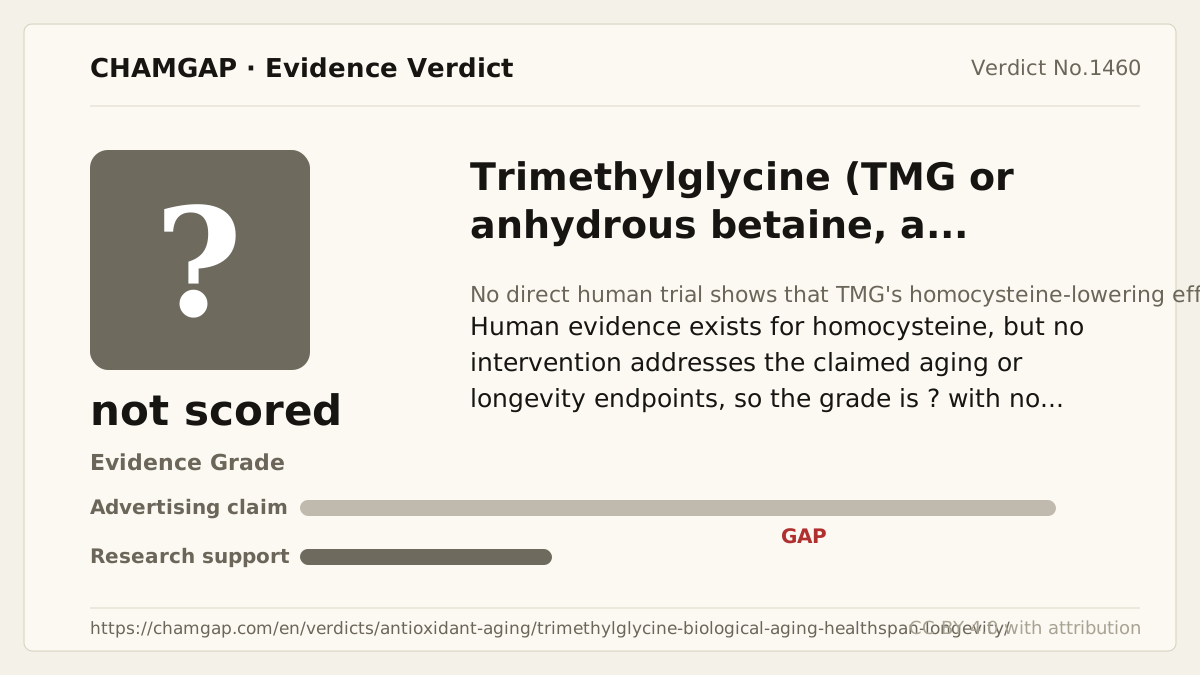
research showsTMG is rated ? for slowing biological aging or extending healthspan or lifespan. Human randomized trials and a meta-analysis show that it can lower circulating homocysteine, but no identified human TMG intervention directly evaluated DNA methylation age, a validated pace-of-aging measure, healthspan, mortality, or lifespan. A change in a metabolic surrogate cannot be repurposed as evidence of slower aging.
ads claimMarketing directly connects methyl donation and lower homocysteine to DNA repair, epigenetic rejuvenation, and longevity. That multistep causal chain has not been tested in a human intervention.
Useful facts when choosing a product
- TMG is also called betaine and donates a methyl group in the betaine-homocysteine methyltransferase pathway that remethylates homocysteine to methionine.
- The multi-gram daily doses common in supplement trials can cause nausea, abdominal discomfort, diarrhea, and a distinctive body odor in some users.
- High-dose betaine may affect blood lipids or the gut-microbial metabolite TMAO, but the long-term clinical meaning remains uncertain.
- Prescription betaine for homocystinuria differs from general TMG supplementation in purpose, dose, and medical supervision; pregnancy, lactation, liver or kidney disease, and polypharmacy warrant clinical advice.
Chamgap Semantic Classification Code
Candidate index · review held
S.trimethylglycine.UNK.slowed-biological-aging-and-extended-healthspan-through-dna-methylation-and-homocysteine-regulation.assess.placeboSupplements and nutraceuticals > Trimethylglycine > Unknown > Slowed biological aging and extended healthspan through DNA methylation and homocysteine regulation > Association or change assessment > Placebo
An automated migration candidate, not an issued permanent code; exact claim scope remains under review. This machine-generated migration candidate helps retrieval but is not a permanent assignment. The original verdict ID and URL remain authoritative.
What the research actually shows
The 2002 Schwab human trial found lower plasma homocysteine with betaine but no effect on body weight, body composition, or resting energy expenditure and did not measure aging. McRae's 2013 meta-analysis of five randomized placebo-controlled trials and 206 participants found that 4 to 6 g/day for 6 to 24 weeks lowered homocysteine by an average 1.23 micromoles per liter. These studies verify a target metabolic pathway, not delayed aging, extended healthspan, or longer life.
Why this is classified as ?
Human trials do show lower homocysteine, but no identified TMG intervention directly measured biological pace of aging, healthspan, lifespan, or mortality. Surrogate findings were not reassigned to the target outcome, so boundary rule ④ gives ? with a null score.
Counterpoint. When homocysteine is elevated, its cause, folate, vitamins B12 and B6, kidney function, and medicines should be evaluated; lowering that laboratory value and slowing aging are separate questions.
Rejudgment record. New verdict — Applied boundary rule ④ because human randomized trials and meta-analysis assess only the surrogate of homocysteine reduction, while no identified TMG intervention directly evaluated DNA methylation age, biological pace of aging, healthspan, lifespan, or mortality
Sub-claim grades by effect
This ingredient is marketed for several effects. A single overall grade blends strong and weak claims together, so each effect is graded separately here. The overall grade reflects the strongest disconfirming or core claim.
| Effect (sub-claim) | Grade | Basis |
|---|---|---|
| Slowed biological aging | ? | No identified human TMG intervention directly assessed DNA methylation age or a validated pace-of-aging measure. |
| Extended healthspan | ? | No identified human intervention used disability-free survival or a composite healthspan outcome. |
| Extended lifespan | ? | No identified human TMG intervention directly evaluated mortality or lifespan. |
Cross-check — AI research and Codex final gate
Evidence Table
| Study | Design | Sample | Funding | Endpoint | Result | Weight |
|---|---|---|---|---|---|---|
| Schwab U et al. 2002 | Controlled-diet human supplementation trial | Forty-two healthy adults | Supported by the Cultor Research Foundation | Homocysteine, body weight, body composition, resting energy expenditure, and lipids | Betaine lowered homocysteine but did not alter weight, body composition, or resting energy expenditure, and no aging endpoint was measured. | Metabolic-surrogate evidence indirect to the claimed endpoint |
| McRae MP. 2013 | Meta-analysis of randomized placebo-controlled trials | Five trials and 206 healthy adults | No external funding reported | Plasma homocysteine over 6 to 24 weeks | Betaine at 4 to 6 g/day lowered homocysteine by a mean 1.23 micromoles per liter but did not assess aging, healthspan, or lifespan. | Pooled surrogate evidence that cannot establish anti-aging efficacy |
Receipt — 3 References
All 3 cited sources were verified for existence at the original page (as of 2026-07-23).
Final verification and publication gate: Codex · Evidence date: 2026-07-23 · Corrections: none
Cite this verdict
[Chamgap] Trimethylglycine x slower biological aging and longer healthspan — Evidence Grade ?. 3 cited sources checked. Source: https://chamgap.com/en/verdicts/antioxidant-aging/trimethylglycine-biological-aging-healthspan-longevity/ · CC BY 4.0CC BY 4.0 — free to use with attribution; do not distort grades, numbers, or verdict meaning.
What this document does and does not do
Chamgap is an information source. It reports what research has and has not confirmed; it does not tell readers what to take or buy. That decision belongs to readers and, when needed, medical or legal professionals. This verdict reflects literature available up to the search date and may change as new research appears. Nothing here is medical advice.