
Transcutaneous vagus nerve stimulation wearable,
does it really help with Slower biological aging, longer healthspan, and longer lifespan in healthy adults?
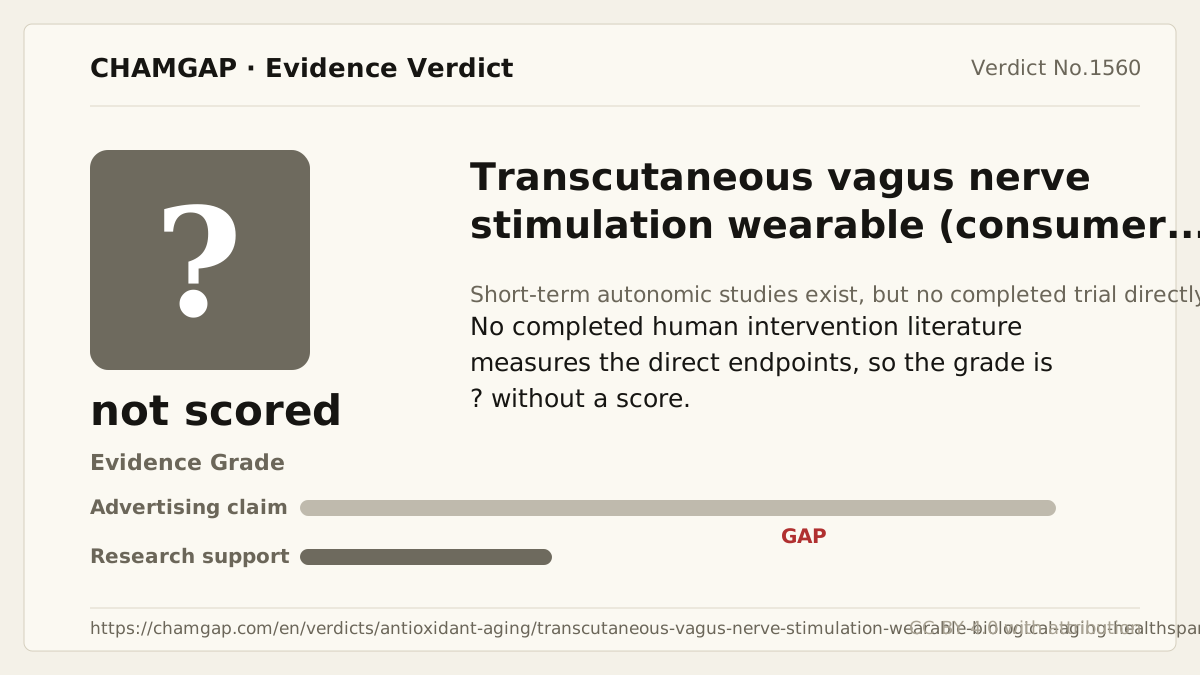
research showsTranscutaneous vagus nerve stimulation wearables are rated ? because no completed human intervention trial was found that directly evaluated biological aging rate, healthspan, or lifespan in healthy adults. A two-week study in volunteers aged at least 55 years assessed heart-rate variability, baroreflex sensitivity, mood, sleep, and quality of life, but not an epigenetic clock, a validated pace-of-aging measure, healthspan, or mortality. Reviews of healthy aging and clinical applications likewise cover cognition, brain function, autonomic outcomes, and disease symptoms without presenting a completed trial of the requested endpoints.
ads claimVagal tone, heart-rate variability, or inflammatory changes can be reframed as reversal of aging or extension of healthspan and lifespan. These surrogate measures are not equivalent to clinical longevity endpoints.
Useful facts when choosing a product
- Transcutaneous vagus nerve stimulation delivers current through electrodes on the auricular vagal region or skin over the cervical vagus.
- Consumer wearables vary in site, frequency, pulse width, intensity, and duration and are not established as equivalent to research protocols.
- The most common adverse events are ear pain, headache, tingling, and skin irritation; they are usually mild, while dizziness or heart-rate changes are less common.
- Bradycardia, arrhythmia, cardiac disease, and implanted electrical devices warrant attention to cardiac effects and possible device interference.
Chamgap Semantic Classification Code
Candidate index · review held
P.transcutaneous-vagus-nerve-stimulation-wearable.transdermal.slower-biological-aging-longer-healthspan-and-longer-lifespan.reduce.UNKProcedures, devices and tests > Transcutaneous vagus nerve stimulation wearable > Transdermal > Slower biological aging, longer healthspan, and longer lifespan > Reduction claim > Unknown
An automated migration candidate, not an issued permanent code; exact claim scope remains under review. This machine-generated migration candidate helps retrieval but is not a permanent assignment. The original verdict ID and URL remain authoritative.
What the research actually shows
Bretherton 2019 conducted single-session studies in 14 and 51 volunteers aged at least 55 years and a two-week daily-stimulation study in 29. The two-week study assessed heart-rate variability, baroreflex sensitivity, quality of life, mood, and sleep, but not biological age, pace of aging, healthspan, lifespan, or death. The Trifilio 2023 review discussed potential healthy cognitive and brain aging through cognition, connectivity, inflammation, and autonomic endpoints. The Hamilton 2024 scoping review mapped clinical disorders and stimulation protocols but did not identify a completed direct aging or longevity trial.
Why this is classified as ?
No completed human intervention trial was identified that directly measured biological aging rate, healthspan, lifespan, or mortality. Other physiological and symptom endpoints were not transferred, so the grade is ?.
Counterpoint. A preregistered controlled trial with direct pace-of-aging and long-term functional, disease, and mortality outcomes is needed.
Rejudgment record. New verdict — Restricted the completed human-intervention search to direct biological-aging-rate, healthspan, lifespan, and mortality endpoints; none were found, so ? was applied without transferring HRV, inflammation, mood, sleep, or cognition evidence
Sub-claim grades by effect
This ingredient is marketed for several effects. A single overall grade blends strong and weak claims together, so each effect is graded separately here. The overall grade reflects the strongest disconfirming or core claim.
| Effect (sub-claim) | Grade | Basis |
|---|---|---|
| Slower biological aging | ? | No completed human intervention trial measuring pace of aging or an epigenetic clock was found. |
| Longer healthspan | ? | No completed trial evaluated long-term function or disease burden as a healthspan endpoint. |
| Longer lifespan | ? | No completed human intervention trial evaluated lifespan or mortality. |
Cross-check — AI research and Codex final gate
Evidence Table
| Study | Design | Sample | Funding | Endpoint | Result | Weight |
|---|---|---|---|---|---|---|
| Bretherton B et al. 2019 | Single-session crossover and single-arm studies plus a two-week single-arm study | 14, 51, and 29 participants | Dunhill Medical Trust | Heart-rate variability, baroreflex sensitivity, quality of life, mood, and sleep | Some autonomic and subjective outcomes improved, but aging rate, healthspan, and lifespan were not measured. | Closest human intervention, but not a direct-endpoint study |
| Trifilio E et al. 2023 | Narrative review of healthy cognitive and brain aging | Synthesis of relevant human studies | Academic research; some authors disclosed device-related patents and advisory roles | Cognition, brain function, inflammation, and autonomic outcomes | It discussed potential mechanisms but presented no direct trial of biological aging rate, healthspan, or lifespan. | Evidence-gap confirmation |
Receipt — 3 References
All 3 cited sources were verified for existence at the original page (as of 2026-07-23).
Final verification and publication gate: Codex · Evidence date: 2026-07-23 · Corrections: none
Cite this verdict
[Chamgap] Transcutaneous vagus nerve stimulation wearable x slower biological aging, longer healthspan, and longer lifespan — Evidence Grade ?. 3 cited sources checked. Source: https://chamgap.com/en/verdicts/antioxidant-aging/transcutaneous-vagus-nerve-stimulation-wearable-biological-aging-healthspan-lifespan/ · CC BY 4.0CC BY 4.0 — free to use with attribution; do not distort grades, numbers, or verdict meaning.
What this document does and does not do
Chamgap is an information source. It reports what research has and has not confirmed; it does not tell readers what to take or buy. That decision belongs to readers and, when needed, medical or legal professionals. This verdict reflects literature available up to the search date and may change as new research appears. Nothing here is medical advice.