
Topical 5% niacinamide,
does it really help with Improved appearance of facial photoaging, including fine lines, rough texture, and hyperpigmented spots, after 12 weeks of application?
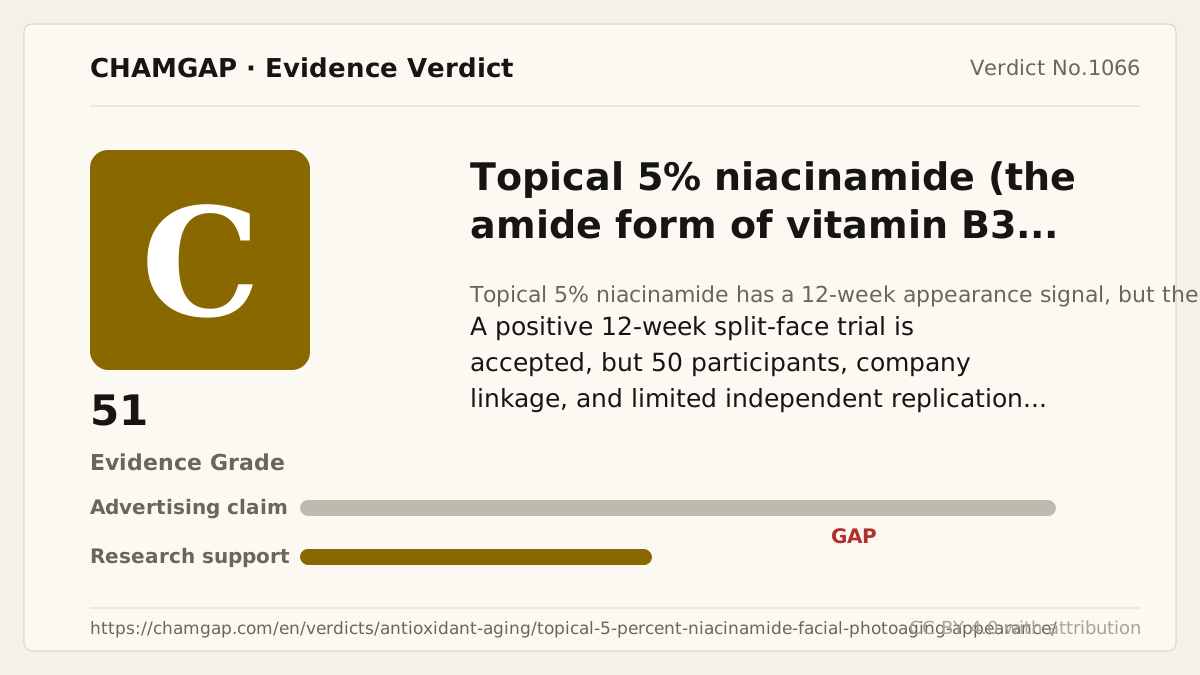
research showsTopical 5% niacinamide is rated C for improving the appearance of facial photoaging. In a double-blind, split-face randomized trial, 50 women applied it twice daily for 12 weeks and had improvements in fine lines, texture, hyperpigmented spots, and other features versus vehicle. The sample was small, however, the investigators and funding were directly linked to Procter & Gamble, and two highly similar reports cannot be treated as independent replications. The positive human trial is therefore accepted but capped at C for small size, company linkage, and limited independent replication. This is a different efficacy axis from oral nicotinamide for skin-cancer prevention, and possible mild redness, stinging, or irritation is recorded separately under safety.
ads claimMarketing expands one small 12-week formulation trial into a vitamin that erases every pore, wrinkle, and dark spot across products, skin tones, and permanent structural outcomes. The evidence fits short-term cosmetic grading of a particular 5% moisturizer most closely.
Useful facts when choosing a product
- The pivotal trial used a 5% niacinamide oil-in-water moisturizer twice daily for 12 weeks, so its effect size cannot be transferred unchanged to wash-off products or serums with different concentrations and vehicles.
- Concentration, pH, moisturizer vehicle, co-ingredients, and package stability can alter delivery and irritation, so the full ingredient list and directions matter.
- A person with sensitive skin can reasonably patch test first and stop use if persistent redness, stinging, or itching occurs.
- A cosmetic for photoaged appearance does not replace sun protection, and this efficacy trial did not establish skin-cancer prevention or treatment of an existing lesion.
Chamgap Semantic Classification Code
Candidate index · review held
S.5-percent-niacinamide.topical-skin.appearance-of-facial-photoaging-including-fine-lines-rough-texture-and-hyperpigmented-spots-after-of-application.improve.UNKSupplements and nutraceuticals > 5% niacinamide > Topical skin > appearance of facial photoaging, including fine lines, rough texture, and hyperpigmented spots, after of application > Improvement claim > Unknown
An automated migration candidate, not an issued permanent code; exact claim scope remains under review. This machine-generated migration candidate helps retrieval but is not a permanent assignment. The original verdict ID and URL remain authoritative.
What the research actually shows
Bissett and colleagues assigned 50 White women aged 40 to 60 years to use a moisturizer containing 5% niacinamide on one side of the face and the matching vehicle on the other twice daily for 12 weeks. Clinical grading, imaging, and instrumental assessments favored niacinamide for fine lines, texture, hyperpigmented spots, red blotchiness, and sallowness, with good tolerability. The 2004 International Journal of Cosmetic Science report and the 2005 Dermatologic Surgery report have very similar participant counts, duration, split-face design, and findings, and both were written by Procter & Gamble investigators, so they were not counted as independent replications. A 2024 review summarized the cosmetic promise but also the formulation, delivery, and clinical-evidence limitations. An appearance change does not establish skin-cancer prevention or histologic reversal of photodamage.
Why this is classified as C (51)
Direct cosmetic endpoints for fine lines, texture, and hyperpigmented spots were positive in a 50-participant, 12-week, double-blind, vehicle-controlled split-face trial, supporting C rather than D. The score is limited to 51 because of one-company investigators and funding, a narrow population, likely overlap between highly similar reports, and no independent multicenter replication. Tolerability was generally good, but safety was kept separate from efficacy.
Counterpoint. Consistent use of a 5% leave-on formulation for 8 to 12 weeks may produce modest visible changes in fine lines, tone, or texture for some users. Persistent irritation warrants reduced frequency or discontinuation, and a changing pigmented lesion should be medically assessed rather than self-treated with a cosmetic.
Rejudgment record. New verdict — Accepted positive wrinkle, texture, and hyperpigmented-spot signals from a 12-week vehicle-controlled split-face trial of 5% niacinamide, but assigned C for a small 50-participant sample, company investigators and funding, likely overlap between similar reports, and no independent replication
Sub-claim grades by effect
This ingredient is marketed for several effects. A single overall grade blends strong and weak claims together, so each effect is graded separately here. The overall grade reflects the strongest disconfirming or core claim.
| Effect (sub-claim) | Grade | Basis |
|---|---|---|
| Improvement of facial fine lines after 12 weeks of application | C | A 50-participant split-face vehicle-controlled trial was positive, but company linkage and lack of independent replication limit confidence. |
| Improvement of rough facial texture after 12 weeks of application | C | Clinical appearance grading improved, but the trial was small and short and has not been replicated across formulations and skin populations. |
| Improvement of facial hyperpigmented spots after 12 weeks of application | C | The hyperpigmented-spot signal versus vehicle was positive but cannot be extended to skin-cancer prevention or treatment of pigmented lesions. |
Cross-check — AI research and Codex final gate
Evidence Table
| Study | Design | Sample | Funding | Endpoint | Result | Weight |
|---|---|---|---|---|---|---|
| Bissett DL et al. 2004 | Double-blind vehicle-controlled split-face left-right randomized trial | 50 White women aged 40 to 60 years | Company-linked cosmetic study with all authors affiliated with Procter & Gamble | Appearance of fine lines, texture, hyperpigmented spots, red blotchiness, and sallowness at 12 weeks | Five-percent niacinamide significantly improved the assessed appearance endpoints versus vehicle and was well tolerated. | Key positive direct trial; small and company-linked |
| Bissett DL et al. 2005 | Report of a double-blind vehicle-controlled split-face left-right randomized clinical study | 50 White women with facial photoaging | Funded by Procter & Gamble with all authors employed by the company | Wrinkles, hyperpigmented spots, red blotchiness, sallowness, and elasticity at 12 weeks | The 5% formulation improved appearance and elasticity measures versus vehicle, but the design, sample, and findings closely match the 2004 report, so it was not counted as independent replication. | Positive support with limited independence |
| Ong RR and Goh CF. 2024 | Review of dermal delivery strategies and clinical evidence | Multiple clinical studies of topical niacinamide | Academic review; company linkage varies across included studies | Brightening, anti-aging, skin barrier, and formulation-dependent dermal delivery | The review summarized clinical promise while showing why formulation and dermal-delivery differences prevent generalization from one trial to every cosmetic product. | Supporting assessment of scope and product variation |
Receipt — 3 References
All 3 cited sources were verified for existence at the original page (as of 2026-07-21).
Final verification and publication gate: Codex · Evidence date: 2026-07-21 · Corrections: none
Cite this verdict
[Chamgap] Topical 5% niacinamide x improved appearance of facial photoaging — Evidence Grade C·51. 3 cited sources checked. Source: https://chamgap.com/en/verdicts/antioxidant-aging/topical-5-percent-niacinamide-facial-photoaging-appearance/ · CC BY 4.0CC BY 4.0 — free to use with attribution; do not distort grades, numbers, or verdict meaning.
What this document does and does not do
Chamgap is an information source. It reports what research has and has not confirmed; it does not tell readers what to take or buy. That decision belongs to readers and, when needed, medical or legal professionals. This verdict reflects literature available up to the search date and may change as new research appears. Nothing here is medical advice.