
Reduced NADH,
does it really help with Slower human aging and extended healthspan or lifespan through restored mitochondrial energy?
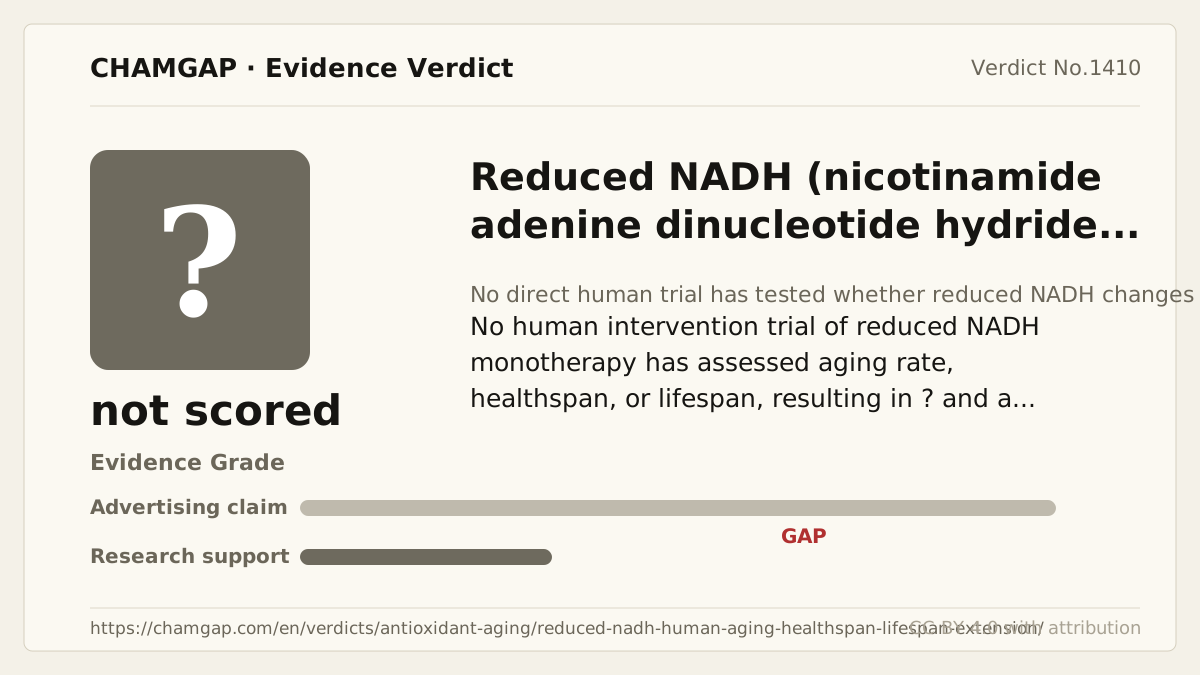
research showsReduced NADH is rated ? for slowing human aging or extending healthspan or lifespan. Human studies of the NAD system mainly examine blood metabolites and short-term functional markers for different precursors such as NR and NMN. No human intervention trial was identified that tested oral NADH monotherapy for aging rate, healthspan, survival, or mortality. Mechanistic evidence and evidence for different compounds cannot be transferred to an NADH longevity claim.
ads claimStatements that replenishing cellular energy reverses aging or repairing mitochondria makes people live longer leap from biochemistry to a human lifespan claim. Even a change in an NAD-related metabolite or short-term fatigue or function would not demonstrate slower aging, longer healthspan, or longer life.
Useful facts when choosing a product
- NADH is the reduced form of NAD and participates in cellular redox and energy metabolism, but an oral supplement cannot automatically be assumed to shift intracellular NADH balance in selected tissues as intended.
- NADH is chemically and pharmacokinetically distinct from NR, NMN, niacin, nicotinamide, and oxidized NAD+, so clinical outcomes cannot be substituted among them.
- Small short-term human studies have generally reported oral NADH as tolerated, but there are no safety data for years of high-dose use intended to prevent aging.
- Product content, stability, formulation, and independent quality testing matter, and a longevity supplement should not replace treatment for disease or prescribed medicine.
Chamgap Semantic Classification Code
Candidate index · review held
S.reduced-nadh.oral.slower-human-aging-and-extended-healthspan-or-lifespan-through-restored-mitochondrial-energy.reduce.UNKSupplements and nutraceuticals > Reduced NADH > Oral > Slower human aging and extended healthspan or lifespan through restored mitochondrial energy > Reduction claim > Unknown
An automated migration candidate, not an issued permanent code; exact claim scope remains under review. This machine-generated migration candidate helps retrieval but is not a permanent assignment. The original verdict ID and URL remain authoritative.
What the research actually shows
The 2020 PRISMA review by Radenkovic and colleagues examined 36 human clinical reports involving NAD, NADH, and various precursors but concluded that adequately powered randomized evidence was sparse and the optimal augmentation strategy remained unclear. The 2023 review by Freeberg and colleagues identified NR, NR plus pterostilbene, and NMN as the main compounds in chronic oral human studies; metabolite increases were more consistent than physiological benefits. Neither review identified an intervention trial of reduced NADH monotherapy measuring human aging rate, healthspan, lifespan, or mortality. Verdict 280 addresses the separate claim of chronic-fatigue improvement with NADH, while verdicts 031 and 314 concern NMN and NR; their evidence is not transferred.
Why this is classified as ?
No intervention trial was identified that evaluated reduced NADH monotherapy for human aging rate, healthspan, lifespan, or mortality. Metabolite and short-term function studies of other NAD precursors differ in both compound and endpoint, so boundary rule ⑤ yields ? with a null score.
Counterpoint. The current conclusion is not F for repeated disproof; it is ? because human efficacy literature for this lifespan claim is absent.
Rejudgment record. New verdict — Applied aging and lifespan boundary rule ⑤ because human NAD studies focus on different precursors, metabolites, and short-term functional markers, and no intervention trial of reduced NADH monotherapy assessing human aging rate, healthspan, lifespan, or mortality was identified
Sub-claim grades by effect
This ingredient is marketed for several effects. A single overall grade blends strong and weak claims together, so each effect is graded separately here. The overall grade reflects the strongest disconfirming or core claim.
| Effect (sub-claim) | Grade | Basis |
|---|---|---|
| Slower human aging from reduced NADH | ? | No human intervention of NADH monotherapy assessing aging rate was identified. |
| Extended human healthspan from reduced NADH | ? | No human intervention of NADH monotherapy directly assessing healthspan was identified. |
| Extended human lifespan from reduced NADH | ? | No human intervention of NADH monotherapy assessing survival, lifespan, or mortality was identified. |
Cross-check — AI research and Codex final gate
Evidence Table
| Study | Design | Sample | Funding | Endpoint | Result | Weight |
|---|---|---|---|---|---|---|
| Radenkovic D et al. 2020 | PRISMA systematic review of human NAD-targeting clinical literature | 36 human clinical reports | Academic review; some authors disclosed longevity or biotechnology interests | Human clinical outcomes and safety of NAD-related administration | Adequately powered randomized trials were sparse, and no reduced-NADH monotherapy trial of aging rate, healthspan, or lifespan was presented. | Key scope review documenting the direct-trial gap |
| Freeberg KA et al. 2023 | Review of chronic oral human NAD-boosting studies | Published human studies primarily of NR, NR plus pterostilbene, and NMN | Academic work; authors disclosed a material-transfer agreement for research NR | NAD metabolites, physiological function, and healthy-aging outcomes | NAD-related metabolites can increase, but physiological effects were unclear and no NADH-monotherapy lifespan trial was identified. | Confirms the lifespan gap and nontransferability from different compounds |
Receipt — 2 References
All 2 cited sources were verified for existence at the original page (as of 2026-07-23).
Final verification and publication gate: Codex · Evidence date: 2026-07-23 · Corrections: none
Cite this verdict
[Chamgap] Reduced NADH x slower human aging and extended healthspan or lifespan — Evidence Grade ?. 2 cited sources checked. Source: https://chamgap.com/en/verdicts/antioxidant-aging/reduced-nadh-human-aging-healthspan-lifespan-extension/ · CC BY 4.0CC BY 4.0 — free to use with attribution; do not distort grades, numbers, or verdict meaning.
What this document does and does not do
Chamgap is an information source. It reports what research has and has not confirmed; it does not tell readers what to take or buy. That decision belongs to readers and, when needed, medical or legal professionals. This verdict reflects literature available up to the search date and may change as new research appears. Nothing here is medical advice.