
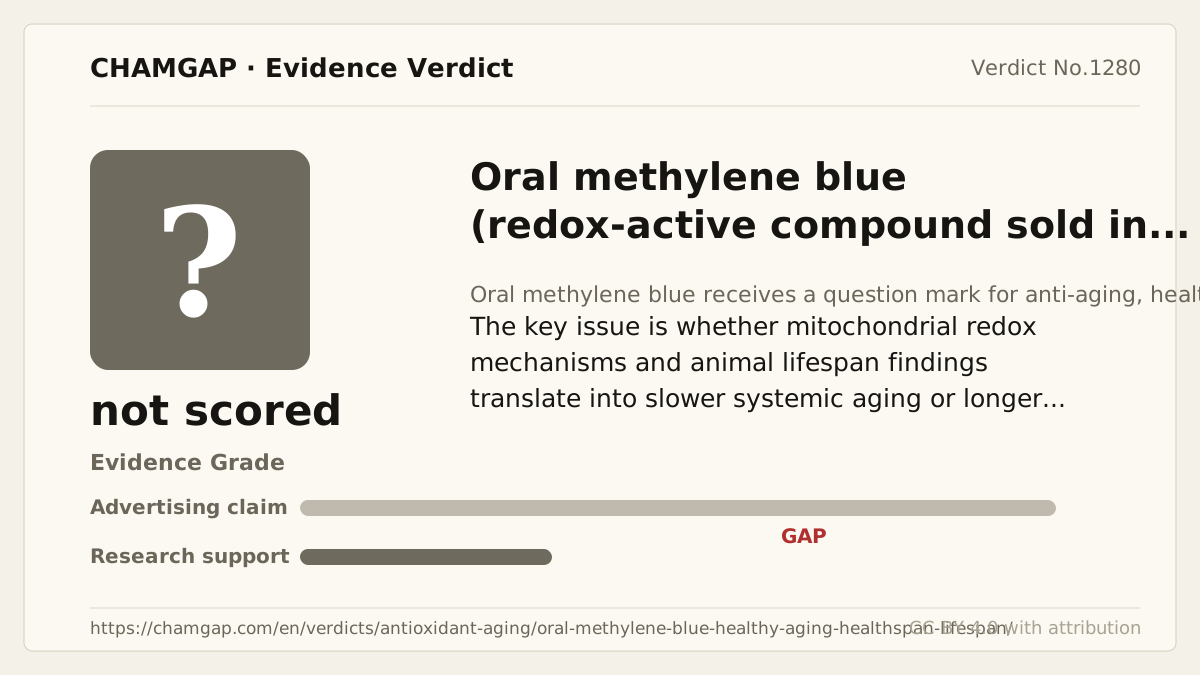
Oral methylene blue,
does it really help with Slowing the rate of aging and extending healthspan and overall lifespan in healthy adults?
research shows?. No human efficacy trial was identified in which healthy adults received oral methylene blue to evaluate the rate of aging, healthspan, or overall lifespan.
ads claimWellness sellers may extrapolate mitochondrial, antioxidant, or cellular-aging findings into human longevity claims. Regulators have warned that unregistered oral wellness products have not been assessed for quality, safety, or efficacy.
Useful facts when choosing a product
- Methylene blue is a drug substance used for particular medical purposes, but oral anti-aging or longevity wellness products do not have an approved indication or established standard dose for this claim.
- Aging-related changes reported in human skin cells and three-dimensional skin models are not evidence of slower whole-body aging or longer life in healthy adults.
- A mouse study found no extension of median lifespan and only a small signal for female maximum lifespan, which cannot be extrapolated to people.
- Methylene blue inhibits MAO-A, so combining it with SSRIs or other serotonergic drugs can cause serotonin syndrome; high-dose toxicity, hemolysis in G6PD deficiency, and blue urine are additional concerns.
Chamgap Semantic Classification Code
Candidate index · review held
UNK.methylene-blue.oral.slowing-the-rate-of-aging-and-extending-healthspan-and-overall-lifespan.assess.UNKUnknown > methylene blue > Oral > Slowing the rate of aging and extending healthspan and overall lifespan > Association or change assessment > Unknown
An automated migration candidate, not an issued permanent code; exact claim scope remains under review. This machine-generated migration candidate helps retrieval but is not a permanent assignment. The original verdict ID and URL remain authoritative.
What the research actually shows
In the National Institute on Aging Interventions Testing Program mouse study, 28 ppm methylene blue did not significantly change median lifespan in either sex, although female maximum lifespan increased by 6%. Research in human skin fibroblasts and three-dimensional skin models remained at the cell or tissue-model level. No oral trial evaluating aging biomarkers or long-term survival in healthy adults was identified.
Why this is classified as ?
No human efficacy trial directly evaluating the rate of aging, healthspan, or overall lifespan in healthy adults was identified, so the claim receives a question mark with no score. Cell and animal evidence can generate a hypothesis but cannot support a clinical efficacy grade.
Counterpoint. Human lifespan trials are difficult, so randomized studies may first use validated aging biomarkers alongside function and disease burden. No such surrogate clinical trial was identified for this claim either.
Rejudgment record. New verdict — The assessment first searched for human efficacy trials directly evaluating the rate of aging, healthspan, or overall lifespan in healthy adults, while separating cell and animal mechanisms and safety evidence from the efficacy verdict.
Sub-claim grades by effect
This ingredient is marketed for several effects. A single overall grade blends strong and weak claims together, so each effect is graded separately here. The overall grade reflects the strongest disconfirming or core claim.
| Effect (sub-claim) | Grade | Basis |
|---|---|---|
| Oral methylene blue slows the rate of aging in healthy adults | ? | No human efficacy trial evaluating aging rate or validated systemic aging biomarkers for this claim was identified. |
| Oral methylene blue extends healthspan in healthy adults | ? | No human trial evaluating preserved function or disease-free survival for this claim was identified. |
| Oral methylene blue extends overall lifespan in healthy adults | ? | No human efficacy trial evaluated overall survival, and median lifespan was not extended in the mouse study. |
Cross-check — AI research and Codex final gate
Evidence Table
| Study | Design | Sample | Funding | Endpoint | Result | Weight |
|---|---|---|---|---|---|---|
| National Institute on Aging Interventions Testing Program Mouse Lifespan Trial of Methylene Blue | Multisite lifespan intervention study in genetically heterogeneous mice | Male and female mice in control and methylene-blue groups | Supported by the US National Institute on Aging | Median and maximum lifespan in both sexes | Methylene blue at 28 ppm did not significantly alter median lifespan in either sex; female maximum lifespan increased by 6%. | Animal evidence close to the lifespan outcome, but not translatable as human efficacy and not a consistent longevity effect |
| Xiong et al. Anti-Aging Study in Human Skin Cells and Three-Dimensional Skin Models | Laboratory study in human-derived fibroblasts and reconstructed skin models | Cell and tissue models | Supported by the Intramural Research Program of the US National Institute on Aging | Cellular senescence, oxidative stress, proliferation, and skin-model viability markers | Several cell and skin-model markers improved, but methylene blue was not administered orally to people and systemic aging or lifespan was not assessed. | Useful for mechanistic and local-tissue hypotheses but highly indirect for the claimed human longevity outcomes |
| Xue et al. Review of the Anti-Aging Potential of Methylene Blue | Narrative review of cellular, animal, and mechanistic literature | Not applicable | Academic review; one author disclosed founding a company developing methylene-blue skin products | Preclinical findings related to mitochondria, oxidative stress, skin aging, and neurological aging | The review discusses anti-aging potential but presents no clinical trial of aging rate, healthspan, or overall lifespan in healthy adults. | Secondary evidence documenting the preclinical nature of the literature and the gap in human efficacy evidence |
| Australian TGA Safety Alert on Unregistered Oral Methylene Blue Products | Regulatory safety alert and product-status notice | Not applicable | Australian federal regulator | Lack of efficacy and quality assessment for unregistered oral products and drug-interaction risks | The alert states that products promoted for anti-aging are unregistered and unassessed for quality, safety, or efficacy, and warns about serotonergic drug interactions. | Does not raise the efficacy grade but supports the product-status and serious-safety warnings |
Receipt — 5 References
All 5 cited sources were verified for existence at the original page (as of 2026-07-24).
Final verification and publication gate: Codex · Evidence date: 2026-07-24 · Corrections: none
Cite this verdict
[Chamgap] Oral Methylene Blue for Aging and Longevity in Healthy Adults — Evidence Grade ?. 5 cited sources checked. Source: https://chamgap.com/en/verdicts/antioxidant-aging/oral-methylene-blue-healthy-aging-healthspan-lifespan/ · CC BY 4.0CC BY 4.0 — free to use with attribution; do not distort grades, numbers, or verdict meaning.
What this document does and does not do
Chamgap is an information source. It reports what research has and has not confirmed; it does not tell readers what to take or buy. That decision belongs to readers and, when needed, medical or legal professionals. This verdict reflects literature available up to the search date and may change as new research appears. Nothing here is medical advice.