
Omega-3 EPA and DHA,
does it really help with Slowing biological aging in older adults as measured by DNA methylation clocks?
research showsThe claim that omega-3 slows biological aging in older adults as measured by DNA methylation clocks is rated C. A post hoc analysis of 777 Swiss participants from the randomized DO-HEALTH trial found small favorable changes over three years in three of four next-generation clocks: PhenoAge, GrimAge2, and DunedinPACE, translating to about 2.9 to 3.8 months. A D rating implying a null large human trial is therefore inappropriate. However, the analysis was post hoc, used only two time points, involved an unvalidated clinical surrogate, and found a small effect. The six clinical primary outcomes in all 2,157 DO-HEALTH participants showed no consistent benefit, so this is a low C. Extensions to healthspan, functional independence, mortality, or lifespan remain ungraded because those endpoints were not tested. Product variation in EPA and DHA content and oxidation, and high-dose bleeding and atrial-fibrillation signals, remain separate from efficacy.
ads claimMarketing turns a claim that an aging clock moved back by four months into actual rejuvenation or a longer life. The study reported a small average difference in selected statistical DNA methylation scores, not improved appearance, function, disease-free survival, or mortality.
Useful facts when choosing a product
- DO-HEALTH used 1 g daily of marine omega-3, consisting of 330 mg EPA and 660 mg DHA. The total oil amount on a retail capsule label is not necessarily the actual EPA-plus-DHA dose.
- The trial formulation used EPA and DHA derived from marine algae, so its aging-clock result cannot automatically be assigned to every fish oil, krill oil, or EPA-dominant product.
- Omega-3 supplements commonly cause gastrointestinal discomfort, fishy aftertaste, or nausea. Higher doses warrant attention to bleeding tendency and atrial-fibrillation signals, especially with anticoagulant or antiplatelet therapy.
- Supplements vary in EPA-to-DHA ratio, chemical form, purity, and oxidation. This product variability is separate from clinical efficacy, and high product quality alone does not establish an anti-aging benefit.
Chamgap Semantic Classification Code
Candidate index · review held
S.omega-3-epa-and-dha.UNK.slowing-biological-aging-as-measured-by-dna-methylation-clocks.assess.MULTISupplements and nutraceuticals > Omega-3 EPA and DHA > Unknown > Slowing biological aging as measured by DNA methylation clocks > Association or change assessment > Multiple: primary unresolved
An automated migration candidate, not an issued permanent code; exact claim scope remains under review. This machine-generated migration candidate helps retrieval but is not a permanent assignment. The original verdict ID and URL remain authoritative.
What the research actually shows
DO-HEALTH followed 2,157 relatively healthy adults aged at least 70 years for three years in a 2-by-2-by-2 factorial trial of vitamin D, omega-3, and home exercise. In the main trial, omega-3 did not significantly improve blood pressure, physical performance, cognition, nonvertebral fractures, or the multiplicity-adjusted infection primary endpoint. The Bio-Age paper post hoc analyzed 777 Swiss participants with DNA at both time points and evaluated four next-generation DNA methylation measures. Omega-3 alone was modestly favorable for PhenoAge, GrimAge2, and DunedinPACE, but whether these changes mediate mortality, disability, or healthspan was not tested.
Why this is classified as C (43)
Small favorable changes in three of four DNA methylation clocks under randomized allocation make a D rating for a null large human trial inappropriate. The analysis nevertheless used a post hoc subset of 777 participants rather than the full cohort, had only two time points, relied on an unvalidated surrogate, and found an effect of only 2.9 to 3.8 months. The six clinical primary outcomes in the full DO-HEALTH trial were not consistently positive. These limitations give a low C with 43 points. Mortality, healthspan, and functional independence were not tested and therefore remain ungraded, distinct from other omega-3 claims such as weight or diabetes prevention.
Counterpoint. Omega-3 may be chosen for evidence in a different indication, such as selected triglyceride management, without relying on an aging-clock claim. Confirmation would require a prespecified analysis, repeated measurements, independent cohorts, and linkage to actual healthspan, disability, and mortality.
Rejudgment record. Cross-check applied — Accepted small favorable changes in three of four DNA methylation clocks under DO-HEALTH randomization as positive human evidence and rejected D as a null large-trial rating; applied a low C because this was a post hoc analysis of a 777-person Swiss subset with two time points, an unvalidated surrogate, an effect of only 2.9 to 3.8 months, and no consistent benefit across the full trial's six clinical primary outcomes; extensions to mortality, healthspan, or functional independence remain ungraded because those endpoints were absent
Sub-claim grades by effect
This ingredient is marketed for several effects. A single overall grade blends strong and weak claims together, so each effect is graded separately here. The overall grade reflects the strongest disconfirming or core claim.
| Effect (sub-claim) | Grade | Basis |
|---|---|---|
| Slowing of biological aging measured by DNA methylation clocks | C | Three clocks were modestly favorable in a post hoc analysis of 777 participants, but the result was not consistent across all clocks and the surrogate is unvalidated. |
| Extension of healthspan or functional independence in older adults | ? | The aging-clock analysis did not test this clinical outcome, and the full trial found no consistent benefit in its physical-performance or cognition primary endpoints. |
| Reduction of mortality or extension of lifespan in older adults | ? | DO-HEALTH was not designed or powered with enough deaths to test this effect, so human efficacy remains unestablished. |
Cross-check — AI research and Codex final gate
Evidence Table
| Study | Design | Sample | Funding | Endpoint | Result | Weight |
|---|---|---|---|---|---|---|
| Bischoff-Ferrari HA et al. 2025 | Post hoc DNA methylation subset analysis of the randomized factorial DO-HEALTH trial | 777 Swiss participants measured at baseline and three years | Public and academic support including the European Union framework and Swiss National Science Foundation; epigenetic-clock patent interests disclosed | Three-year changes in PhenoAge, GrimAge, GrimAge2, and DunedinPACE | Omega-3 was favorable for PhenoAge, GrimAge2, and DunedinPACE, with standardized effects of 0.16 to 0.32, or about 2.9 to 3.8 months. | Pivotal positive surrogate evidence, but post hoc, subset-based, and small |
| Bischoff-Ferrari HA et al.; DO-HEALTH Research Group. 2020 | Multinational randomized double-blind placebo-controlled 2-by-2-by-2 factorial trial | 2,157 adults aged at least 70 years followed for three years | Mixed European Union, Swiss, foundation, and in-kind industry support | Six prespecified primary outcomes including blood pressure, physical performance, cognition, nonvertebral fractures, and infections | None of the interventions, including omega-3, significantly improved the six clinical primary outcomes under the multiplicity threshold. | Clinical-outcome context from the full cohort |
| Gencer B et al. 2021 | Systematic review and meta-analysis of long-term marine omega-3 cardiovascular randomized trials | Seven large randomized trials and 81,210 participants | Academic work with author public funding and disclosures reported | Incident atrial fibrillation and dose relationship | Marine omega-3 was associated with increased atrial-fibrillation risk, with a stronger signal at higher doses. | Safety-only evidence |
Receipt — 3 References
All 3 cited sources were verified for existence at the original page (as of 2026-07-22).
Final verification and publication gate: Codex · Evidence date: 2026-07-22 · Corrections: none
Cite this verdict
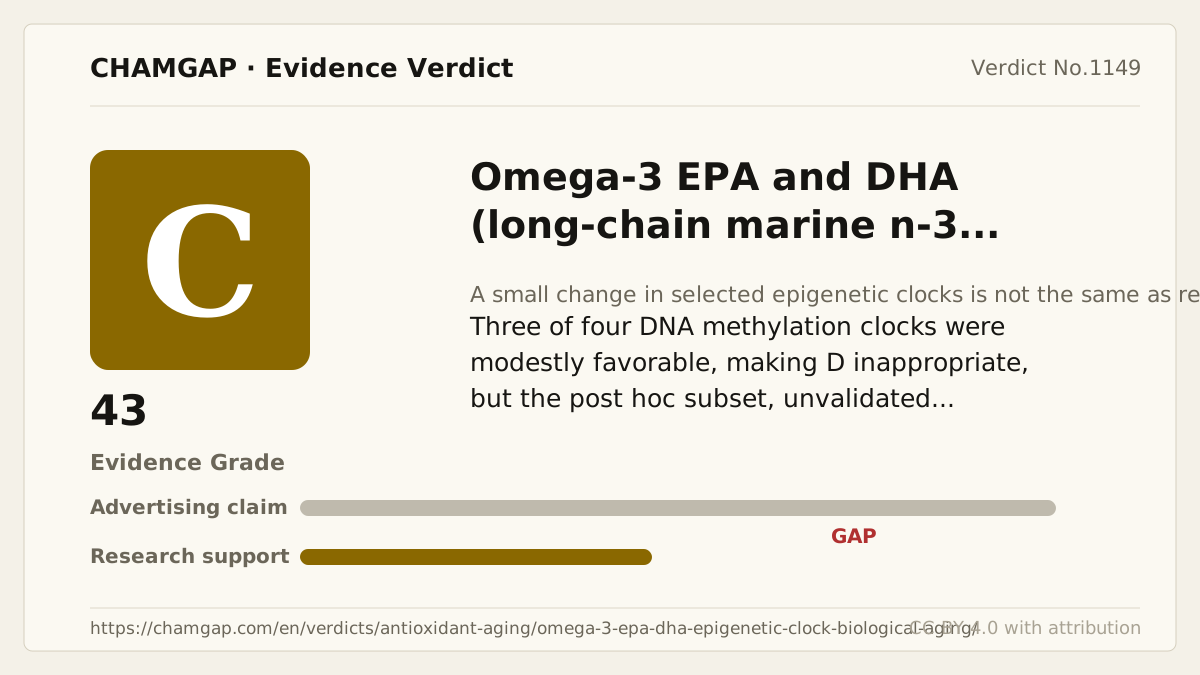
[Chamgap] Omega-3 EPA and DHA x slower aging on DNA methylation clocks — Evidence Grade C·43. 3 cited sources checked. Source: https://chamgap.com/en/verdicts/antioxidant-aging/omega-3-epa-dha-epigenetic-clock-biological-aging/ · CC BY 4.0CC BY 4.0 — free to use with attribution; do not distort grades, numbers, or verdict meaning.
What this document does and does not do
Chamgap is an information source. It reports what research has and has not confirmed; it does not tell readers what to take or buy. That decision belongs to readers and, when needed, medical or legal professionals. This verdict reflects literature available up to the search date and may change as new research appears. Nothing here is medical advice.