
Intravenous MSC-derived exosomes,
does it really help with Reversal of systemic aging and extension of healthspan in healthy adults?
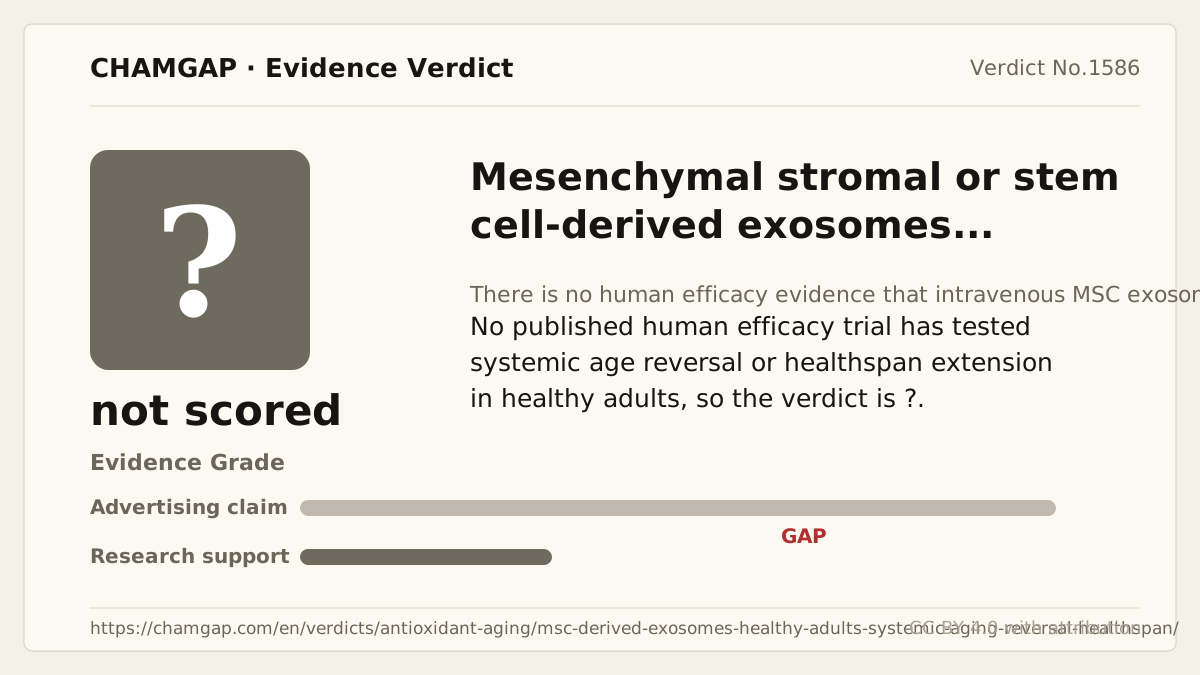
research showsThe claim that intravenous MSC-derived exosomes reverse systemic aging or extend healthspan in healthy adults is rated ?. A 2023 clinical-trial review found published human MSC-exosome studies in diseases such as kidney disease, skin conditions, graft-versus-host disease, and stroke or in local treatment, but no controlled efficacy trial of systemic age reversal or healthspan extension in healthy adults. NCT06495437, registered in 2024, is a preliminary single-arm infusion study in people with age-related phenotypes and impaired glucose tolerance; it is not evidence that aging has been reversed or healthspan extended in healthy adults. Because human efficacy literature for this claim is absent, the verdict is ?. Separately, the FDA warned of serious adverse events after unapproved products marketed as exosomes, including contamination-related infection and sepsis.
ads claimMarketing turns intercellular signaling and anti-inflammatory or regenerative findings in animals into claims of resetting cellular age, whole-body rejuvenation, and longer healthspan. Exosome source cells, culture conditions, separation and purification, particle counts, and cargo vary between products, while efficacy and long-term safety in healthy adults remain unestablished.
Useful facts when choosing a product
- Exosomes are one class of extracellular vesicle released by cells, not a single defined ingredient. Source cells, culture conditions, isolation, purification, and storage can change their cargo and biological activity.
- No validated product specification, standard dose, dosing interval, or clinical efficacy endpoint has been established for intravenous MSC exosomes intended to reverse systemic aging or extend healthspan in healthy adults.
- The FDA warned in 2019 of multiple serious adverse events after unapproved products marketed as exosomes, and a public-health investigation described Escherichia coli sepsis associated with contaminated intravenous infusions.
- Unapproved intravenous administration outside a regulated trial may cause infection, immune or infusion reactions, thrombosis, unknown long-term harms, and delay of proven care. Any claimed investigational-new-drug authorization, ethics oversight, and manufacturing-quality documentation should be independently verified.
Chamgap Semantic Classification Code
Candidate index · review held
UNK.mesenchymal-stromal-or-stem-cell-derived-exosomes-administered-intravenously.intravenous.reversal-of-systemic-aging-and-extension-of-healthspan.assess.UNKUnknown > Mesenchymal stromal or stem cell-derived exosomes administered intravenously > Intravenous > Reversal of systemic aging and extension of healthspan > Association or change assessment > Unknown
An automated migration candidate, not an issued permanent code; exact claim scope remains under review. This machine-generated migration candidate helps retrieval but is not a permanent assignment. The original verdict ID and URL remain authoritative.
What the research actually shows
The Lotfy 2023 review summarized seven published MSC-exosome clinical studies and 14 ongoing trials through September 2022. These involved kidney disease, graft-versus-host disease, skin disorders, stroke, Alzheimer disease, and other conditions rather than systemic age reversal or healthspan extension in healthy adults. NCT06495437 registered a preliminary single-arm intravenous infusion of 100 mL of Wharton's-jelly MSC-derived extracellular vesicles in people with age-related phenotypes and impaired glucose tolerance, without a control group. In 2019, the FDA disclosed multiple serious adverse-event reports in Nebraska after unapproved products marketed as exosomes; the associated public-health investigation described Escherichia coli sepsis after contaminated intravenous infusions. The FDA stated that exosome products are regulated as drugs and biologics and that no such product was approved at that time.
Why this is classified as ?
No published human efficacy trial was identified that evaluates whether intravenous MSC-derived exosomes reverse systemic aging or extend healthspan in healthy adults. The registered preliminary single-arm study concerns age-related impaired glucose tolerance and is not a published controlled efficacy trial. Preclinical and mechanistic findings cannot establish human efficacy, so the grade is ?.
Counterpoint. Early disease-specific or local skin studies may generate hypotheses. A preventive rejuvenation infusion in healthy people requires separate proof of benefit and risk, and the current evidence does not justify a paid unapproved procedure.
Rejudgment record. Cross-check applied — ? versus D: assign ? when no human efficacy trial exists and D when human efficacy trials exist but are negative. No published controlled efficacy trial tests systemic age reversal or healthspan extension in healthy adults, and the evidence remains preclinical or disease-specific early research, so ? applies.
Sub-claim grades by effect
This ingredient is marketed for several effects. A single overall grade blends strong and weak claims together, so each effect is graded separately here. The overall grade reflects the strongest disconfirming or core claim.
| Effect (sub-claim) | Grade | Basis |
|---|---|---|
| Reversal of systemic aging in healthy adults | ? | No published human efficacy trial has compared validated aging measures and function against a control group. |
| Extension of healthspan in healthy adults | ? | No human efficacy literature evaluates disease-free survival time or functional healthspan. |
| Improved long-term function and disease incidence in healthy adults | ? | No intravenous efficacy trial has assessed long-term function, age-related disease incidence, or survival. |
Cross-check — AI research and Codex final gate
Evidence Table
| Study | Design | Sample | Funding | Endpoint | Result | Weight |
|---|---|---|---|---|---|---|
| Lotfy A et al. 2023 | Narrative review of clinical studies of MSC-derived exosomes | Seven published studies and 14 ongoing trials through September 2022 | Academic and United States Veterans Affairs research setting; not a commercial anti-aging confirmation trial | Disease-specific safety and early efficacy, manufacturing, dose, and route | Studies existed for selected diseases and local treatment, but no efficacy trial tested systemic age reversal or healthspan extension in healthy adults. | Confirms the gap in human efficacy literature |
| ClinicalTrials.gov NCT06495437 | Registered preliminary single-arm intravenous-infusion study | People with age-related phenotypes and impaired glucose tolerance; registry record | Investigator-led registration at Nanjing Drum Tower Hospital, China | Short-term safety and age-related metabolic and functional measures | This uncontrolled preliminary study has not provided published evidence of age reversal or healthspan extension in healthy adults. | Shows ongoing exploration but is not efficacy evidence |
| U.S. FDA exosome safety notification. 2019 | Regulatory public-health safety notification | Multiple serious adverse-event reports associated with unapproved products marketed as exosomes in Nebraska | United States Food and Drug Administration | Unapproved products, serious adverse events, and regulatory status | Warned of serious adverse events after unapproved administration and stated that exosome products require drug and biologic premarket review. | Key safety and regulatory evidence |
Receipt — 5 References
All 5 cited sources were verified for existence at the original page (as of 2026-07-24).
Final verification and publication gate: Codex · Evidence date: 2026-07-24 · Corrections: none
Cite this verdict
[Chamgap] Intravenous MSC-derived exosomes x reversal of systemic aging and extension of healthspan in healthy adults — Evidence Grade ?. 5 cited sources checked. Source: https://chamgap.com/en/verdicts/antioxidant-aging/msc-derived-exosomes-healthy-adults-systemic-aging-reversal-healthspan/ · CC BY 4.0CC BY 4.0 — free to use with attribution; do not distort grades, numbers, or verdict meaning.
What this document does and does not do
Chamgap is an information source. It reports what research has and has not confirmed; it does not tell readers what to take or buy. That decision belongs to readers and, when needed, medical or legal professionals. This verdict reflects literature available up to the search date and may change as new research appears. Nothing here is medical advice.