
Molecular-hydrogen inhaler,
does it really help with Slower biological aging and longer healthspan and lifespan through regular hydrogen inhalation?
research showsNo direct human intervention trial was identified showing that regular molecular-hydrogen inhalation slows biological aging or extends healthspan or lifespan, so the grade is ?. The nearest study was an open-label, single-arm experiment in 54 people who inhaled 2% hydrogen for 30 minutes daily for four weeks; it measured before-and-after changes in oxidative-stress, inflammatory, and dementia-related blood markers. It had no randomized control group and did not assess aging rate, disability-free survival, disease incidence, mortality, or lifespan. Biomarker changes and early studies in unrelated diseases cannot establish longevity.
ads claimMarketing directly converts lower oxidative-stress or inflammatory markers into younger cells and longer life. Antioxidant markers, exploratory disease findings, and studies of hydrogen water or hydrogen-generating tablets are not evidence that an inhaler slows human aging or extends healthspan or lifespan.
Useful facts when choosing a product
- A water-electrolysis inhaler generates hydrogen or a hydrogen-oxygen mixture and delivers it through a nasal cannula or similar interface. Sale as a non-medical wellness device does not establish approved disease-treatment or longevity efficacy.
- Generated-gas concentration, flow, purity, dilution, filtration, flashback protection, and leak detection vary by product, so low-concentration research-grade medical-gas findings cannot be generalized to consumer devices.
- Hydrogen is flammable, and hydrogen-oxygen mixtures can explode or detonate when leakage, static electricity, ignition sources, and inadequate design coincide. Published guidance is based on actual inhaler accidents and ignition experiments.
- A study of eight adults found acceptable short-term tolerability for up to 72 hours of low-concentration hydrogen in medical air, but it does not establish long-term repeated safety of home devices or exclude impurity and oxygen-concentration hazards.
Chamgap Semantic Classification Code
Candidate index · review held
P.molecular-hydrogen-inhalation-device.inhaled.slower-biological-aging-and-longer-healthspan-and-lifespan-through-regular-hydrogen-inhalation.reduce.UNKProcedures, devices and tests > Molecular-hydrogen inhalation device > Inhaled > Slower biological aging and longer healthspan and lifespan through regular hydrogen inhalation > Reduction claim > Unknown
An automated migration candidate, not an issued permanent code; exact claim scope remains under review. This machine-generated migration candidate helps retrieval but is not a permanent assignment. The original verdict ID and URL remain authoritative.
What the research actually shows
Rahman and colleagues enrolled 54 community-dwelling adults and, without randomization or a control group, delivered 2% hydrogen in filtered air by nasal cannula for 30 minutes daily over four weeks. Reactive oxygen species, nitric oxide, BACE-1, amyloid beta, tau, BDNF, IL-6, and other markers changed before versus after treatment, but multiple testing, regression to the mean, and time effects cannot be excluded, and no aging or survival endpoint was measured. Johnsen and colleagues reviewed 81 hydrogen-therapy trials and 64 human publications in 2023, but delivery routes and disease indications varied and longevity was not established. Cole and colleagues exposed eight adults to 2.4% hydrogen in medical air for four to 72 hours to assess short-term tolerability, not efficacy or long-term safety.
Why this is classified as ?
The inhalation evidence nearest to this claim is a 54-person uncontrolled four-week biomarker study, and no direct human intervention trial measured aging rate, healthspan, lifespan, or mortality. Boundary rule ⑤ gives ? with a null score.
Counterpoint. Future aging research would need preregistered controls, adequate duration, validated aging measures, and functional, disease, and mortality endpoints. Current evidence does not support recommending a device for longevity.
Rejudgment record. New verdict — Applied boundary rule ⑤ because short-term biomarker, disease-specific, and safety studies of hydrogen inhalation and studies of hydrogen water or tablets exist, but no direct human intervention trial evaluated aging rate, healthspan, lifespan, or mortality for an electrolysis inhaler
Sub-claim grades by effect
This ingredient is marketed for several effects. A single overall grade blends strong and weak claims together, so each effect is graded separately here. The overall grade reflects the strongest disconfirming or core claim.
| Effect (sub-claim) | Grade | Basis |
|---|---|---|
| Slower biological aging | ? | Human inhalation studies measured short-term oxidative, inflammatory, and dementia-related markers, with no controlled trial of a validated biological-aging-rate endpoint. |
| Extended healthspan | ? | No human intervention trial directly evaluated disability-free survival, multimorbidity onset, or healthspan. |
| Extended lifespan | ? | No human hydrogen-inhalation intervention trial used lifespan or mortality as an endpoint. |
Cross-check — AI research and Codex final gate
Evidence Table
| Study | Design | Sample | Funding | Endpoint | Result | Weight |
|---|---|---|---|---|---|---|
| Rahman MH et al. 2023 | Single-arm open-label prospective trial | 54 enrolled participants, including dropouts | Supported by a Korean Ministry of SMEs and Startups technology-development program | Reactive oxygen species, nitric oxide, and dementia- and inflammation-related blood markers after four weeks | Several markers changed from baseline, but there was no randomized control group and no aging-rate, healthspan, or lifespan endpoint. | Closest inhalation evidence, but not direct for the claim |
| Johnsen HM et al. 2023 | Narrative review of human molecular-hydrogen clinical research | 81 registered clinical trials and 64 human publications | Research Council of Norway support; some authors had hydrogen-release patent and company interests | Disease-specific clinical outcomes, delivery routes, safety, and development status | Catalogued early studies across diseases and delivery routes but did not establish slower human aging or longer healthspan or lifespan. | Mapping of the human evidence base |
| Cole AR et al. 2021 | Single-arm escalating-exposure safety study in healthy adults | Eight healthy adults | Boston Children's Hospital research support | Short-term clinical and neurological safety of 2.4% hydrogen inhalation for four to 72 hours | No clinically important short-term adverse effect was observed, but repeated long-term safety and longevity efficacy were not assessed. | Short-term low-concentration medical-gas safety only |
Receipt — 4 References
All 4 cited sources were verified for existence at the original page (as of 2026-07-23).
Final verification and publication gate: Codex · Evidence date: 2026-07-23 · Corrections: none
Cite this verdict
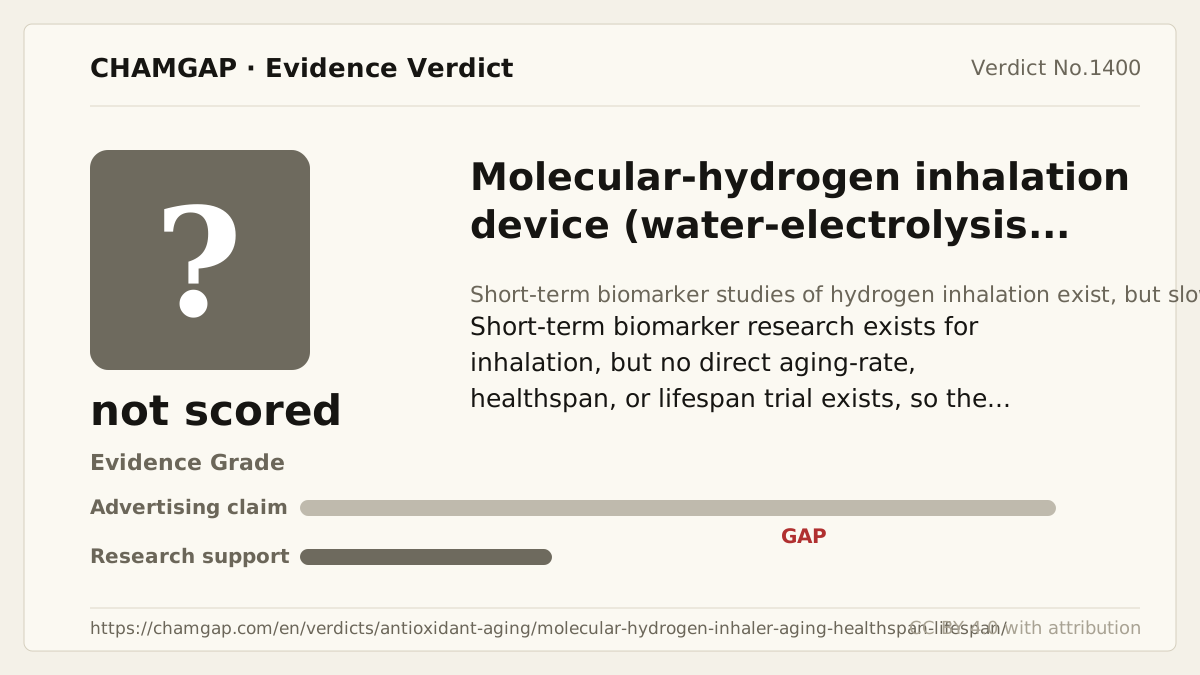
[Chamgap] Molecular-hydrogen inhaler x slower aging and longer healthspan and lifespan — Evidence Grade ?. 4 cited sources checked. Source: https://chamgap.com/en/verdicts/antioxidant-aging/molecular-hydrogen-inhaler-aging-healthspan-lifespan/ · CC BY 4.0CC BY 4.0 — free to use with attribution; do not distort grades, numbers, or verdict meaning.
What this document does and does not do
Chamgap is an information source. It reports what research has and has not confirmed; it does not tell readers what to take or buy. That decision belongs to readers and, when needed, medical or legal professionals. This verdict reflects literature available up to the search date and may change as new research appears. Nothing here is medical advice.