
Low-dose oral methylene blue,
does it really help with Slower human aging and longer healthspan and lifespan through improved mitochondrial efficiency?
research showsLow-dose oral methylene blue is rated ? for human anti-aging and lifespan claims. Cellular, animal, mitochondrial-mechanism, and single-dose cognitive and brain-imaging studies exist, but no oral intervention trial was identified that directly evaluated human aging rate, healthspan, lifespan, or mortality. Absence of human intervention literature for the claimed outcomes is not evidence of ineffectiveness, so the score is null.
ads claimMarketing directly converts a mitochondrial electron-shuttle mechanism and cellular antioxidant findings into human rejuvenation, longer healthspan, and longer life. That extrapolation lacks direct human outcomes.
Useful facts when choosing a product
- Methylene blue is a redox drug used medically for specific indications. Online low-dose wellness products are not approved supplements for human anti-aging or lifespan extension.
- Methylene blue can inhibit monoamine oxidase A, creating a potentially life-threatening serotonin-syndrome risk with SSRIs, SNRIs, tricyclic antidepressants, and other serotonergic drugs. A case involving an oral methylene-blue product has been reported.
- Glucose-6-phosphate dehydrogenase deficiency creates a hemolysis risk, and use in pregnancy also requires caution. Blue-green urine, stool, or skin discoloration, gastrointestinal symptoms, and dizziness may occur; industrial dye is not an ingestible product.
- This compound is distinct from the other anti-aging ? verdicts on rapamycin, 625, epitalon, 1420, and TMG, 1460. Cognitive or brain-imaging research must not be reassigned to aging-rate, healthspan, or lifespan outcomes.
Chamgap Semantic Classification Code
Candidate index · review held
UNK.oral-methylene-blue.oral.slower-human-aging-and-longer-healthspan-and-lifespan-through-improved-mitochondrial-efficiency.reduce.placeboUnknown > oral methylene blue > Oral > Slower human aging and longer healthspan and lifespan through improved mitochondrial efficiency > Reduction claim > Placebo
An automated migration candidate, not an issued permanent code; exact claim scope remains under review. This machine-generated migration candidate helps retrieval but is not a permanent assignment. The original verdict ID and URL remain authoritative.
What the research actually shows
The 2021 review by Xue and colleagues summarized mitochondrial electron shuttling, oxidative stress, neurodegeneration, skin aging, progeria-related cellular findings, and other preclinical work. It did not identify a human intervention trial of aging rate, healthspan, or lifespan. Rodriguez and colleagues in 2016 administered a single oral low dose to 26 healthy adults and evaluated functional MRI, attention, and short-term memory, reporting memory-retrieval and brain-activation signals. That was an acute cognitive and imaging experiment, not an aging or survival trial.
Why this is classified as ?
Cellular, animal, and mechanistic research and a single-dose human cognitive and brain-imaging study exist, but no intervention trial directly assessing human aging rate, healthspan, lifespan, or mortality was identified. Boundary rule ④ for absence of human intervention evidence on the claimed outcomes gives ? with a null score.
Counterpoint. A future long-term randomized trial would need prespecified measures of biological aging together with function, disease burden, and mortality before this claim could be graded.
Rejudgment record. New verdict — Applied boundary rule ④ because cellular, animal, mitochondrial-mechanism, and single-dose human cognitive and brain-imaging research exists, but no intervention trial directly evaluating human aging rate, healthspan, lifespan, or mortality was identified
Sub-claim grades by effect
This ingredient is marketed for several effects. A single overall grade blends strong and weak claims together, so each effect is graded separately here. The overall grade reflects the strongest disconfirming or core claim.
| Effect (sub-claim) | Grade | Basis |
|---|---|---|
| Slower human aging rate | ? | No human intervention trial directly evaluating this outcome was identified. |
| Longer human healthspan | ? | No methylene-blue intervention literature has longitudinally measured function and disease burden as healthspan. |
| Longer human lifespan | ? | No intervention trial evaluating human survival time or mortality was identified. |
Cross-check — AI research and Codex final gate
Evidence Table
| Study | Design | Sample | Funding | Endpoint | Result | Weight |
|---|---|---|---|---|---|---|
| Xue H et al. 2021 | Narrative review of anti-aging mechanisms and preclinical methylene-blue research | Cellular, animal, and disease-specific literature; zero human lifespan intervention trials | Supported in part by United States NIH funding | Mitochondria, oxidative stress, neurodegeneration, skin aging, and progeria | The review summarized preclinical promise but provided no human aging-rate, healthspan, or lifespan outcome. | Key evidence-gap assessment |
| Rodriguez P et al. 2016 | Single-dose randomized double-blind placebo-controlled functional-MRI trial in healthy adults | 26 healthy adults | Academic and public research support as reported by the article | Attention, short-term memory, memory retrieval, and functional-MRI brain activation | Single-dose cognitive and brain-activation signals were reported, but aging rate, healthspan, and lifespan were not measured. | Confirms outcome mismatch in human research |
| Zuschlag ZD et al. 2018 | Oral case report and systematic literature review of methylene-blue-induced serotonin syndrome | Fifty unique literature cases plus one new case involving an oral product | Academic case report and literature review | Serotonin syndrome | Severe cases associated with serotonergic drugs and a possible case involving an oral methylene-blue product were reported. | Key safety evidence |
Receipt — 3 References
All 3 cited sources were verified for existence at the original page (as of 2026-07-23).
Final verification and publication gate: Codex · Evidence date: 2026-07-23 · Corrections: none
Cite this verdict
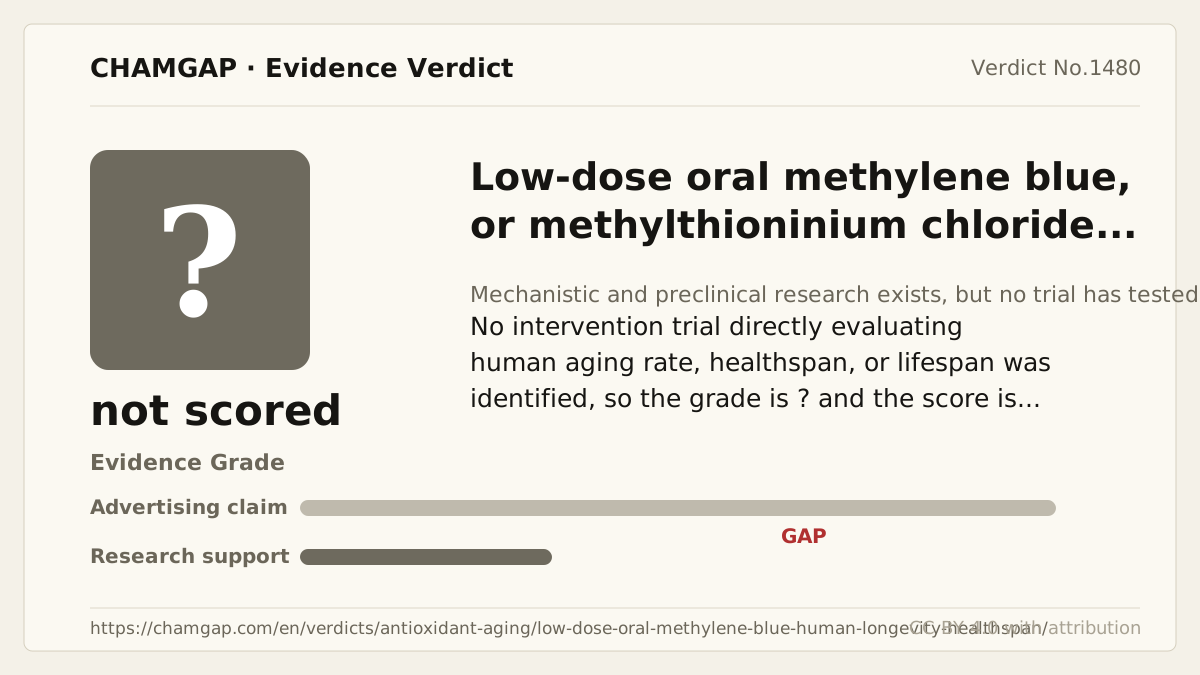
[Chamgap] Low-dose oral methylene blue x slower human aging and longer healthspan and lifespan — Evidence Grade ?. 3 cited sources checked. Source: https://chamgap.com/en/verdicts/antioxidant-aging/low-dose-oral-methylene-blue-human-longevity-healthspan/ · CC BY 4.0CC BY 4.0 — free to use with attribution; do not distort grades, numbers, or verdict meaning.
What this document does and does not do
Chamgap is an information source. It reports what research has and has not confirmed; it does not tell readers what to take or buy. That decision belongs to readers and, when needed, medical or legal professionals. This verdict reflects literature available up to the search date and may change as new research appears. Nothing here is medical advice.