
Hyperbaric oxygen therapy,
does it really help with Reversal of biological aging through improved telomere and immunosenescence markers?
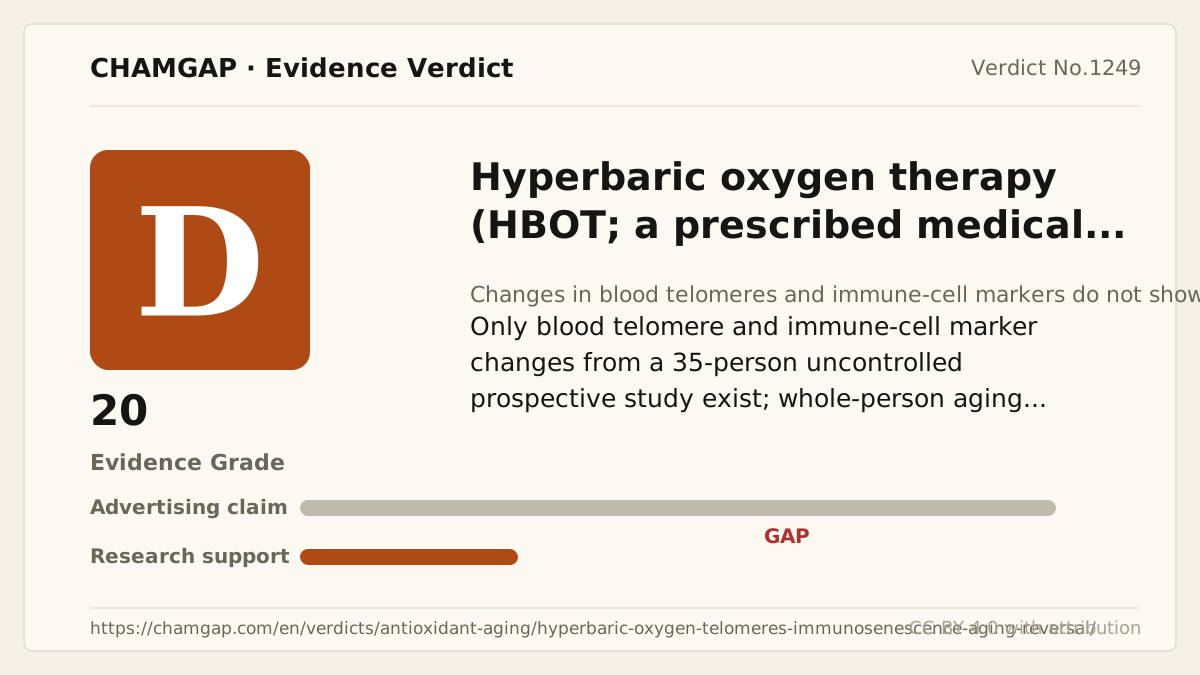
research showsThe claim that hyperbaric oxygen therapy reverses biological aging by improving telomere and immunosenescence markers is rated D. The pivotal human study was a single-arm prospective trial in which 35 healthy adults aged 64 years or older received 60 HBOT sessions, without a control group or randomization. Telomere length increased by more than 20% in selected peripheral-blood immune-cell subsets and senescent T-cell proportions decreased, but repeated biomarker changes do not establish rejuvenation of whole-person biological age. A systematic review of 17 studies combined human, animal, and cell work using heterogeneous hyperbaric and normobaric hyperoxia protocols and did not establish clinical aging reversal or longer life. Disease-free survival, function, and mortality benefits remain unproven, giving D.
ads claimMarketing can present 20% longer telomeres, removal of senescent cells, and reversal of biological age as interchangeable. A relative signal in blood cell subsets is not whole-organism rejuvenation, disease reduction, healthspan, or longer life, and medical-device clearance does not recognize this anti-aging efficacy.
Useful facts when choosing a product
- The pivotal protocol was a prescribed medical-chamber procedure using 100% oxygen at 2 ATA for 90 minutes with five-minute air breaks every 20 minutes, five days per week, for 60 sessions.
- HBOT requires medical prescribing, supervision, and fire-prevention infrastructure; low-pressure wellness chambers and oxygen rooms are not equivalent to the research protocol.
- Middle-ear or sinus barotrauma, ear pain, transient myopia, pulmonary oxygen toxicity, and rare oxygen-induced seizures can occur, with greater risk when pressure equalization is difficult.
- High-concentration oxygen increases fire risk, and flammable materials, electronics, incompatible clothing, or unsupervised use can cause serious injury.
Chamgap Semantic Classification Code
Candidate index · review held
P.hyperbaric-oxygen-therapy.procedural.reversal-of-biological-aging-through-improved-telomere-and-immunosenescence-markers.improve.noneProcedures, devices and tests > Hyperbaric oxygen therapy > Procedural > Reversal of biological aging through improved telomere and immunosenescence markers > Improvement claim > No intervention
An automated migration candidate, not an issued permanent code; exact claim scope remains under review. This machine-generated migration candidate helps retrieval but is not a permanent assignment. The original verdict ID and URL remain authoritative.
What the research actually shows
Hachmo and colleagues gave 35 independently living healthy adults aged 64 years or older 100% oxygen at 2 ATA for 90 minutes, five days per week, for 60 sessions. Peripheral blood mononuclear cells were measured at baseline, after 30 and 60 sessions, and one to two weeks later; telomere length increased in several immune-cell subsets and senescent helper and cytotoxic T-cell proportions fell. There was no concurrent untreated control and no clinical function, disease, or survival outcome. Tessema and colleagues selected 17 of 1,699 records, mixing nine human, two cell-line, three rat, and three insect or worm studies with randomized, nonrandomized, and uncontrolled designs. Some biomarkers were favorable, but mitochondrial DNA damage and nuclear cataract were also reported depending on dose and duration, so the review does not establish clinical rejuvenation.
Why this is classified as D (20)
Direct evidence consists of one single-arm before-after study in 35 healthy older adults without control, randomization, or blinding. Telomere length and immunosenescence in blood-cell subsets are surrogates, and whole-person biological age, function, disease-free survival, and mortality were not assessed. The systematic review qualitatively combined 17 heterogeneous studies across species and protocols, so uncontrolled low-quality human evidence gives D with 20 points.
Counterpoint. An independent controlled randomized trial could change the verdict if it prespecified not only telomere and immune markers but also a validated pace of aging, frailty, cognition, mobility, and disease-free survival. Current evidence does not justify a costly medical-risk procedure for aging reversal.
Rejudgment record. Cross-check applied — Applied D because a single-arm prospective study of 60 HBOT sessions in 35 healthy older adults changed selected blood-cell telomere and immunosenescence markers but had no control, randomization, or blinding and did not assess whole-person aging pace, function, disease-free survival, or mortality, while the systematic review mixed heterogeneous human, animal, and cell studies
Sub-claim grades by effect
This ingredient is marketed for several effects. A single overall grade blends strong and weak claims together, so each effect is graded separately here. The overall grade reflects the strongest disconfirming or core claim.
| Effect (sub-claim) | Grade | Basis |
|---|---|---|
| Longer telomeres in immune cells | D | An uncontrolled before-after study in 35 participants reported increases in several subsets but could not exclude natural variability or shifts in cell composition. |
| Improved immunosenescence markers | D | Lower senescent T-cell proportions were reported, but this was a blood surrogate without a control or independent replication. |
| Directly verified reversal of biological aging and extension of human lifespan | ? | Changes in telomere and immune markers do not directly test reversal of human aging or lifespan extension, and no human efficacy trial directly evaluating that claim exists, so this is literature absence (?). |
Cross-check — AI research and Codex final gate
Evidence Table
| Study | Design | Sample | Funding | Endpoint | Result | Weight |
|---|---|---|---|---|---|---|
| Hachmo Y et al. 2020 | Single-arm uncontrolled prospective before-after trial | 35 healthy adults aged 64 years or older | Three authors worked for AVIV Scientific and the senior author was a shareholder | Telomere length and senescent-cell proportions by immune-cell subset | After 60 sessions, telomeres increased by more than 20% in several subsets and senescent T-cell proportions fell, but there was no concurrent control. | Only pivotal direct trial; uncontrolled with commercial conflicts |
| Tessema B et al. 2022 | Systematic review of hyperoxia and aging biomarkers | 17 studies: 9 human, 2 cell-line, 3 rat, and 3 insect or worm | Supported by CellAir Construction GmbH with article charges funded by InterHypox e.V.; one author co-owned CellAir | Aging-related transcription factors, telomeres, cellular senescence, oxidative markers, and toxicity | Some biomarkers were favorable, but species, protocols, and designs were heterogeneous and clinical aging reversal or longevity was not established. | Supporting synthesis with low directness |
Receipt — 2 References
All 2 cited sources were verified for existence at the original page (as of 2026-07-24).
Final verification and publication gate: Codex · Evidence date: 2026-07-24 · Corrections: none
Cite this verdict
[Chamgap] Hyperbaric oxygen therapy x reversal of biological aging through telomere and immunosenescence markers — Evidence Grade D·20. 2 cited sources checked. Source: https://chamgap.com/en/verdicts/antioxidant-aging/hyperbaric-oxygen-telomeres-immunosenescence-aging-reversal/ · CC BY 4.0CC BY 4.0 — free to use with attribution; do not distort grades, numbers, or verdict meaning.
What this document does and does not do
Chamgap is an information source. It reports what research has and has not confirmed; it does not tell readers what to take or buy. That decision belongs to readers and, when needed, medical or legal professionals. This verdict reflects literature available up to the search date and may change as new research appears. Nothing here is medical advice.