
Topical 5% to 8% glycolic acid,
does it really help with Improvement of rough texture and fine lines in photoaged skin with topical 5% to 8% use?
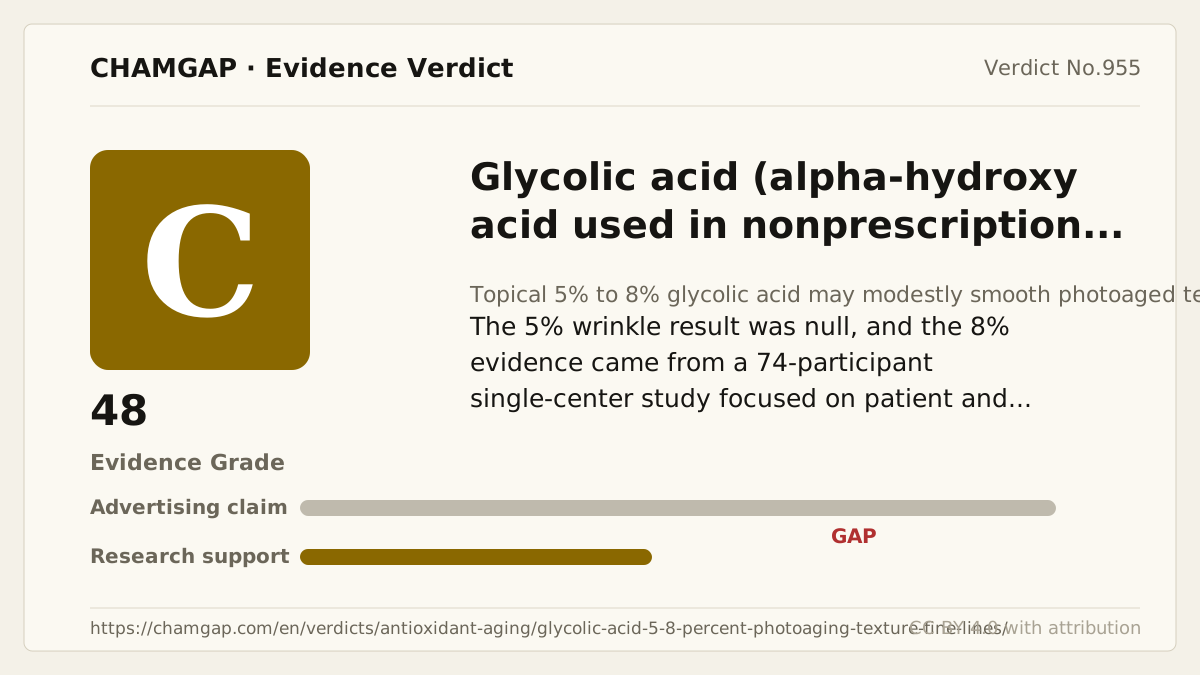
research showsTopical 5% to 8% glycolic acid is rated C because it produces a small improvement in rough texture and only limited evidence for fine lines in photoaged skin. In a 75-participant, three-month trial of 5% cream, overall texture and discoloration improved significantly versus placebo, but wrinkle reduction was not significant. In a 74-participant, 22-week trial of 8% cream, at least one-grade facial improvement in overall photodamage occurred in 76% versus 40% with vehicle, but this was a single-center study focused on patient and physician cosmetic ratings. These limitations yield C with 48 points.
ads claimPromotion can expand smoother stratum corneum and lighting- or hydration-sensitive fine-line changes into collagen regeneration, dermal remodeling, and reversal of photoaging. Evidence for finished products containing 5% to 8% glycolic acid best matches small superficial changes in texture and appearance scores.
Useful facts when choosing a product
- The effect and irritation of cosmetic glycolic acid depend on final pH, neutralization, vehicle, and application frequency as well as labeled concentration, so products marked 5% or 8% are not necessarily interchangeable.
- Initial use on a small area at low frequency is prudent, and persistent stinging, dryness, redness, or peeling calls for less frequent use or discontinuation.
- Concurrent retinoids, other acidic exfoliants, benzoyl peroxide, or physical scrubs can increase irritation and should be adjusted to skin tolerance and product directions.
- Alpha-hydroxy acids can increase ultraviolet sensitivity during use and for about one week afterward, so broad-spectrum sunscreen, protective clothing, and limiting intense sun exposure are appropriate.
Chamgap Semantic Classification Code
Candidate index · review held
M.glycolic-acid.topical-skin.rough-texture-and-fine-lines-in-photoaged-skin-with-topical-5-percent-to-8-percent-use.improve.placeboMedicinal interventions > Glycolic acid > Topical skin > rough texture and fine lines in photoaged skin with topical 5% to 8% use > Improvement claim > Placebo
An automated migration candidate, not an issued permanent code; exact claim scope remains under review. This machine-generated migration candidate helps retrieval but is not a permanent assignment. The original verdict ID and URL remain authoritative.
What the research actually shows
Thibault 1998 assigned 75 volunteers with facial and neck photoaging to daily 5% unneutralized glycolic acid or vehicle cream for three months. Assessment by the same physician found significant improvement in texture and discoloration but no significant wrinkle reduction. Stiller 1996 assigned 74 women aged 40 to 70 years to twice-daily 8% glycolic acid, 8% L-lactic acid, or vehicle on the face and forearms for 22 weeks; at least one-grade facial improvement in overall photodamage occurred in 76% versus 40% with vehicle. Concentration alone does not determine performance; pH, neutralization, vehicle, application frequency, and ultraviolet exposure affect both efficacy and irritation.
Why this is classified as C (48)
C. A 75-participant 5% trial significantly improved texture but not wrinkles, while a 74-participant single-center 8% trial found at least one-grade overall photodamage improvement in 76% versus 40%. Randomized human signals are real, but small old studies focused on patient and physician cosmetic ratings, superficial effects, and pH and formulation variation yield C with 48 points. Irritation, erythema, and photosensitivity remain separate safety issues.
Counterpoint. Consistent low-strength use may modestly improve the appearance and feel of rough, dull photoaged skin. Evidence is not strong enough to substitute for sun protection or established treatment of deep wrinkles, laxity, or prevention of further photodamage.
Rejudgment record. Cross-check revision — Accepted significant texture improvement in the 75-participant 5% trial while noting that wrinkle reduction was not significant, and treated the 8% evidence as a 74-participant single-center trial focused on patient and physician cosmetic ratings, supporting mid-C
Sub-claim grades by effect
This ingredient is marketed for several effects. A single overall grade blends strong and weak claims together, so each effect is graded separately here. The overall grade reflects the strongest disconfirming or core claim.
| Effect (sub-claim) | Grade | Basis |
|---|---|---|
| Improvement of rough photoaged texture with 5% to 8% glycolic acid | C | Small trials of 5% and 8% products modestly improved texture or overall appearance, mainly by clinical ratings. |
| Improvement of photoaged fine lines with 5% to 8% glycolic acid | C | Wrinkle reduction was nonsignificant in the 5% trial, and the 8% trial did not establish a strong objective fine-line effect in isolation. |
| Deep dermal rebuilding and durable reversal of photoaging with 5% to 8% glycolic acid | ? | No human efficacy trial of these low-strength finished products directly establishes deep dermal rebuilding or durable reversal after discontinuation. |
Cross-check — AI research and Codex final gate
Evidence Table
| Study | Design | Sample | Funding | Endpoint | Result | Weight |
|---|---|---|---|---|---|---|
| Thibault PK et al. 1998 | Three-month double-blind randomized placebo-controlled clinical trial | 75 volunteers with facial and neck photoaging | Funding not stated in the PubMed abstract | Clinical assessment of general texture, discoloration, and wrinkles by the same physician | The 5% cream significantly improved texture and discoloration, but wrinkle reduction was not significant. | Key small trial directly matching the claimed concentration |
| Stiller MJ et al. 1996 | Twenty-two-week double-blind randomized vehicle-controlled clinical trial | 74 women aged 40 to 70 years with photodamage | Funding not stated in the PubMed abstract | Patient and physician ratings of overall photodamage and seven appearance components | At least one-grade facial improvement in overall photodamage occurred in 76% with 8% glycolic acid and 40% with vehicle. | Direct low-strength trial with subjective cosmetic outcomes |
| Kaidbey K et al. 2003 | Randomized double-blind placebo-controlled human photosensitivity study | 29 White adults | United States FDA research context | Ultraviolet erythema and cellular-damage sensitivity after four weeks of 10% glycolic acid and recovery after stopping | Glycolic acid increased ultraviolet sensitivity and cellular damage, with differences resolving about one week after discontinuation. | Key safety evidence kept separate from efficacy |
Receipt — 3 References
All 3 cited sources were verified for existence at the original page (as of 2026-07-21).
Final verification and publication gate: Codex · Evidence date: 2026-07-21 · Corrections: none
Cite this verdict
[Chamgap] Topical 5% to 8% glycolic acid x improved rough texture and fine lines in photoaged skin — Evidence Grade C·48. 3 cited sources checked. Source: https://chamgap.com/en/verdicts/antioxidant-aging/glycolic-acid-5-8-percent-photoaging-texture-fine-lines/ · CC BY 4.0CC BY 4.0 — free to use with attribution; do not distort grades, numbers, or verdict meaning.
What this document does and does not do
Chamgap is an information source. It reports what research has and has not confirmed; it does not tell readers what to take or buy. That decision belongs to readers and, when needed, medical or legal professionals. This verdict reflects literature available up to the search date and may change as new research appears. Nothing here is medical advice.