
Astaxanthin,
does it really help with Slower biological aging, longer healthspan, and longer lifespan in healthy adults?
research showsAstaxanthin for slower biological aging or longer healthspan and lifespan in healthy adults is rated ?. A meta-analysis of 12 randomized trials and 380 participants evaluated oxidative-stress and inflammation biomarkers such as malondialdehyde, interleukin-6, C-reactive protein, and tumor necrosis factor alpha. Some biomarkers improved modestly, while C-reactive protein and tumor necrosis factor alpha did not. An eight-week randomized trial in 42 healthy young women measured DNA-damage, immune, and inflammatory markers rather than aging rate, multisystem function, disease-free survival, or mortality. No human efficacy study directly testing the three claimed endpoints was identified, so no numeric score is invented and the score remains null. Short-term tolerability is separate from lifespan efficacy, and high-dose, long-term, purity, and product-variation data remain limited.
ads claimMarketing can turn potent antioxidant activity, lower inflammation, or cellular protection into anti-aging, age reversal, and lifespan extension. Radical-scavenging activity and biomarker changes are not human survival outcomes, and studies on eye, skin, or exercise outcomes belong to different efficacy axes and do not establish this longevity claim.
Useful facts when choosing a product
- Commercial astaxanthin is often extracted from Haematococcus pluvialis microalgae, but synthetic and other sources also exist, and isomer composition, purity, and content can vary across products.
- Human studies have used doses ranging from a few milligrams to several tens of milligrams daily, but no dose or duration is established for slowing aging or extending lifespan.
- Short-term studies generally report good tolerability, but higher intake can cause changes in stool color, orange skin discoloration, or gastrointestinal discomfort, and long-term high-dose safety data are limited.
- An antioxidant supplement does not replace smoking cessation, exercise, sleep, vaccination, or management of blood pressure, lipids, and diabetes, which are linked directly to health and mortality outcomes.
Chamgap Semantic Classification Code
Candidate index · review held
S.astaxanthin.UNK.slower-biological-aging-longer-healthspan-and-longer-lifespan.reduce.placeboSupplements and nutraceuticals > Astaxanthin > Unknown > Slower biological aging, longer healthspan, and longer lifespan > Reduction claim > Placebo
An automated migration candidate, not an issued permanent code; exact claim scope remains under review. This machine-generated migration candidate helps retrieval but is not a permanent assignment. The original verdict ID and URL remain authoritative.
What the research actually shows
Ma and colleagues searched literature from 1970 through April 2021 and included 12 placebo-controlled randomized trials with 380 participants. Astaxanthin lowered blood malondialdehyde with an SMD of -0.95 and interleukin-6 by 0.70 pg/mL in participants with type 2 diabetes, while effects on C-reactive protein and tumor necrosis factor alpha were not significant. Trials were few, mixed healthy and clinical populations, and assessed oxidative or inflammatory markers. Park and colleagues randomized 42 women, average age 21.5, to 0, 2, or 8 mg daily for eight weeks and reported selected changes in DNA-damage, C-reactive protein, and immune markers, with inconsistent lipid-peroxidation and cytokine findings. Neither source measured a validated biological aging rate, multidimensional healthspan, disease-free survival, or overall survival.
Why this is classified as ?
The meta-analysis of 12 trials and 380 participants and a randomized trial in 42 healthy women assessed oxidative-stress, inflammation, immune, and related biomarkers. No human efficacy literature directly assessing biological aging rate, multidimensional healthspan, or lifespan was identified, so the grade is ? and the score is null. Positive surrogate findings on another efficacy axis are not a numeric basis for a longevity verdict.
Counterpoint. Antioxidant and inflammatory biomarker research can help design hypotheses and doses for long-term aging trials. The verdict would require a long randomized trial in healthy adults with prespecified validated biological-aging, multisystem function, disease-free survival, or mortality outcomes.
Rejudgment record. New verdict — Applied ? with a null score because the meta-analysis of 12 randomized trials and 380 participants and the randomized trial in 42 healthy women assessed only oxidative-stress, inflammatory, immune, and related surrogates, and no human efficacy literature directly testing biological aging rate, healthspan, or lifespan in healthy adults was identified
Sub-claim grades by effect
This ingredient is marketed for several effects. A single overall grade blends strong and weak claims together, so each effect is graded separately here. The overall grade reflects the strongest disconfirming or core claim.
| Effect (sub-claim) | Grade | Basis |
|---|---|---|
| Slower biological aging rate in healthy adults | ? | Identified human trials assessed oxidative, inflammatory, and immune surrogates rather than a validated biological aging rate. |
| Longer healthspan in healthy adults | ? | No human efficacy literature using multidimensional function and disease-free survival as a healthspan outcome was identified. |
| Longer lifespan in healthy adults | ? | No human astaxanthin supplementation trial assessing overall survival or mortality was identified. |
Cross-check — AI research and Codex final gate
Evidence Table
| Study | Design | Sample | Funding | Endpoint | Result | Weight |
|---|---|---|---|---|---|---|
| Ma B et al. 2022 | Systematic review and meta-analysis of placebo-controlled randomized trials | 12 randomized trials and 380 participants | Indexed as non-United States government research support; no commercial funding was stated in the abstract | Malondialdehyde, antioxidant enzymes, isoprostane, interleukin-6, C-reactive protein, and tumor necrosis factor alpha | Malondialdehyde and selected interleukin-6 outcomes improved, while C-reactive protein and tumor necrosis factor alpha did not; healthspan, lifespan, and aging rate were not assessed. | Human surrogate synthesis; indirect for the longevity claim |
| Park JS et al. 2010 | Eight-week randomized double-blind placebo-controlled dose study | 42 healthy young women; 14 each assigned to 0, 2, or 8 mg | Supported by the Washington Technology Center and La Haye Labs | DNA damage, lipid peroxidation, C-reactive protein, cytokine, and immune-response markers | Selected DNA-damage, C-reactive protein, and immune markers changed, but lipid peroxidation and several cytokines were inconsistent, and aging or survival was not measured. | Human trial in healthy participants, but limited to short-term biomarkers |
Receipt — 2 References
All 2 cited sources were verified for existence at the original page (as of 2026-07-22).
Final verification and publication gate: Codex · Evidence date: 2026-07-22 · Corrections: none
Cite this verdict
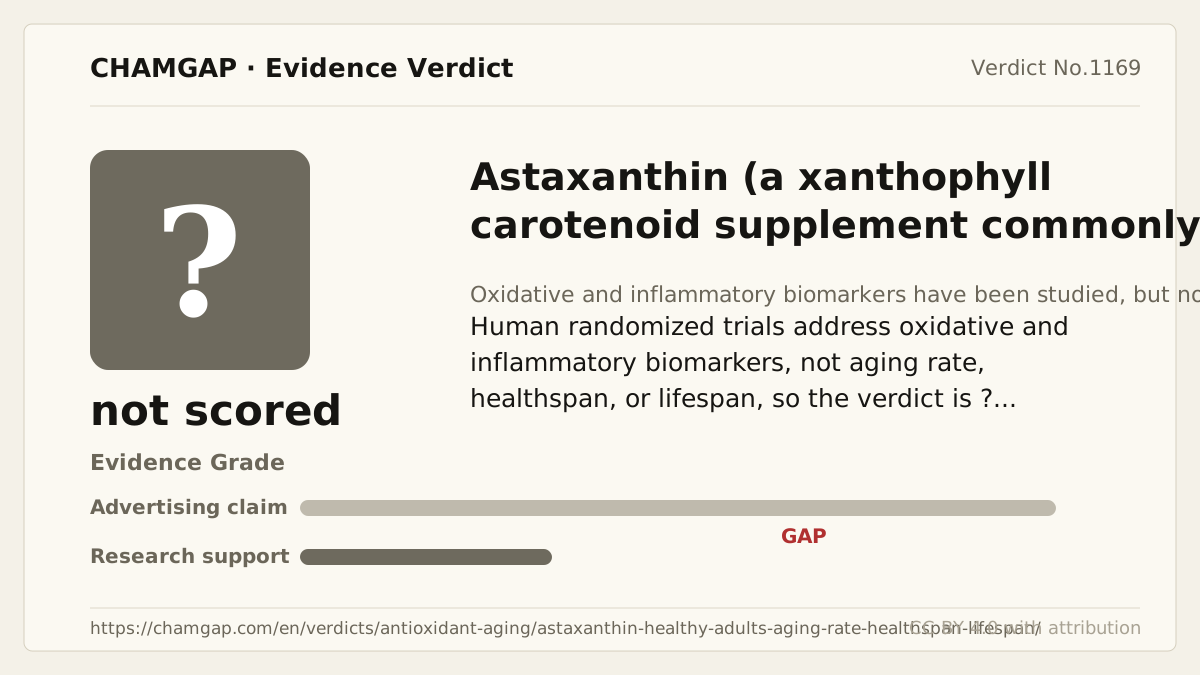
[Chamgap] Astaxanthin x slower biological aging and longer healthspan and lifespan in healthy adults — Evidence Grade ?. 2 cited sources checked. Source: https://chamgap.com/en/verdicts/antioxidant-aging/astaxanthin-healthy-adults-aging-rate-healthspan-lifespan/ · CC BY 4.0CC BY 4.0 — free to use with attribution; do not distort grades, numbers, or verdict meaning.
What this document does and does not do
Chamgap is an information source. It reports what research has and has not confirmed; it does not tell readers what to take or buy. That decision belongs to readers and, when needed, medical or legal professionals. This verdict reflects literature available up to the search date and may change as new research appears. Nothing here is medical advice.