
Intravaginal boric acid,
does it really help with Treatment of recurrent non-albicans vulvovaginal candidiasis?
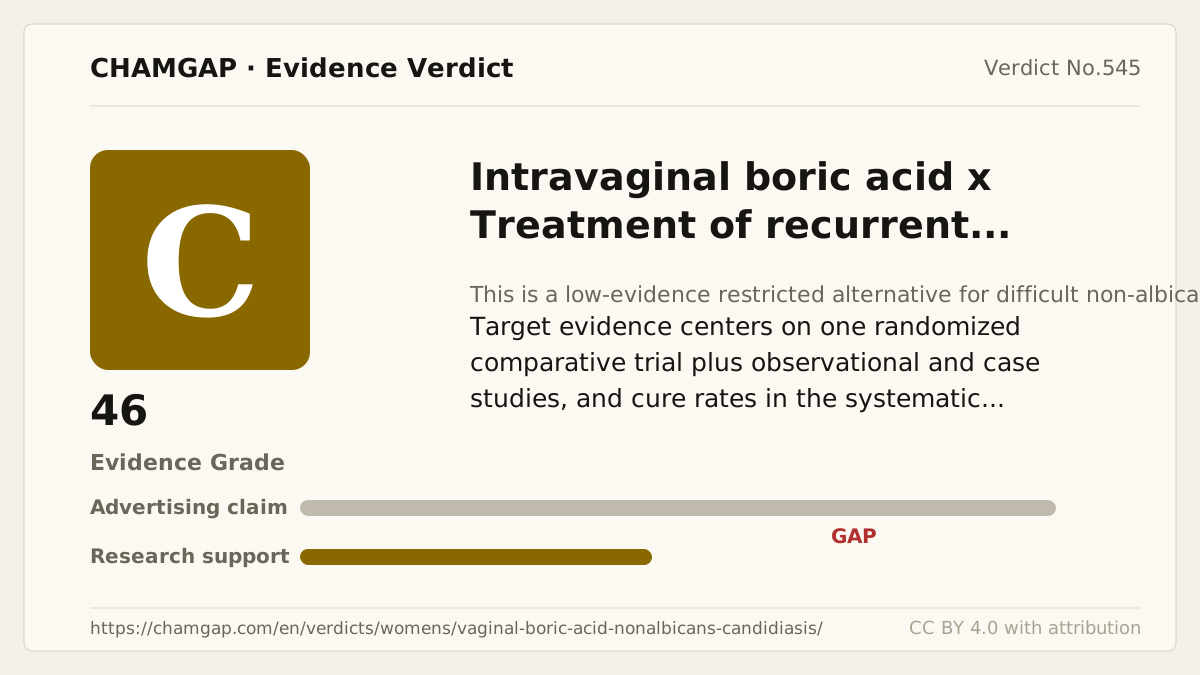
research showsThere is a limited treatment signal for use as an alternative in non-albicans vulvovaginal candidiasis, especially Candida glabrata, after standard azole treatment fails. Evidence relies mainly on a few comparative, observational, and case studies, with limited symptom and recurrence data, so the grade is C and use should follow diagnosis and clinician guidance.
ads claimClaims about natural detoxification, universal vaginal pH balancing, or prevention of every episode of itching, odor, or recurrence are unsupported. Species identification and exclusion of other causes come first.
Useful facts when choosing a product
- No South Korean medicinal product specifically approved as a 600 mg intravaginal boric acid treatment for vulvovaginal candidiasis was identified; imported and compounded products do not share a single approval or quality standard.
- For recurrent non-albicans disease, CDC describes a 600 mg gelatin capsule intravaginally once daily for three weeks, while IDSA lists a 14-day alternative regimen for Candida glabrata.
- It is for intravaginal use only and must never be swallowed. It should be avoided during pregnancy and stored away from children and animals.
Chamgap Semantic Classification Code
Candidate index · review held
UNK.intravaginal-boric-acid.vaginal.treatment-of-recurrent-non-albicans-vulvovaginal-candidiasis.treat.UNKUnknown > Intravaginal boric acid > Vaginal > Treatment of recurrent non-albicans vulvovaginal candidiasis > Treatment or remission claim > Unknown
An automated migration candidate, not an issued permanent code; exact claim scope remains under review. This machine-generated migration candidate helps retrieval but is not a permanent assignment. The original verdict ID and URL remain authoritative.
What the research actually shows
In an open randomized trial among women with diabetes, the mycological cure rate for Candida glabrata was 63.6% with 600 mg intravaginally for 14 days versus 28.6% with single-dose fluconazole (p=0.01), but symptom improvement was similar and long-term recurrence was not evaluated. Only two of 14 studies in the systematic review were randomized trials, and cure rates ranged from 40% to 100%.
Why this is classified as C (46)
The comparative mycological signal is recognized, but few trials, reliance on observational and case evidence, and missing symptom and long-term recurrence data support C. Strong CDC and IDSA recommendations are based on low-quality evidence and provide clinical context rather than stronger trial evidence.
Counterpoint. Oral toxicity and pregnancy concerns are separate from the efficacy grade but are central to any real-world use decision.
Rejudgment record. Adjusted by final editorial verdict — Few comparative trials, predominantly observational and case evidence, and limited symptom and long-term recurrence data
Sub-claim grades by effect
This ingredient is marketed for several effects. A single overall grade blends strong and weak claims together, so each effect is graded separately here. The overall grade reflects the strongest disconfirming or core claim.
| Effect (sub-claim) | Grade | Basis |
|---|---|---|
| Treatment of recurrent or azole-refractory non-albicans vulvovaginal candidiasis | C | Comparative trials are few, observational and case evidence predominates, and symptom and long-term recurrence data are limited. |
| First-line self-treatment of routine Candida albicans infection | C | Older comparative evidence exists, but it does not establish boric acid over standardized azole therapy as first-line self-treatment. |
| Long-term prevention or maintenance therapy against recurrence | C | Maintenance is used in practice, but controlled evidence defining dose, duration, and long-term safety is insufficient. |
Cross-check — AI research and Codex final gate
Evidence Table
| Study | Design | Sample | Funding | Endpoint | Result | Weight |
|---|---|---|---|---|---|---|
| Ray et al. 2007 | Open-label block-randomized comparative trial | 112 | Academic study; no commercial funding reported in the abstract | Mycological cure at day 15, particularly for Candida glabrata | Fourteen days of 600 mg intravaginal boric acid achieved 74% overall mycological cure versus 51% with single-dose fluconazole, with a larger difference in Candida glabrata. | Moderate weight for direct species-targeted evidence, limited by open design and a diabetic population |
| Sobel et al. 2003 | Two retrospective chart reviews from a university vaginitis clinic | 141 | Academic clinical data | Clinical and mycological success | Intravaginal boric acid 600 mg for two to three weeks produced clinical and mycological success in approximately 64% to 71%. | Low-to-moderate weight as targeted real-world evidence without randomization |
| Iavazzo et al. 2011 | Systematic review of clinical evidence for boric acid in vulvovaginal candidiasis | 4 | Academic literature review | Clinical and mycological cure and adverse events | Reported cure ranged from 40% to 100%; the authors considered it an option in recurrent or chronic disease while calling for better trials. | Moderate weight for coverage, downgraded for low-quality primary evidence |
| CDC 2021 STI Treatment Guidelines | Evidence-based clinical practice guideline | United States Centers for Disease Control and Prevention | Clinical and mycological eradication in recurrent non-albicans disease | After recurrence following a non-fluconazole azole, it describes 600 mg intravaginally once daily for three weeks and summarizes eradication at about 70%. | Authoritative for scope and regimen, but not a substitute for trial evidence | |
| Mittelstaedt et al. 2021 | Narrative review of intravaginal boric acid safety | 1,100 | Academic author group | Local and systemic toxicity, pregnancy exposure, and long-term use | Common intravaginal doses appeared generally tolerated in nonpregnant adults with normal renal function, while pregnancy and long-term data were sparse and oral toxicity and unregulated products remained concerns. | Key safety evidence evaluated separately from efficacy |
Receipt — 6 References
All 6 cited sources were verified for existence at the original page (as of 2026-07-18).
Final verification and publication gate: Codex · Evidence date: 2026-07-18 · Corrections: none
Cite this verdict
[Chamgap] Does vaginal boric acid treat recurrent non-albicans candidiasis? — Evidence Grade C·46. 6 cited sources checked. Source: https://chamgap.com/en/verdicts/womens/vaginal-boric-acid-nonalbicans-candidiasis/ · CC BY 4.0CC BY 4.0 — free to use with attribution; do not distort grades, numbers, or verdict meaning.
What this document does and does not do
Chamgap is an information source. It reports what research has and has not confirmed; it does not tell readers what to take or buy. That decision belongs to readers and, when needed, medical or legal professionals. This verdict reflects literature available up to the search date and may change as new research appears. Nothing here is medical advice.