
Motherwort,
does it really help with Irregular menstruation, menstrual pain, and postpartum uterine recovery?
research showsNo RCT of a standardized motherwort product exists, but one human study tested standalone oral capsules without reporting constituent amounts. In the 324-person three-arm study, menstrual-pain VAS changed from 7.12 to 5.27 in the motherwort arm versus 7.25 to 7.08 with placebo. Extract weight, extraction ratio, leonurine standardization, and blinding were unreported, and all 108 placebo participants were classified as ineffective, reducing credibility. Postpartum evidence concerns injections and oxytocin combinations and cannot be attributed to oral products.
ads claimPhrases such as 'women's ginseng,' 'restores blocked periods,' 'cleans the uterus,' and 'supports lochia and postpartum recovery' convert traditional indications and hospital injection data into efficacy claims for oral teas, pills, and juices. L. japonicus also must be distinguished from the European motherwort species L. cardiaca.
Useful facts when choosing a product
- In Korea, motherwort is available as dried herb, tea, juice, pills, and mixed products, often without standardized leonurine content.
- The menstrual-pain trial reported one capsule three times daily but did not provide extract weight or marker-compound content.
- The motherwort injections in Chinese postpartum studies are sterile medical formulations and are not equivalent to oral teas or pills.
- Leonurus japonicus and Leonurus cardiaca are different species, so the botanical name on the label matters.
- Uterotonic pharmacology and pregnancy-safety concerns support avoiding self-use during pregnancy and discussing postpartum use with a clinician.
Chamgap Semantic Classification Code
Candidate index · review held
UNK.motherwort.UNK.irregular-menstruation-menstrual-pain-and-postpartum-uterine-recovery.assess.MULTIUnknown > Motherwort > Unknown > Irregular menstruation, menstrual pain, and postpartum uterine recovery > Association or change assessment > Multiple: primary unresolved
An automated migration candidate, not an issued permanent code; exact claim scope remains under review. This machine-generated migration candidate helps retrieval but is not a permanent assignment. The original verdict ID and URL remain authoritative.
What the research actually shows
The 2016 Sun trial randomized 324 patients with primary dysmenorrhea to Resina Draconis, L. japonicus, or placebo, with 108 per arm. Motherwort capsules were taken three times daily for one week per month beginning three days before expected menstruation for three months; VAS and symptoms improved versus placebo, but the paper merely stated that allocation was random and did not report blinding, concealment, registration, or active-ingredient dose. The 2019 Yu meta-analysis included 37 RCTs and 7,887 women receiving motherwort injection around vaginal delivery, all at moderate-to-high risk of bias. Motherwort injection alone did not significantly differ from oxytocin for hemorrhage outcomes, while add-on treatment improved selected measures with low-to-very-low certainty. These were not oral-herb trials of postpartum uterine recovery.
Why this is classified as C (40)
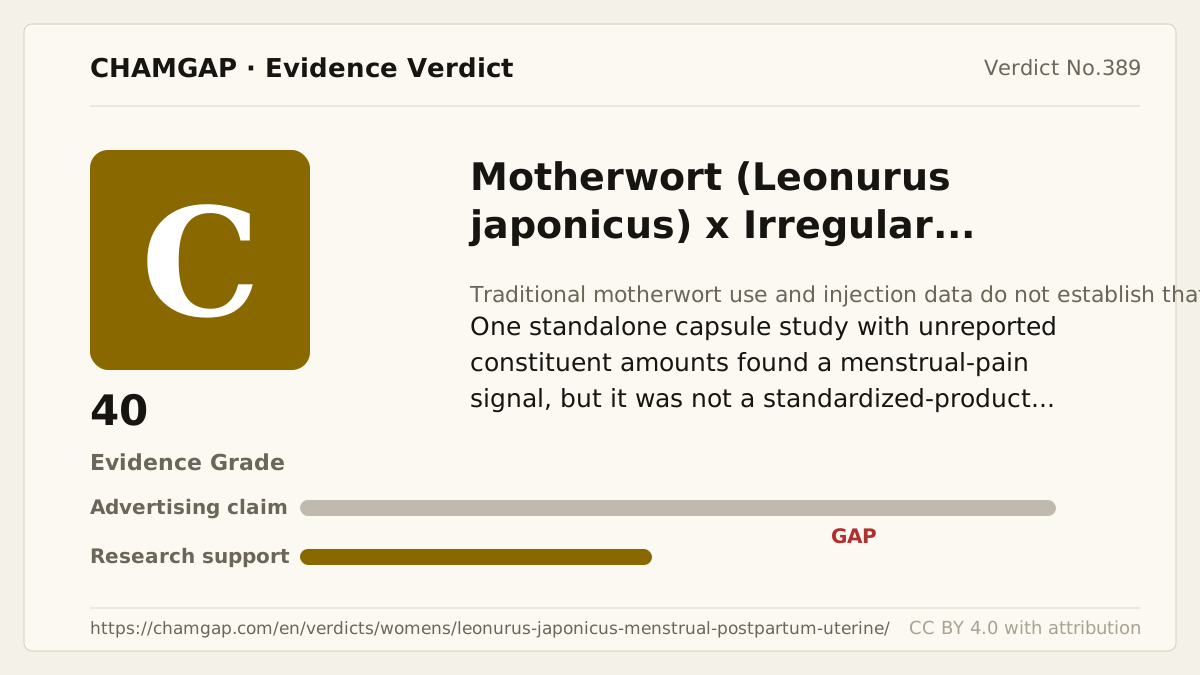
One standalone oral capsule study with unreported constituent amounts supplies a C signal, but extract weight, extraction ratio, leonurine standardization, and blinding were not reported; all 108 placebo participants were classified as ineffective; and no independent replication exists. Irregular menstruation lacks a direct trial, and the Yu evidence uses injections and combinations. The overall grade is C with 40 points.
Counterpoint. A standardized motherwort extract requires an independently replicated, preregistered, double-blind menstrual-pain trial with an active comparator. Oral postpartum recovery requires separate trials of uterine size, lochia, bleeding, and adverse effects.
Rejudgment record. Reassessment (cross-check reflected) — Accepted one standalone oral capsule study with unreported constituent amounts while applying unreported blinding, extract weight, extraction ratio, and leonurine standardization, the implausible placebo pattern, absent replication, and postpartum injection mismatch
Sub-claim grades by effect
This ingredient is marketed for several effects. A single overall grade blends strong and weak claims together, so each effect is graded separately here. The overall grade reflects the strongest disconfirming or core claim.
| Effect (sub-claim) | Grade | Basis |
|---|---|---|
| Menstrual-pain relief | C | One standalone study; constituent amount unreported |
| Improvement of irregular menstruation | ? | No standalone trial |
| Postpartum uterine recovery | ? | Injection and oxytocin-combination evidence cannot be attributed to oral use |
Cross-check — AI research and Codex final gate
Evidence Table
| Study | Design | Sample | Funding | Endpoint | Result | Weight |
|---|---|---|---|---|---|---|
| Sun L, Wang J. 2016 | Three-arm randomized controlled study, three months; not an RCT of a standardized product | 108 | Unknown; no conflict declared | Primary-dysmenorrhea VAS and subjective symptoms | VAS changed from 7.12 to 5.27 with motherwort and from 7.25 to 7.08 with placebo; extract weight, extraction ratio, leonurine standardization, and blinding were unreported, and all 108 placebo participants were classified as ineffective. | Key, low confidence |
| Yu J et al. 2019 | Systematic review and meta-analysis of randomized injection evidence | 7,887 | Chinese evidence-based medicine institutions | Blood loss, postpartum hemorrhage, and adverse events after vaginal delivery | Injection alone was null versus oxytocin on key outcomes; add-on treatment was positive on selected measures, but all trials had moderate-to-high bias and certainty was low to very low. | Formulation and scope-setting |
| Miao LL et al. 2019 | Comprehensive pharmacology, phytochemistry, and clinical-application review | Academic review | Gynecologic traditional use, constituents, pharmacology, and clinical applications | Summarized traditional use and multiple formulations for menstrual and postpartum conditions but did not establish efficacy of a standardized standalone oral product. | Background |
Receipt — 3 References
All 3 cited sources were verified for existence at the original page (as of 2026-07-16).
Final verification and publication gate: Codex · Evidence date: 2026-07-16 · Corrections: none
Cite this verdict
[Chamgap] Motherwort (Leonurus japonicus) × Irregular menstruation, menstrual pain, and postpartum uterine recovery — Evidence Grade C·40. 3 cited sources checked. Source: https://chamgap.com/en/verdicts/womens/leonurus-japonicus-menstrual-postpartum-uterine/ · CC BY 4.0CC BY 4.0 — free to use with attribution; do not distort grades, numbers, or verdict meaning.
What this document does and does not do
Chamgap is an information source. It reports what research has and has not confirmed; it does not tell readers what to take or buy. That decision belongs to readers and, when needed, medical or legal professionals. This verdict reflects literature available up to the search date and may change as new research appears. Nothing here is medical advice.