
Cod fillet,
does it really help with Additional weight loss during energy restriction?
research showsThe grade is C with 54 points. In an eight-week trial of 126 adults with overweight or obesity assigned to 30% energy restriction, 150 g cod five times weekly produced 1.7 kg more loss than no seafood, P<.015. The main analysis included only 100 completers, and neither a confidence interval nor a validated threshold for cod's incremental effect was provided.
ads claimCod's low-fat protein composition is factual but does not guarantee extra weight loss. Verdict 1077 is D with 30 points for EPA/DHA capsules; this verdict concerns actual cod meals during energy restriction.
Useful facts when choosing a product
- Cod fillet was provided as 150 g three times weekly, 450 g/week, or five times weekly, 750 g/week, for eight weeks.
- Atlantic cod was studied, but farmed or wild origin, fresh or frozen state, and cooking method were not established in accessible reporting.
- The FDA monitoring-table mean for total mercury in cod is 0.111 ppm, not a direct methylmercury result for the trial fish.
- Trial-product sodium was not verified, and the result cannot be generalized to salted or dried cod.
Chamgap Semantic Classification Code
Candidate index · review held
D.cod-fillet.oral.additional-weight-loss-during-energy-restriction.assess.UNKDietary patterns and eating practices > Cod fillet > Oral > Additional weight loss during energy restriction > Association or change assessment > Unknown
An automated migration candidate, not an issued permanent code; exact claim scope remains under review. This machine-generated migration candidate helps retrieval but is not a permanent assignment. The original verdict ID and URL remain authoritative.
What the research actually shows
Adults aged 20-40 with BMI 27.5-32.5 were randomized among no seafood, cod three times weekly, and cod five times weekly, all with 30% energy restriction. The published main analysis used 100 completers. Cod was 150 g per meal for eight weeks. No public registry number was verified. AVS R048-05 was sector-aligned funding intended to create value and industrial development in seafood; this was not recast as an author's personal conflict.
Why this is classified as C (54)
The approximate effect exceeded the conventional moderate threshold, but it came from one eight-week completer analysis, giving C with 54 points.
Counterpoint. C does not erase the 1.7 kg contrast; durability, full-randomized analysis, and replication are missing.
Rejudgment record. Cross-check applied — Randomized and completer counts were separated and total-treatment response was not misapplied to cod's incremental effect
| Endpoint | P | Symptom or function itself is the target - including patient reports and performance tests |
| Replication | R1 | Single confirmatory trial |
| Independence | I2 | Decisive evidence is publicly or non-profit funded |
| Effect size | E+ | Meets the clinically important threshold |
Stored derived and displayed grades match; this is not a current recalculation or validity check (C).
Sub-claim grades by effect
This ingredient is marketed for several effects. A single overall grade blends strong and weak claims together, so each effect is graded separately here. The overall grade reflects the strongest disconfirming or core claim.
| Effect (sub-claim) | Grade | Basis |
|---|---|---|
| Adding cod five times weekly increases eight-week loss during energy restriction | C | The completer analysis found a 1.7 kg contrast. |
| Cod maintains long-term weight loss | ? | Maintenance beyond eight weeks was not measured. |
Cross-check — AI research and Codex final gate
Evidence Table
| Study | Design | Sample | Funding | Endpoint | Result | Weight |
|---|---|---|---|---|---|---|
| Ramel A et al. 2009 | Randomized parallel dietary intervention trial | 126 randomized; 100 completers in the main analysis | AVS R048-05, sector-aligned funding for seafood value creation and industrial development | Eight-week body-weight change | The five-times-weekly group lost 1.7 kg more than no seafood, P<.015; dose trend P<.001; approximate d≈0.586 using the full sample's 2.9 kg weight-change SD | Direct endpoint limited by completer analysis, small sample, and short duration |
Receipt — 2 References
All 2 cited sources were verified for existence at the original page (as of 2026-08-03).
Final verification and publication gate: Codex · Evidence date: 2026-08-03 · Corrections: none
Cite this verdict
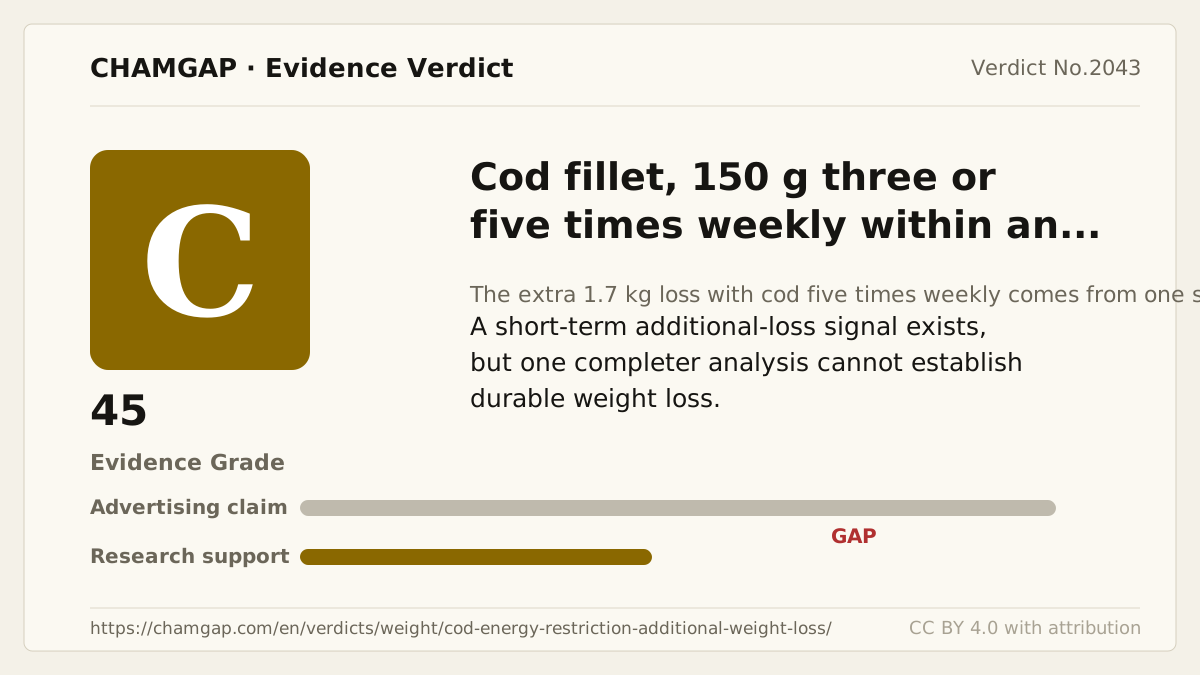
[Chamgap] Cod fillet x additional weight loss during energy restriction — Evidence Grade C·54. 2 cited sources checked. Source: https://chamgap.com/en/verdicts/weight/cod-energy-restriction-additional-weight-loss/ · CC BY 4.0CC BY 4.0 — free to use with attribution; do not distort grades, numbers, or verdict meaning.
What this document does and does not do
Chamgap is an information source. It reports what research has and has not confirmed; it does not tell readers what to take or buy. That decision belongs to readers and, when needed, medical or legal professionals. This verdict reflects literature available up to the search date and may change as new research appears. Nothing here is medical advice.