
Intensive lifestyle intervention,
does it really help with Prevention of type 2 diabetes in overweight adults with impaired glucose tolerance?
research showsIntensive lifestyle intervention is rated A because multiple independent randomized trials show fewer new diagnoses of type 2 diabetes in overweight adults with impaired glucose tolerance. In the 3,234-participant U.S. DPP, lifestyle intervention reduced incidence by 58% versus placebo over a mean 2.8 years, exceeding the 31% reduction with metformin. The Finnish DPS, China's Da Qing study, and India's IDPP-1 independently replicated prevention, and long-term follow-up retained a delay in cumulative incidence. Cardiovascular events and mortality, however, were not reduced in long-term DPP follow-up.
ads claimShort-term weight or glucose change may be expanded into a claim that diabetes is completely prevented. The tested intervention combined diet, physical activity, weight goals, counseling, and follow-up; it was not the effect of one exercise or food.
Useful facts when choosing a product
- Intensive lifestyle intervention is not a product; it combines dietary change, physical activity, weight-loss goals, behavioral counseling, and repeated follow-up.
- The DPP lifestyle goals were at least 7% weight loss and at least 150 minutes of moderate physical activity per week, supported by individual coaching and maintenance sessions.
- The evidence mainly applies to high-risk adults who are overweight or obese and have impaired glucose tolerance or prediabetes.
- Exercise can cause musculoskeletal soreness or injury, but serious hypoglycemia risk is lower than with pharmacologic intervention; intensity is adapted to comorbidity and functional status.
Chamgap Semantic Classification Code
Candidate index · review held
D.intensive-lifestyle-intervention.dietary.type-2-diabetes-with-impaired-glucose-tolerance.prevent.placeboDietary patterns and eating practices > Intensive lifestyle intervention > Dietary regimen > type 2 diabetes with impaired glucose tolerance > Occurrence-prevention claim > Placebo
An automated migration candidate, not an issued permanent code; exact claim scope remains under review. This machine-generated migration candidate helps retrieval but is not a permanent assignment. The original verdict ID and URL remain authoritative.
What the research actually shows
The DPP assigned 3,234 overweight adults with elevated fasting and postload glucose to intensive lifestyle intervention, metformin, or placebo. Over a mean 2.8 years, diabetes incidence was 4.8, 7.8, and 11.0 cases per 100 person-years, respectively; lifestyle reduced incidence by 58% and metformin by 31% versus placebo. The Finnish DPS reported a 58% risk reduction among 522 overweight adults with impaired glucose tolerance. The 577-participant cluster-randomized Da Qing study and the 531-participant IDPP-1 trial independently reproduced prevention with diet, exercise, or lifestyle programs. DPP follow-up showed a sustained delay in cumulative diabetes incidence through 21 years, while separate analyses found no reduction in cardiovascular events or all-cause and cardiovascular mortality.
Why this is classified as A (94)
In 3,234 DPP participants, lifestyle intervention reduced incident diabetes by 58% versus placebo, and independent trials in Finland, China, and India plus long-term follow-up reproduced a durable hard-endpoint effect. This is direct evidence for a multicomponent nonpharmacologic program distinct from metformin or a single postmeal walk, giving A with 94 points.
Counterpoint. Weight and glycemic improvement are intermediate pathways, but this verdict rests on fewer clinically diagnosed cases of type 2 diabetes. Cardiovascular-event and mortality benefits were not demonstrated in separate long-term analyses.
Rejudgment record. New verdict — Independent randomized trials including the DPP, Finnish DPS, Da Qing study, and IDPP-1 randomized the intensive diet, exercise, and behavioral program itself and directly reduced incident type 2 diabetes, with a sustained cumulative-incidence delay during long-term follow-up
Sub-claim grades by effect
This ingredient is marketed for several effects. A single overall grade blends strong and weak claims together, so each effect is graded separately here. The overall grade reflects the strongest disconfirming or core claim.
| Effect (sub-claim) | Grade | Basis |
|---|---|---|
| Prevention of incident type 2 diabetes | A | Independent trials including the DPP, Finnish DPS, Da Qing study, and IDPP-1 plus long-term follow-up support fewer clinical diagnoses. |
| Improvement in weight and glycemia | A | Multiple program trials show improvement consistent with an intermediate pathway to diabetes prevention. |
| Reduction in cardiovascular events and mortality | C | Twenty-one-year DPP follow-up did not demonstrate reductions in major cardiovascular events or all-cause and cardiovascular mortality. |
Cross-check — AI research and Codex final gate
Evidence Table
| Study | Design | Sample | Funding | Endpoint | Result | Weight |
|---|---|---|---|---|---|---|
| Knowler WC et al.; DPP Research Group, 2002 | Multicenter randomized controlled trial | 3,234 overweight adults with impaired glucose tolerance | Primarily funded by the U.S. NIH and public sources, with some donated medicines and materials | Incident type 2 diabetes | Over a mean 2.8 years, lifestyle reduced incidence by 58% versus placebo (95% CI 48 to 66) and metformin by 31% (95% CI 17 to 43); lifestyle was significantly more effective than metformin. | Pivotal large direct hard-endpoint trial |
| Tuomilehto J et al. 2001 | Finnish multicenter randomized controlled trial | 522 overweight adults with impaired glucose tolerance | Finnish public, academic, and foundation support | Incident type 2 diabetes | Individualized lifestyle intervention reduced the risk of incident diabetes by 58% versus control. | Independent replication trial |
| Ramachandran A et al. 2006 | Four-arm randomized controlled trial | 531 Indian adults with impaired glucose tolerance | Academic study; see the article for detailed support | Incident type 2 diabetes by WHO criteria | Three-year cumulative incidence was 55.0% with control and 39.3% with lifestyle; relative risk reduction was 28.5% (95% CI 20.5 to 37.3; p=0.018). | Independent replication in a distinct population |
Receipt — 4 References
All 4 cited sources were verified for existence at the original page (as of 2026-07-23).
Final verification and publication gate: Codex · Evidence date: 2026-07-23 · Corrections: none
Cite this verdict
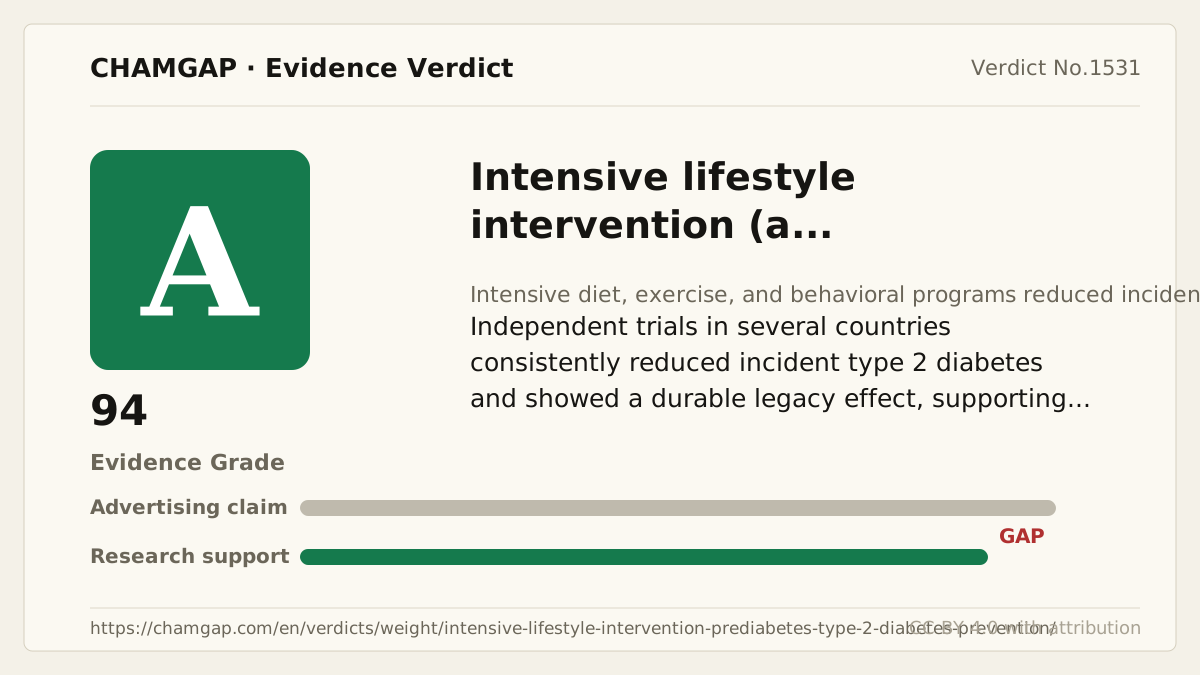
[Chamgap] Intensive lifestyle intervention x prevention of type 2 diabetes in overweight adults with impaired glucose tolerance — Evidence Grade A·94. 4 cited sources checked. Source: https://chamgap.com/en/verdicts/weight/intensive-lifestyle-intervention-prediabetes-type-2-diabetes-prevention/ · CC BY 4.0CC BY 4.0 — free to use with attribution; do not distort grades, numbers, or verdict meaning.
What this document does and does not do
Chamgap is an information source. It reports what research has and has not confirmed; it does not tell readers what to take or buy. That decision belongs to readers and, when needed, medical or legal professionals. This verdict reflects literature available up to the search date and may change as new research appears. Nothing here is medical advice.