
Cayenne powder,
does it really help with Reduced appetite and calorie intake at one meal?
research showsThe grade is C. In a 25-person acute crossover trial, 1 g reduced intake at the next meal by an average 66 kcal among 12 people who did not regularly eat spicy food, but not among regular users. Hunger, fullness, and prospective consumption did not change overall, and body weight was not measured long term.
ads claimOne gram is about 0.56 teaspoon, 0.19 tablespoon, or 4 to 5 pinches, a culinary amount. One lower-calorie meal in a subgroup is not evidence of long-term weight loss.
Useful facts when choosing a product
- The tested commercial cayenne measured 1.995 mg capsaicin per gram and 53,800 SHU.
- One gram is about 0.56 teaspoon, 0.19 tablespoon, or 4 to 5 pinches.
- Verdict 1448 is D with 31 points and concerns long-term weight outcomes from capsaicin or cayenne extracts; this verdict concerns ground pepper at one meal.
Chamgap Semantic Classification Code
Candidate index · review held
F.one-gram-of-commercial-ground-cayenne-pepper-added-to-food.oral.appetite-and-calorie-intake-at-one-meal.reduce.addonFoods and beverages > One gram of commercial ground cayenne pepper added to food > Oral > appetite and calorie intake at one meal > Reduction claim > Added intervention on common background care
An automated migration candidate, not an issued permanent code; exact claim scope remains under review. This machine-generated migration candidate helps retrieval but is not a permanent assignment. The original verdict ID and URL remain authoritative.
What the research actually shows
Ludy and Mattes 2011 used a randomized six-visit crossover design in 25 healthy lean adults: 13 regular spicy-food users and 12 nonusers. Commercial McCormick cayenne was analyzed at 1,995 micrograms capsaicin per gram and 53,800 SHU. Comparing 1 g with no pepper, ad libitum intake 270 minutes later fell by 66 kcal in nonusers but was unchanged in users. No registration or prespecified primary endpoint was identified. Funding included an NIH training grant and McCormick Science Institute, an organization established by a spice company.
Why this is classified as C (46)
Direct testing of a culinary amount is offset by a 25-person single-meal study, a nonuser-only signal, and divergent appetite outcomes, giving C with 46 points.
Counterpoint. Temperature, energy expenditure, and respiratory quotient do not substitute for appetite or body-weight outcomes.
Rejudgment record. Cross-check applied — The nonuser-only single-meal intake reduction was weighed against null overall appetite measures and null findings in regular users
| Endpoint | P | Symptom or function itself is the target - including patient reports and performance tests |
| Replication | R1 | Single confirmatory trial |
| Independence | I1 | Mixed funding sources |
| Effect size | EX | The clinical size of the effect could not be judged |
Stored derived and displayed grades match; this is not a current recalculation or validity check (C).
Sub-claim grades by effect
This ingredient is marketed for several effects. A single overall grade blends strong and weak claims together, so each effect is graded separately here. The overall grade reflects the strongest disconfirming or core claim.
| Effect (sub-claim) | Grade | Basis |
|---|---|---|
| Reduced calorie intake at one meal | C | A 66-kcal reduction appeared only in nonusers. |
| General appetite suppression | D | Overall hunger, fullness, and prospective intake did not differ. |
Cross-check — AI research and Codex final gate
Evidence Table
| Study | Design | Sample | Funding | Endpoint | Result | Weight |
|---|---|---|---|---|---|---|
| Ludy MJ and Mattes RD. 2011 | Randomized six-visit acute crossover trial | All 25 analyzed: 13 regular users and 12 nonusers | NIH grant 5T32DK076540 and McCormick Science Institute | Appetite ratings over 270 minutes and ad libitum meal energy intake | With 1 g versus none, nonuser intake fell by 66 kcal, F(1,23)=5.436, P=0.029; intake in users and overall hunger, fullness, and prospective intake were null. | Acute subgroup signal |
Receipt — 1 References
All 1 cited sources were verified for existence at the original page (as of 2026-08-03).
Final verification and publication gate: Codex · Evidence date: 2026-08-03 · Corrections: none
Cite this verdict
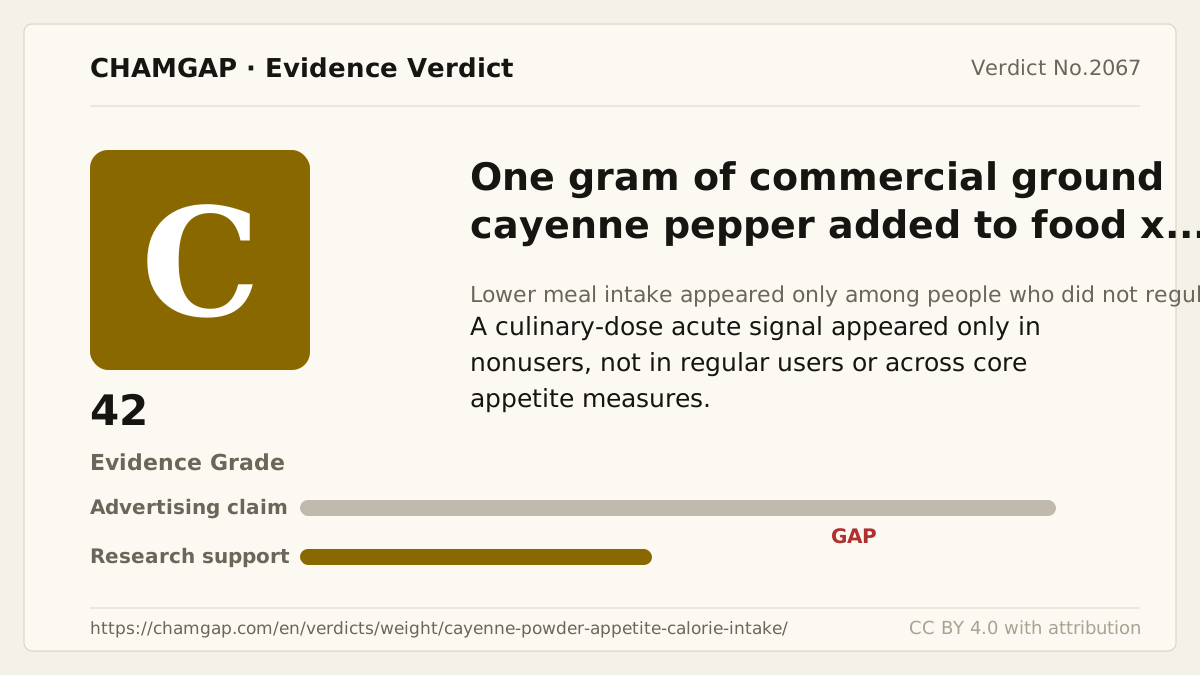
[Chamgap] Cayenne powder x appetite and calorie intake — Evidence Grade C·46. 1 cited sources checked. Source: https://chamgap.com/en/verdicts/weight/cayenne-powder-appetite-calorie-intake/ · CC BY 4.0CC BY 4.0 — free to use with attribution; do not distort grades, numbers, or verdict meaning.
What this document does and does not do
Chamgap is an information source. It reports what research has and has not confirmed; it does not tell readers what to take or buy. That decision belongs to readers and, when needed, medical or legal professionals. This verdict reflects literature available up to the search date and may change as new research appears. Nothing here is medical advice.