
Caralluma fimbriata extract,
does it really help with Weight loss through reduced appetite and waist circumference?
research showsThe weight-loss claim for Caralluma fimbriata extract is rated D. An independent placebo-controlled trial of 89 participants found no between-group benefit for weight, BMI, waist circumference, or appetite after 12 weeks. A systematic review of seven studies and quantitative synthesis of four placebo-controlled trials estimated a weight effect of about -0.04 kg, effectively zero. A -1.59-cm waist signal and borderline hunger signal are weak secondary findings and do not rescue the overall weight-loss claim. Direct null human weight outcomes support D with 35 points.
ads claimMarketing turns appetite suppression directly into fat loss and reliable weight reduction. The evidence is limited to short-term signals for hunger and waist circumference with particular extracts and does not establish sustained weight loss or clinical outcomes.
Useful facts when choosing a product
- Caralluma fimbriata is distinct from garcinia, hoodia, and cissus, and this verdict applies only to Caralluma fimbriata extract.
- Trials commonly used 1 g/day of standardized extract for 8 to 16 weeks, but retail products can differ in extraction ratio and pregnane-glycoside standardization.
- Some trials reported mild gastrointestinal effects such as nausea, abdominal discomfort, constipation, or diarrhea, while long-term safety data remain limited.
- A change in appetite does not necessarily reduce energy intake or body weight, so appetite, waist circumference, and weight must be evaluated as separate outcomes.
Chamgap Semantic Classification Code
Candidate index · review held
S.caralluma-fimbriata-extract.UNK.weight-loss-through-reduced-appetite-and-waist-circumference.reduce.placeboSupplements and nutraceuticals > Caralluma fimbriata extract > Unknown > Weight loss through reduced appetite and waist circumference > Reduction claim > Placebo
An automated migration candidate, not an issued permanent code; exact claim scope remains under review. This machine-generated migration candidate helps retrieval but is not a permanent assignment. The original verdict ID and URL remain authoritative.
What the research actually shows
Kuriyan et al. 2007 reported lower hunger and waist circumference with 1 g/day in 50 participants but no clear weight effect. Arora et al. 2015 tested 1 g/day for 12 weeks in 89 participants and found no placebo-adjusted effect on weight, BMI, waist, hip, waist-to-hip ratio, or appetite. Rao et al. 2021 reported weight maintenance and selected waist and intake signals among 83 completers using a supplied Slimaluma extract, without confirming clinical weight loss. The 2021 systematic review included seven studies and quantitatively synthesized four placebo-controlled trials, finding an effectively null weight effect of about -0.04 kg, with only a -1.59-cm waist signal and borderline hunger signal.
Why this is classified as D (35)
D. The 89-person placebo-controlled trial was null for weight, BMI, waist circumference, and appetite, and the quantitative synthesis of four placebo-controlled trials estimated a weight effect of about -0.04 kg, effectively zero. The -1.59-cm waist result and borderline hunger signal are weak and do not support the direct clinical claim of weight loss. Prioritizing null human weight outcomes yields D with 35 points; mild gastrointestinal effects and product variability remain separate safety issues.
Counterpoint. Diet quality, energy intake, physical activity, sleep, and evidence-based obesity treatment when indicated remain central; this supplement has not been shown to replace them.
Rejudgment record. Reassessment (cross-check reflected) — Prioritized the null weight, BMI, waist, and appetite findings in the 89-person placebo-controlled trial and the approximately -0.04-kg weight effect in a quantitative synthesis of four placebo-controlled trials, while recognizing only limited -1.59-cm waist and borderline hunger signals
Sub-claim grades by effect
This ingredient is marketed for several effects. A single overall grade blends strong and weak claims together, so each effect is graded separately here. The overall grade reflects the strongest disconfirming or core claim.
| Effect (sub-claim) | Grade | Basis |
|---|---|---|
| Weight loss through reduced appetite and waist circumference | D | The 89-person placebo trial and meta-analysis found null weight and BMI effects, with an effect near zero. |
| Weak signals for waist circumference and hunger | C | Only a -1.59-cm waist result and a borderline hunger signal were limited positives. |
| Attribution of an appetite mechanism to weight loss | ? | Attributing the appetite mechanism to actual weight loss is unstable. |
Cross-check — AI research and Codex final gate
Evidence Table
| Study | Design | Sample | Funding | Endpoint | Result | Weight |
|---|---|---|---|---|---|---|
| Arora E et al. 2015 | Randomized single-blind placebo-controlled trial | 89 adults with overweight or obesity | No conflict of interest declared | Weight, BMI, waist and hip circumference, and appetite at 12 weeks | One gram per day produced no significant placebo-adjusted difference in any anthropometric or appetite measure. | Key direct conflicting null trial |
| Jayawardena R et al. 2021 | Systematic review and meta-analysis | Seven intervention studies; four placebo-controlled trials in quantitative synthesis | No external funding reported | Weight, BMI, circumference, and appetite measures | The weight effect was about -0.04 kg, effectively zero, with only a -1.59-cm waist result and a borderline hunger signal. | Synthesis confirming conflict and limitations |
| Rao A et al. 2021 | Randomized double-blind placebo-controlled trial | 83 completers over 16 weeks | Gencor Pacific supplied the Slimaluma extract | Weight, waist circumference, intake, and satiety biomarkers | It reported weight maintenance and some waist and intake signals versus placebo without establishing clinically meaningful weight loss. | Limited positive trial of a specific branded extract |
Receipt — 4 References
All 4 cited sources were verified for existence at the original page (as of 2026-07-19).
Final verification and publication gate: Codex · Evidence date: 2026-07-19 · Corrections: none
Cite this verdict
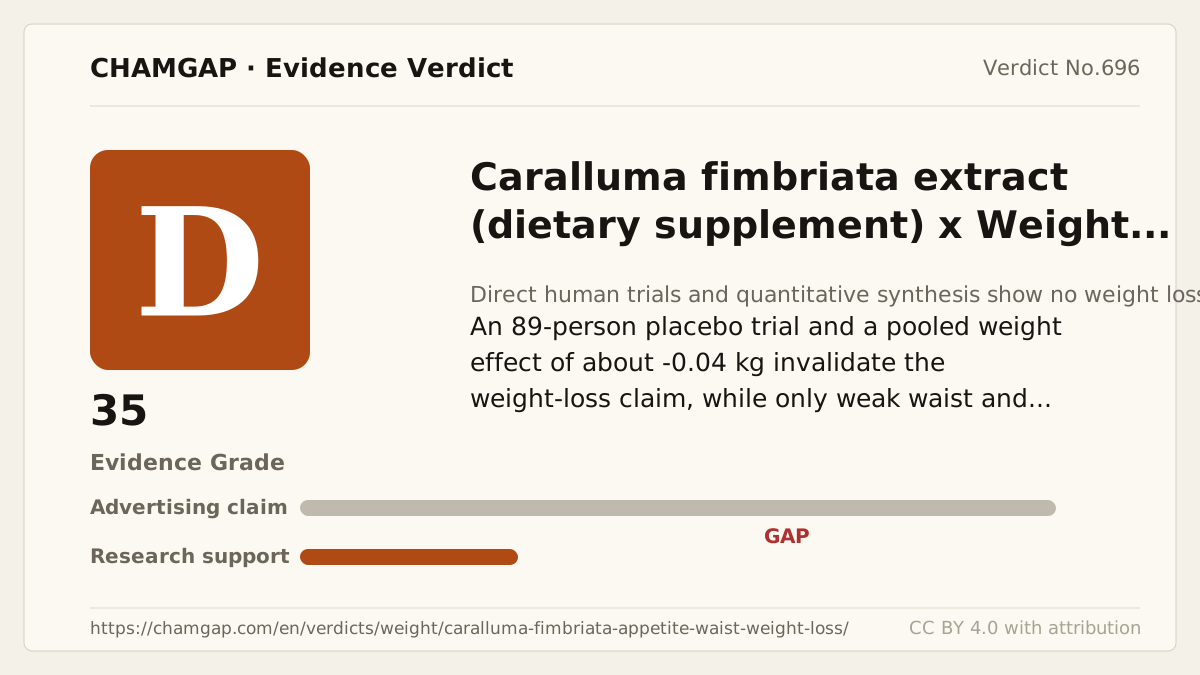
[Chamgap] Caralluma fimbriata extract x weight loss through reduced appetite and waist circumference — Evidence Grade D·35. 4 cited sources checked. Source: https://chamgap.com/en/verdicts/weight/caralluma-fimbriata-appetite-waist-weight-loss/ · CC BY 4.0CC BY 4.0 — free to use with attribution; do not distort grades, numbers, or verdict meaning.
What this document does and does not do
Chamgap is an information source. It reports what research has and has not confirmed; it does not tell readers what to take or buy. That decision belongs to readers and, when needed, medical or legal professionals. This verdict reflects literature available up to the search date and may change as new research appears. Nothing here is medical advice.