
Orlistat 120 mg,
does it really help with Clinically significant long-term weight loss when combined with diet?
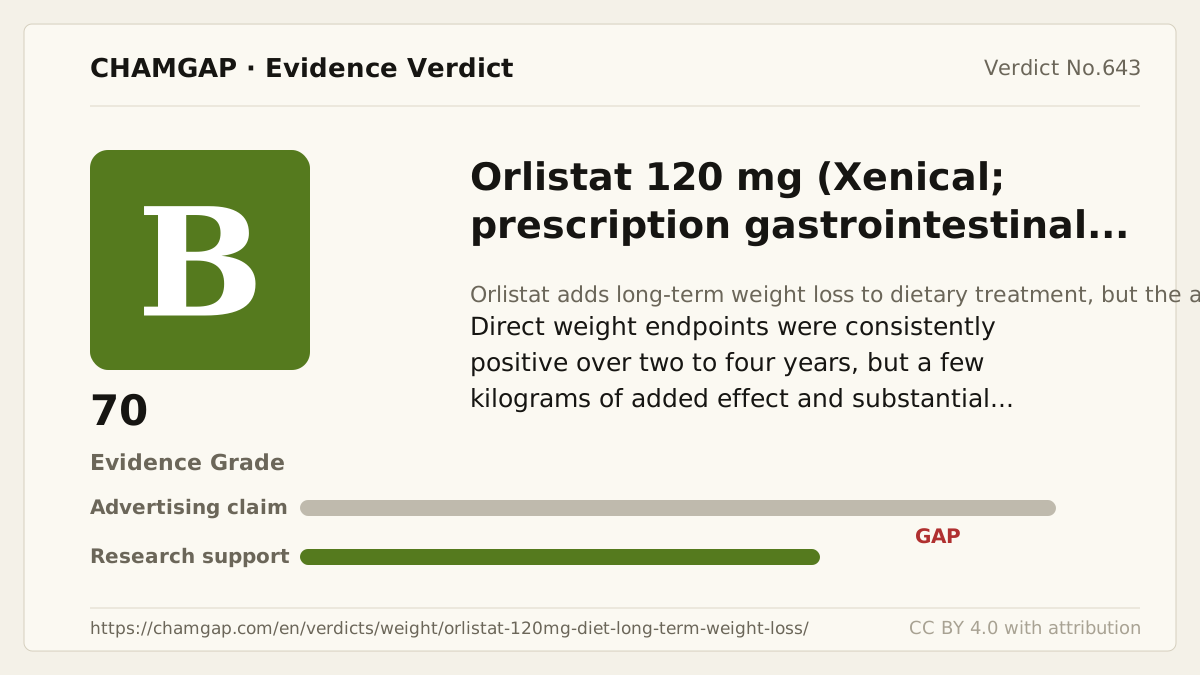
research showsOrlistat 120 mg is rated B because it adds significant long-term weight loss and maintenance benefit to a reduced-calorie diet. In a two-year trial, first-year weight loss was 10.2% with orlistat versus 6.1% with placebo, and the four-year XENDOS trial found losses of 5.8 kg versus 3.0 kg. A long-term meta-analysis estimated about 2.9 kg of additional loss over placebo, smaller than advertising can imply, while oily stool, urgency, and limited persistence constrain real-world results. It is a prescription intestinal lipase inhibitor distinct from chitosan, white-kidney-bean supplements, and GLP-1 agonists, with efficacy separated from safety.
ads claimMarketing can portray fat blocking as large durable loss without dietary control. Trials combined treatment with a reduced-calorie, lower-fat diet, the average added effect was only a few kilograms, and weight can return after treatment or dietary adherence stops.
Useful facts when choosing a product
- Orlistat 120 mg is an intestinal lipase inhibitor taken three times daily with each fat-containing main meal or within one hour afterward, while a meal without fat is generally skipped.
- Oily stool, spotting, flatus with discharge, urgency, and fecal incontinence are common and can worsen as dietary fat increases.
- Absorption of vitamins A, D, E, K, and beta-carotene can fall, so a multivitamin is taken at least two hours apart according to the product label.
- It is contraindicated in chronic malabsorption, cholestasis, and pregnancy, while rare severe liver injury, oxalate nephropathy, gallstones, and interactions with cyclosporine, warfarin, and levothyroxine require review.
Chamgap Semantic Classification Code
Candidate index · review held
M.orlistat.UNK.clinically-significant-long-term-weight-loss-when-combined-with-diet.assess.placeboMedicinal interventions > Orlistat > Unknown > Clinically significant long-term weight loss when combined with diet > Association or change assessment > Placebo
An automated migration candidate, not an issued permanent code; exact claim scope remains under review. This machine-generated migration candidate helps retrieval but is not a permanent assignment. The original verdict ID and URL remain authoritative.
What the research actually shows
The 688-participant Sjostrom 1998 trial found first-year loss of 10.2% with a reduced-calorie diet plus orlistat versus 6.1% with placebo and less regain in year two. The 3,305-participant Torgerson 2004 XENDOS trial found four-year losses of 5.8 kg versus 3.0 kg. Rucker 2007 estimated an average 2.9-kg placebo-adjusted loss, showing statistically secure but limited magnitude. Higher dietary fat increases gastrointestinal events, making diet part of both efficacy and tolerability.
Why this is classified as B (70)
In the 3,305-participant four-year XENDOS trial, weight loss was 5.8 kg versus 3.0 kg and completion was 52% versus 34%; long-term meta-analyses show about 2.6 to 2.9 kg of added loss over placebo. These replicated objective direct weight endpoints make C too low, but modest magnitude, attrition, and manufacturer involvement support B with 70 points. Oily stool, fat-soluble vitamin deficiency, and rare liver injury remain separate safety issues.
Counterpoint. If clinically meaningful loss is absent during the initial months, continued prescribing should be reassessed. Treatment does not replace lifestyle change, and lower dietary fat strongly affects adverse effects and adherence.
Rejudgment record. New verdict — Applied B because the 3,305-participant four-year XENDOS trial showed 5.8 kg versus 3.0 kg weight loss and long-term meta-analyses showed about 2.6 to 2.9 kg of added loss, while completion of 52% versus 34%, modest magnitude, and manufacturer involvement limited confidence
Sub-claim grades by effect
This ingredient is marketed for several effects. A single overall grade blends strong and weak claims together, so each effect is graded separately here. The overall grade reflects the strongest disconfirming or core claim.
| Effect (sub-claim) | Grade | Basis |
|---|---|---|
| Long-term weight loss when combined with diet | B | Two- to four-year trials and meta-analyses repeatedly improved direct weight endpoints. |
| Large weight loss implied by advertising | ? | No evidence establishes a specified large loss, and the mean placebo-adjusted benefit is about 3 kg. |
| High long-term adherence without gastrointestinal adverse effects | D | Gastrointestinal adverse effects and discontinuation were more common, and long-term completion was low. |
Cross-check — AI research and Codex final gate
Evidence Table
| Study | Design | Sample | Funding | Endpoint | Result | Weight |
|---|---|---|---|---|---|---|
| Sjöström L et al. 1998 | Two-year multicenter randomized double-blind placebo-controlled trial | 743 entered run-in; 688 were randomized | Funding not reported in the abstract; European Multicentre Orlistat Study Group | Weight loss and weight regain during the second year | First-year loss was 10.2% versus 6.1%, a 3.9-kg difference; continued orlistat halved regain in year two. | Key long-term direct randomized trial |
| Torgerson JS et al. 2004 XENDOS | Four-year prospective randomized double-blind placebo-controlled trial | 3,305 adults with obesity | Funding not reported in the PubMed abstract; two authors were affiliated with Hoffmann-La Roche | Change in body weight and incidence of type 2 diabetes | Mean four-year weight loss was 5.8 kg versus 3.0 kg, with completion rates of 52% versus 34%. | Large four-year direct trial with manufacturer involvement |
| Rucker D et al. 2007 | Systematic review and meta-analysis of long-term randomized obesity-drug trials | 16 orlistat trials with 10,631 participants | Public and academic support including the Canadian Institutes of Health Research | Weight change and adverse events over at least one year | Orlistat produced 2.9 kg of additional loss over placebo (95% CI 2.5 to 3.2). | Synthesis of magnitude and consistency |
Receipt — 4 References
Of 4 cited sources, 1 had limited original-page access (blocked or summary-only) and were verified via index/summary, marked partial; the rest were verified at the original page. As of 2026-07-19.
Final verification and publication gate: Codex · Evidence date: 2026-07-19 · Corrections: none
Cite this verdict
[Chamgap] Orlistat 120 mg x long-term weight loss with diet — Evidence Grade B·70. 4 cited sources checked. Source: https://chamgap.com/en/verdicts/weight/orlistat-120mg-diet-long-term-weight-loss/ · CC BY 4.0CC BY 4.0 — free to use with attribution; do not distort grades, numbers, or verdict meaning.
What this document does and does not do
Chamgap is an information source. It reports what research has and has not confirmed; it does not tell readers what to take or buy. That decision belongs to readers and, when needed, medical or legal professionals. This verdict reflects literature available up to the search date and may change as new research appears. Nothing here is medical advice.