
Tirzepatide,
does it really help with Reduced body weight and waist circumference in adults with obesity?
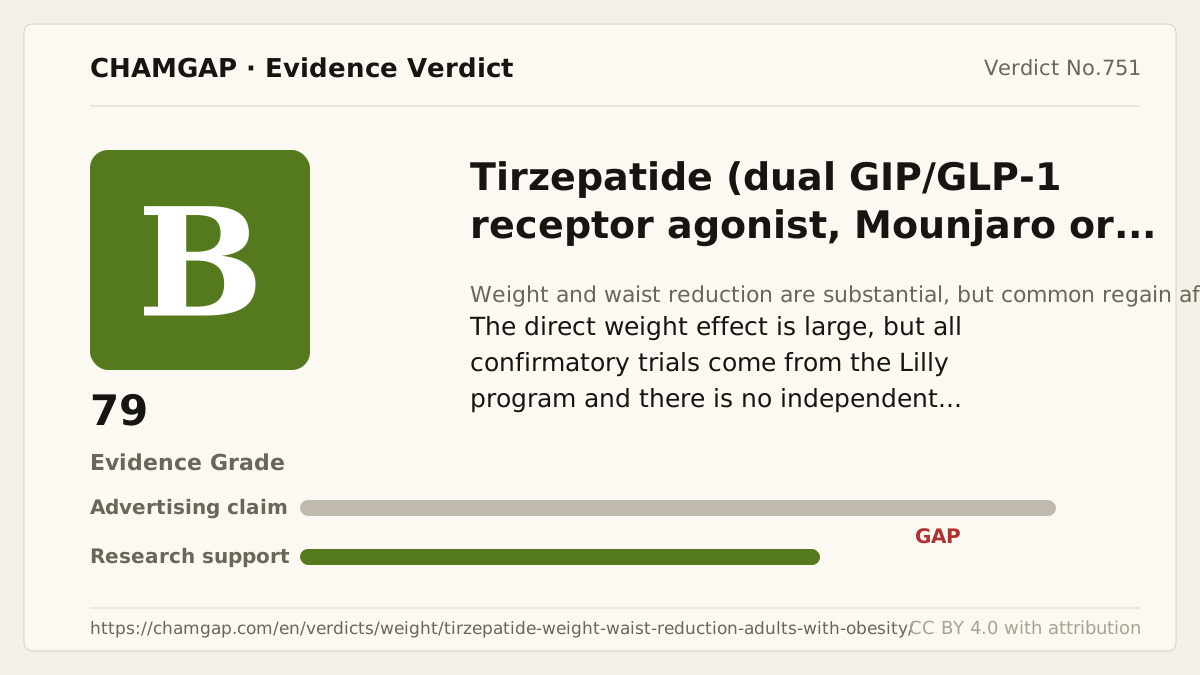
research showsB. Tirzepatide substantially reduces body weight and waist circumference in adults with obesity. In 2,539 SURMOUNT-1 participants, mean weight change at 72 weeks was -15.0% to -20.9% across doses versus -3.1% with placebo, with significant waist reduction. However, all confirmatory trials belong to the Lilly program, with no independent replication, and weight is not a hard clinical outcome such as cardiovascular events or mortality. The large effect and direct measurement support upper B with 79 points after applying consistent treatment of single-sponsor evidence.
ads claimMarketing can turn a large mean weight reduction into a permanent or universal result. Individual response varies with dose, tolerability, and adherence, regain is common after withdrawal, and lifestyle support and medical follow-up remain necessary.
Useful facts when choosing a product
- Tirzepatide is a once-weekly prescription injection acting at GIP and GLP-1 receptors; brand names and approved weight-management or diabetes indications vary by country.
- Treatment starts at a low dose and is escalated gradually to reduce gastrointestinal adverse effects such as nausea, vomiting, diarrhea, and constipation.
- Gallbladder disease has been reported and symptoms suggesting pancreatitis require prompt evaluation; unsupervised use with other incretin therapies or for weight loss during pregnancy is inappropriate.
- Lean mass can fall along with fat mass during weight reduction, so adequate protein, resistance exercise, and individualized nutritional and functional monitoring may be appropriate.
Chamgap Semantic Classification Code
Candidate index · review held
M.tirzepatide.UNK.obesity-body-weight.reduce.MULTIMedicinal interventions > Tirzepatide > Unknown > Body weight in obesity or overweight > Reduction claim > Multiple: primary unresolved
An automated migration candidate, not an issued permanent code; exact claim scope remains under review. This machine-generated migration candidate helps retrieval but is not a permanent assignment. The original verdict ID and URL remain authoritative.
What the research actually shows
SURMOUNT-1 was a 72-week double-blind placebo-controlled phase 3 trial showing dose-dependent weight loss of 15.0% to 20.9% and reduced waist circumference. SURMOUNT-4 used a 36-week open-label lead-in and then randomized 670 participants to continued treatment or placebo; weight changed by -5.5% versus +14.0% over the next 52 weeks. Together they establish efficacy and the importance of maintenance, while cardiovascular and mortality endpoints remain separate claims.
Why this is classified as B (79)
B. A 2,539-participant placebo-controlled phase 3 trial showed 15.0% to 20.9% direct weight reduction at 72 weeks with reduced waist circumference, and a randomized withdrawal trial clearly demonstrated maintenance with continued treatment and regain after withdrawal. All confirmatory trials nevertheless belong to the Lilly program, without independent replication, and weight is not a hard clinical outcome such as cardiovascular events or mortality. The large direct effect supports upper B with 79 points under consistent treatment of single-sponsor evidence.
Counterpoint. The B applies to weight and waist reduction. It does not establish cardiovascular or mortality benefit, permanent maintenance after withdrawal, or identical effects in every patient.
Rejudgment record. Reassessment (cross-check reflected) — Accepted the large direct weight and waist effects in SURMOUNT-1 and the maintenance and withdrawal findings in SURMOUNT-4, but applied upper B because all confirmatory trials belong to the Lilly program without independent replication, weight is not a cardiovascular or mortality hard outcome, and single-sponsor evidence requires consistent treatment
Sub-claim grades by effect
This ingredient is marketed for several effects. A single overall grade blends strong and weak claims together, so each effect is graded separately here. The overall grade reflects the strongest disconfirming or core claim.
| Effect (sub-claim) | Grade | Basis |
|---|---|---|
| Reduced weight and waist circumference in adults with obesity | B | Large placebo-controlled trials showed a substantial directly measured effect, but all belong to the Lilly program and lack independent replication. |
| Extension to hard outcomes such as cardiovascular events or mortality | ? | The weight and waist trials used for this verdict do not by themselves establish hard-outcome efficacy. |
| Weight regain after discontinuation | ? | A randomized withdrawal trial observed regain, but its long-term extent and individual magnitude require further evidence. |
Cross-check — AI research and Codex final gate
Evidence Table
| Study | Design | Sample | Funding | Endpoint | Result | Weight |
|---|---|---|---|---|---|---|
| Jastreboff AM et al. 2022 SURMOUNT-1 | Multicenter randomized double-blind placebo-controlled phase 3 trial | 2,539 adults with obesity or overweight | Supported by Eli Lilly with employee coauthors | Percent weight change and at least 5% loss at 72 weeks; waist circumference | Mean weight change was -15.0% to -20.9% versus -3.1% with placebo, with significant waist reduction. | Pivotal large direct efficacy evidence |
| Aronne LJ et al. 2024 SURMOUNT-4 | Phase 3 randomized double-blind withdrawal trial after an open-label lead-in | 783 in the lead-in and 670 randomized | Supported by Eli Lilly with employee coauthors | Weight change from weeks 36 to 88 and maintenance of weight loss | Weight changed by -5.5% with continued treatment versus +14.0% after switching to placebo, demonstrating substantial regain after withdrawal. | Key durability and withdrawal-regain evidence |
Receipt — 2 References
All 2 cited sources were verified for existence at the original page (as of 2026-07-20).
Final verification and publication gate: Codex · Evidence date: 2026-07-20 · Corrections: none
Cite this verdict
[Chamgap] Tirzepatide x reduced body weight and waist circumference in adults with obesity — Evidence Grade B·79. 2 cited sources checked. Source: https://chamgap.com/en/verdicts/weight/tirzepatide-weight-waist-reduction-adults-with-obesity/ · CC BY 4.0CC BY 4.0 — free to use with attribution; do not distort grades, numbers, or verdict meaning.
What this document does and does not do
Chamgap is an information source. It reports what research has and has not confirmed; it does not tell readers what to take or buy. That decision belongs to readers and, when needed, medical or legal professionals. This verdict reflects literature available up to the search date and may change as new research appears. Nothing here is medical advice.