
5-Amino-1MQ,
does it really help with Reduced body fat and increased metabolic rate through NNMT inhibition?
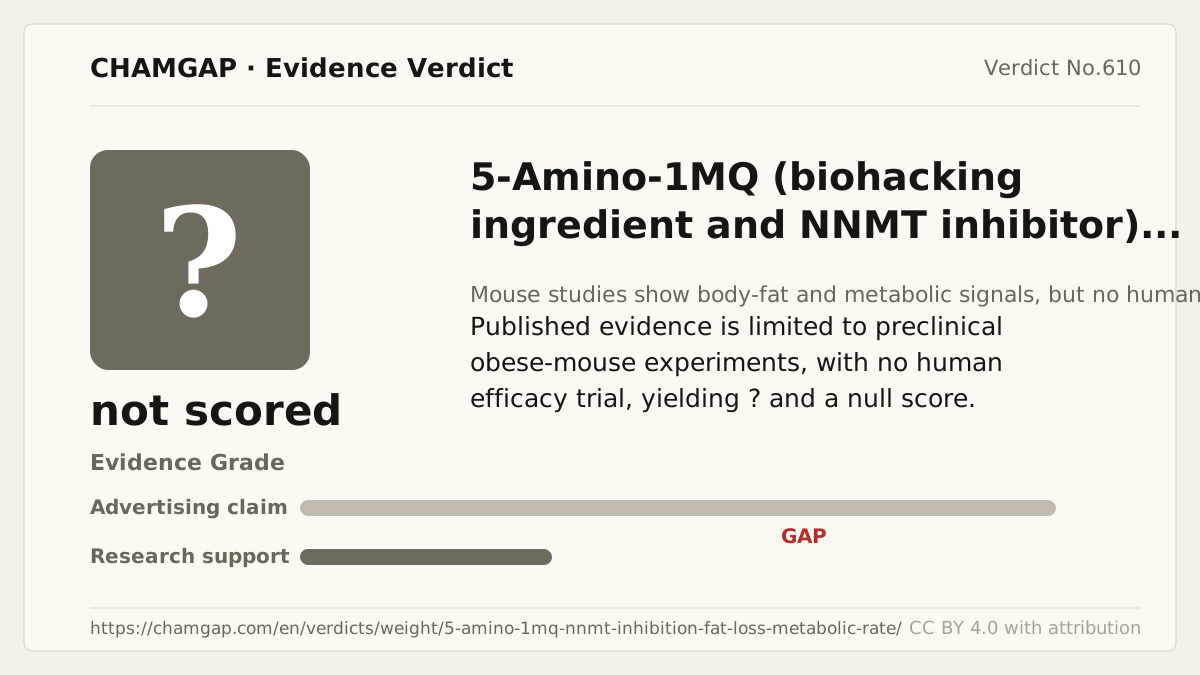
research shows5-Amino-1MQ is rated ? because no human efficacy literature evaluates fat loss or increased metabolic rate. The main published evidence consists of preclinical experiments in diet-induced obese mice, using 11- or 28-day treatment and observing reduced body-weight or fat-mass gain and improved metabolic measures. A 2021 study likewise combined the compound with a reduced-calorie diet in obese mice and was not a human weight-loss trial. Target engagement and fat change in animals cannot establish human efficacy, dosing, or safety, so the score is null.
ads claimVendors turn lower fat mass in mice into rapid human fat burning, a higher metabolic rate, and weight loss without appetite suppression. Human dose, absorption, efficacy, and long-term toxicity are not established, so such numbers are not clinically validated product information.
Useful facts when choosing a product
- 5-Amino-1MQ is a synthetic small-molecule NNMT inhibitor, not a peptide, and its evidence base is centered on cells and mice. It is not an established standardized human weight-loss medicine.
- Animal mg/kg subcutaneous doses cannot be directly converted into human dosing. No published human pharmacokinetic, dose-finding, or effective-dose data establish a safe regimen.
- Products sold online as research material or biohacking compounds may vary in identity, salt form, purity, sterility, and content. An informal commercial product cannot be assumed identical to the test compound used in an animal paper.
- Short- and long-term human adverse effects, drug interactions, and safety in pregnancy or liver and kidney disease are unknown. There is no basis for calling it safe, so self-use should be avoided and it should be treated as an unvalidated research chemical.
Chamgap Semantic Classification Code
Candidate index · review held
UNK.5-amino-1mq.UNK.body-fat-and-increased-metabolic-rate-through-nnmt-inhibition.reduce.UNKUnknown > 5-Amino-1MQ > Unknown > body fat and increased metabolic rate through NNMT inhibition > Reduction claim > Unknown
An automated migration candidate, not an issued permanent code; exact claim scope remains under review. This machine-generated migration candidate helps retrieval but is not a permanent assignment. The original verdict ID and URL remain authoritative.
What the research actually shows
The 2018 pharmacology study developed membrane-permeable NNMT inhibitors and administered 5-amino-1MQ 20 mg/kg subcutaneously three times daily to diet-induced obese mice, measuring body weight and adipose tissue over 11 days. The 2021 study switched obese mice to a reduced-calorie diet and added the inhibitor, reporting normalized body composition and metabolic improvement. The 2024 study treated obese mice for 28 days and assessed body-weight and fat-mass gain, insulin sensitivity, fatty liver, and mouse pharmacokinetics. All three were animal studies with zero human participants.
Why this is classified as ?
Fat-loss and metabolic signals have been observed only in cells and obese mice, with no published human efficacy trial. Under the requested definition, this is not D for preclinical-only evidence but ? because human efficacy literature itself is absent, with a null score. Unknown toxicity, dosing, and product variability remain separate safety warnings.
Counterpoint. Efficacy magnitude and benefit-risk cannot be judged until a preregistered randomized placebo-controlled human trial evaluates fat mass, body weight, resting energy expenditure, and adverse events. It must not replace validated obesity treatment and lifestyle care.
Rejudgment record. New verdict — Applied the no-human-efficacy-literature rule because published evidence is limited to cell and diet-induced obese-mouse studies, with no efficacy literature evaluating human fat mass, body weight, or resting energy expenditure
Sub-claim grades by effect
This ingredient is marketed for several effects. A single overall grade blends strong and weak claims together, so each effect is graded separately here. The overall grade reflects the strongest disconfirming or core claim.
| Effect (sub-claim) | Grade | Basis |
|---|---|---|
| Reduced body fat in humans | ? | No published human body-composition efficacy trial is available. |
| Increased metabolic rate in humans | ? | No human efficacy literature evaluates resting metabolic rate or energy expenditure. |
| Validated human dosing and safety | ? | Human dose-finding, pharmacokinetic, and long-term safety data are absent. |
Cross-check — AI research and Codex final gate
Evidence Table
| Study | Design | Sample | Funding | Endpoint | Result | Weight |
|---|---|---|---|---|---|---|
| Neelakantan H et al. 2018 | Cell pharmacology and preclinical diet-induced obese-mouse experiment | Small mouse groups; zero humans | United States NIH and UTMB research support; invention-related interests | Body weight, food intake, fat pads, adipocyte size, and cholesterol over 11 days | Subcutaneous 5-amino-1MQ at 20 mg/kg three times daily reduced body-weight and adiposity measures in obese mice. | Foundational preclinical evidence; not human efficacy |
| Sampson CM et al. 2021 | Preclinical reduced-calorie-diet combination experiment in diet-induced obese mice | Six to eight mice per group; zero humans | United States NIH and Department of Defense support; some authors had company ties | Body weight, fat mass, lean mass, and metabolites | A reduced-calorie diet combined with 5-amino-1MQ improved body composition and metabolic measures in obese mice. | Supporting animal evidence; not human efficacy |
| Babula JJ et al. 2024 | Preclinical pharmacodynamic and pharmacokinetic experiment in diet-induced obese mice | Mice; zero humans | United States federal research support; Ridgeline Therapeutics founder and employees participated | Body weight, fat mass, glucose metabolism, fatty liver, and mouse pharmacokinetics over 28 days | Treatment dose-dependently limited body-weight and fat-mass gain and improved metabolic and liver measures in obese mice. | Recent animal evidence; not human efficacy |
Receipt — 3 References
All 3 cited sources were verified for existence at the original page (as of 2026-07-19).
Final verification and publication gate: Codex · Evidence date: 2026-07-19 · Corrections: none
Cite this verdict
[Chamgap] 5-Amino-1MQ x NNMT inhibition for fat loss and increased metabolic rate — Evidence Grade ?. 3 cited sources checked. Source: https://chamgap.com/en/verdicts/weight/5-amino-1mq-nnmt-inhibition-fat-loss-metabolic-rate/ · CC BY 4.0CC BY 4.0 — free to use with attribution; do not distort grades, numbers, or verdict meaning.
What this document does and does not do
Chamgap is an information source. It reports what research has and has not confirmed; it does not tell readers what to take or buy. That decision belongs to readers and, when needed, medical or legal professionals. This verdict reflects literature available up to the search date and may change as new research appears. Nothing here is medical advice.