
Low-molecular-weight yeast hydrolysate,
does it really help with Appetite suppression and body-fat reduction?
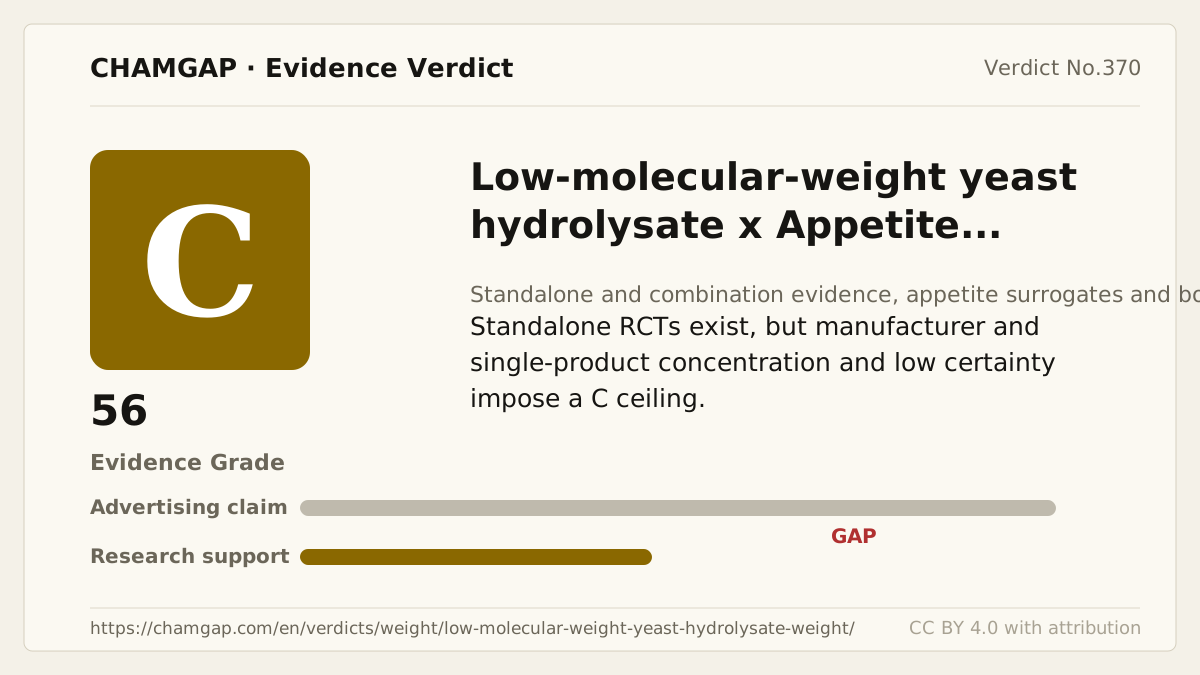
research showsStandalone human trials of yeast hydrolysate below 10 kDa do exist and report signals for lower weight and body fat at 0.5-1 g/day. The trials are small and short, however, and concentrated in the same Korean research group and the DNF-10 trademarked ingredient. A recent meta-analysis also pooled several different yeast-hydrolysate products and rated certainty as low, resulting in grade C.
ads claimAnimal mechanisms involving neuropeptide Y or serotonin, subjective hunger questions, or results from one DNF-10 product must not be converted into established appetite suppression, obesity treatment, or efficacy of every yeast extract. Regulatory functional recognition and evidence grade are also separate matters.
Useful facts when choosing a product
- Low-molecular-weight yeast hydrolysate ingredients such as DNF-10 from the Korean ingredient company Neo Cremar and related weight-management products are marketed domestically.
- Direct human trials used 0.5-1 g/day for four to ten weeks.
- Yeast hydrolysates differ by molecular-weight cutoff, peptide composition, and manufacturing process, so DNF-10 results cannot be applied to unrelated yeast extracts.
- Major adverse events were not prominent in short trials, but long-term safety, yeast allergy, and medication co-use data are inadequate.
Chamgap Semantic Classification Code
Candidate index · review held
UNK.low-molecular-weight-yeast-hydrolysate.UNK.appetite-suppression-and-body-fat-reduction.reduce.placeboUnknown > Low-molecular-weight yeast hydrolysate > Unknown > Appetite suppression and body-fat reduction > Reduction claim > Placebo
An automated migration candidate, not an issued permanent code; exact claim scope remains under review. This machine-generated migration candidate helps retrieval but is not a permanent assignment. The original verdict ID and URL remain authoritative.
What the research actually shows
A 2011 trial in 20 participants used 1 g/day of yeast hydrolysate below 10 kDa for four weeks and reported lower weight and BMI, but fat mass and waist circumference were null. A 2014 trial in 54 participants reported lower weight, fat mass, abdominal fat, and energy intake but included an ingredient-company employee. A 2017 trial in 30 participants reported weight and two-item appetite-questionnaire signals. A 2025 meta-analysis of six RCTs with 262 participants found -3.08 kg in weight and -1.93 kg in fat mass, but all studies were small and Asian and mixed branded products. Waist circumference was nonsignificant at -2.47 cm, p=0.06, and certainty was low.
Why this is classified as C (56)
Standalone RCTs and the 2025 pooled weight change of -3.08 kg justify a mid-to-high C signal. Small Asian samples, mixed branded products, manufacturer and investigator concentration, low certainty, and borderline-null waist circumference at p=0.06 prevent B, yielding C with 56 points.
Counterpoint. An independent multicenter long-term trial should reproduce body fat as the primary endpoint and test appetite through objective intake and clinically meaningful weight maintenance.
Rejudgment record. Reassessment (cross-check reflected) — Recognized small standalone RCTs but applied a C ceiling for manufacturer and trademarked-product concentration and subjective surrogates
Sub-claim grades by effect
This ingredient is marketed for several effects. A single overall grade blends strong and weak claims together, so each effect is graded separately here. The overall grade reflects the strongest disconfirming or core claim.
| Effect (sub-claim) | Grade | Basis |
|---|---|---|
| Appetite suppression | C | Energy intake, a short subjective questionnaire, and animal mechanisms |
| Body-fat reduction | C | Signals from multiple small RCTs but concentrated in a manufacturer-linked trademarked ingredient |
Cross-check — AI research and Codex final gate
Evidence Table
| Study | Design | Sample | Funding | Endpoint | Result | Weight |
|---|---|---|---|---|---|---|
| Jung et al. (2011), Journal of Food Biochemistry | Randomized double-blind placebo-controlled trial, four weeks | 20 | Ingredient and investigator interests unclear | Weight, BMI, body fat, and waist circumference | Lower weight and BMI at 1 g/day, but no significant between-group fat-mass or waist difference | Low |
| Jung et al. (2014), Nutrition | Randomized double-blind placebo-controlled trial, ten weeks | 54 | Included an author employed by Neo Cremar | Weight, body fat, abdominal computed tomography, and energy intake | Lower weight, fat mass, abdominal fat, and energy intake at 1 g/day | Moderate |
| Jung et al. (2017), Preventive Nutrition and Food Science | Randomized double-blind placebo-controlled trial, eight weeks | 30 | Ingredient-related research network | Weight, BMI, appetite questionnaire, and energy intake | Lower weight and BMI and some appetite surrogates at 0.5 g/day | Low |
| Palacios-García et al. (2025), BMC Complementary Medicine and Therapies | Systematic review and meta-analysis | 262 | Funded by Laboratorios Columbia with two employee authors | Weight, BMI, body fat, and waist circumference | Lower weight, BMI, and fat mass, but nonsignificant waist change, low certainty, and substantial heterogeneity | Moderate |
Receipt — 4 References
All 4 cited sources were verified for existence at the original page (as of 2026-07-16).
Final verification and publication gate: Codex · Evidence date: 2026-07-16 · Corrections: none
Cite this verdict
[Chamgap] Does low-molecular-weight yeast hydrolysate suppress appetite and reduce body fat? — Evidence Grade C·56. 4 cited sources checked. Source: https://chamgap.com/en/verdicts/weight/low-molecular-weight-yeast-hydrolysate-weight/ · CC BY 4.0CC BY 4.0 — free to use with attribution; do not distort grades, numbers, or verdict meaning.
What this document does and does not do
Chamgap is an information source. It reports what research has and has not confirmed; it does not tell readers what to take or buy. That decision belongs to readers and, when needed, medical or legal professionals. This verdict reflects literature available up to the search date and may change as new research appears. Nothing here is medical advice.