
Vortioxetine,
does it really help with Improved cognition, attention, and processing speed in major depressive disorder independently of antidepressant effects?
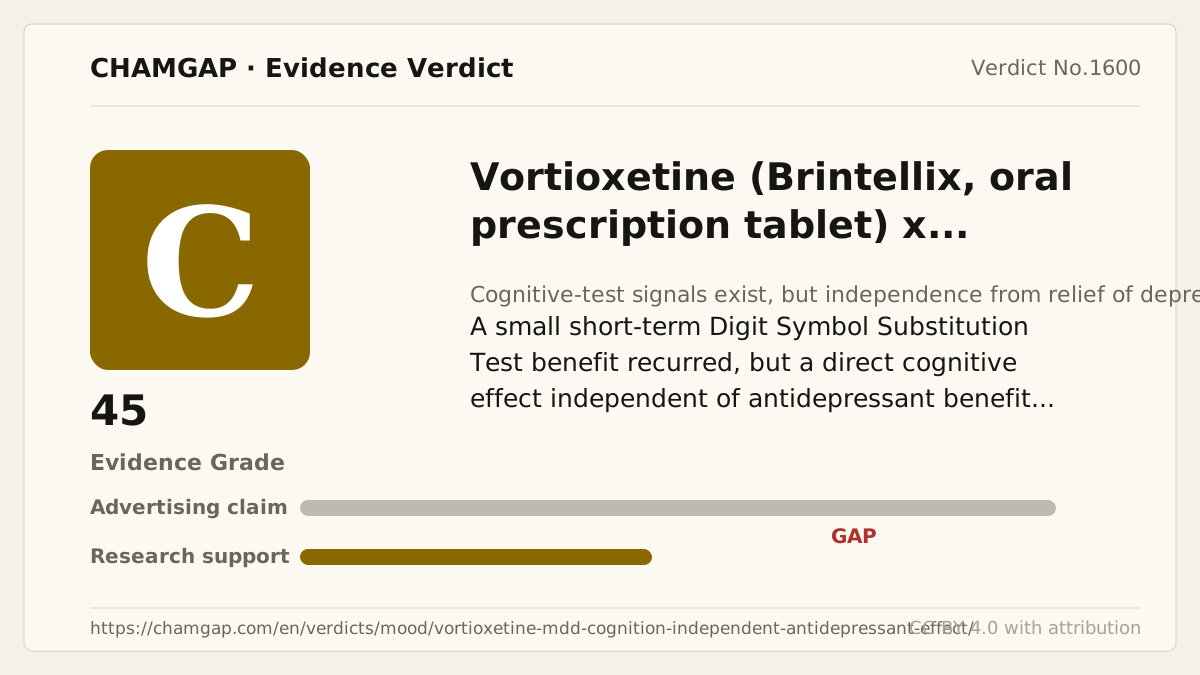
research showsVortioxetine produced small short-term improvements on cognitive tests such as the Digit Symbol Substitution Test, but the differentiating claim that this occurs independently of improvement in depression is rated C. Manufacturer-linked eight-week trials including FOCUS and CONNECT favored vortioxetine on the test, and meta-analysis found a small average effect. The claim of a direct cognitive effect relies mainly on path analyses statistically separating changes in depression ratings from changes in cognition; direct superiority over an active comparator and long-term real-world functional benefit have not been established. A 2024 reanalysis of late-life depression data found that cognitive improvement in the full treated sample was mediated by change in depressive symptoms, adding uncertainty about independence.
ads claimAnswering a few more symbols on a cognitive test does not establish an antidepressant-independent cognitive treatment or a special restoration of everyday concentration. Vortioxetine is a treatment for major depressive disorder, not an approved treatment for a separate cognitive disorder, and sustained improvement in work, study, or independent daily functioning has not been established.
Useful facts when choosing a product
- Vortioxetine is a prescription antidepressant for major depressive disorder in adults, usually taken once daily with dose adjustment according to response and tolerability.
- Nausea is the most common adverse effect, and vomiting, constipation, dizziness, and sexual dysfunction can occur.
- Combining it with other serotonergic medicines can increase serotonin-syndrome risk, required separation from monoamine oxidase inhibitors must be observed, and bleeding-risk medicines and hyponatremia require review.
- Abrupt discontinuation from higher doses can produce headache, tension, or mood changes, and the prescriber should monitor for mania and for suicidal thoughts in younger patients.
Chamgap Semantic Classification Code
Candidate index · review held
UNK.vortioxetine.oral.cognition-attention-and-processing-speed-in-major-depressive-disorder-independently-of-antidepressant-effects.improve.MULTIUnknown > Vortioxetine > Oral > cognition, attention, and processing speed in major depressive disorder independently of antidepressant effects > Improvement claim > Multiple: primary unresolved
An automated migration candidate, not an issued permanent code; exact claim scope remains under review. This machine-generated migration candidate helps retrieval but is not a permanent assignment. The original verdict ID and URL remain authoritative.
What the research actually shows
In FOCUS, 602 participants received eight weeks of vortioxetine 10 mg, vortioxetine 20 mg, or placebo. Correct Digit Symbol Substitution Test responses favored vortioxetine by about 4.20 and 4.26 symbols, and the composite of that test with verbal learning favored treatment by 0.36 and 0.33 SD. In CONNECT, 602 participants received flexible-dose vortioxetine 10 to 20 mg, duloxetine, or placebo; the test favored vortioxetine by 1.75 symbols (95% CI 0.28 to 3.21), while duloxetine differed by 1.21 symbols (95% CI -0.23 to 2.65). A six-trial meta-analysis of 1,782 participants found a mean difference of 2.44 symbols (95% CI 1.11 to 3.77) with substantial heterogeneity of I-squared 76%. A 2024 reanalysis of 452 participants with late-life depression found that cognitive improvement with vortioxetine and duloxetine in the full treated sample was indirectly mediated by change in depressive symptoms, with direct effects limited to a late-onset subgroup.
Why this is classified as C (45)
Small objective short-term benefits on the Digit Symbol Substitution Test appeared across trials and meta-analysis, so D is not appropriate. A direct cognitive effect independent of antidepressant benefit relies on path analysis rather than direct proof, conflicts with a 2024 reanalysis, and is supported mainly by manufacturer-linked eight-week studies without established real-world functional benefit. Rule ①-ⓒ and unestablished independence give C with 45 points.
Counterpoint. For a patient with major depression and prominent complaints about attention or processing speed, the cognitive-test signal can be one consideration in antidepressant selection. It does not establish superiority over antidepressants such as escitalopram or duloxetine for a cognitive effect separate from improvement in depression.
Rejudgment record. Cross-check applied — Accepted the small Digit Symbol Substitution Test benefits in FOCUS, CONNECT, and meta-analysis, but applied the rule ①-ⓒ ceiling of C because independence from antidepressant benefit depends on path analysis in manufacturer-linked short trials, conflicts with a 2024 reanalysis, and lacks established real-world functional improvement
Sub-claim grades by effect
This ingredient is marketed for several effects. A single overall grade blends strong and weak claims together, so each effect is graded separately here. The overall grade reflects the strongest disconfirming or core claim.
| Effect (sub-claim) | Grade | Basis |
|---|---|---|
| Improved Digit Symbol Substitution Test attention and processing speed in major depressive disorder | C | Several eight-week trials and meta-analysis found a small average benefit, but heterogeneity was substantial and clinical importance is uncertain. |
| Direct cognitive improvement independent of relief of depressive symptoms | C | Path analyses left some direct effect, but a 2024 full-sample reanalysis attributed improvement indirectly to relief of depression. |
| Long-term improvement in real-world cognitive functioning at work, in study, or in independent living | D | Pivotal trials mainly measured cognitive tests over eight weeks and did not establish durable real-world functional improvement. |
Cross-check — AI research and Codex final gate
Evidence Table
| Study | Design | Sample | Funding | Endpoint | Result | Weight |
|---|---|---|---|---|---|---|
| McIntyre RS, Lophaven S, Olsen CK. 2014 | Multinational randomized double-blind placebo-controlled FOCUS trial | 602 adults with major depressive disorder | Manufacturer-sponsored trial funded by H. Lundbeck | Eight-week composite cognitive score using the Digit Symbol Substitution Test and Rey Auditory Verbal Learning Test | The 10 mg and 20 mg doses favored the composite by 0.36 and 0.33 SD and the Digit Symbol Substitution Test by about 4.20 and 4.26 symbols, respectively. | Positive objective testing, but a short manufacturer trial |
| Mahableshwarkar AR et al. 2015 | Randomized double-blind placebo- and active-reference-controlled CONNECT trial | 602 adults with major depressive disorder and self-reported cognitive dysfunction | Manufacturer-sponsored trial supported by Takeda and H. Lundbeck | Eight-week primary Digit Symbol Substitution Test outcome plus subjective and functional cognitive measures | Vortioxetine favored placebo by 1.75 symbols (95% CI 0.28 to 3.21), while the duloxetine difference was 1.21 symbols (95% CI -0.23 to 2.65). | Positive trial with an active reference, but no established direct superiority |
| Huang IC et al. 2022 | Systematic review and meta-analysis of randomized trials | 1,782 participants across six randomized trials | Most pivotal included trials were manufacturer studies associated with Lundbeck and Takeda | Digit Symbol Substitution Test and other objective and subjective cognitive measures | The mean Digit Symbol Substitution Test difference was 2.44 symbols (95% CI 1.11 to 3.77), with heterogeneity of I-squared 76%. | Synthesis supporting a small test benefit, but with substantial heterogeneity |
| Xue L et al. 2024 | Secondary mediation analysis of an eight-week randomized trial in late-life major depression | 452 treated older patients | Academic secondary analysis of data from an existing manufacturer trial | Direct and indirect mediation by change in depressive symptoms on cognitive change | In the full treated sample, cognitive improvement with vortioxetine and duloxetine was indirectly mediated by change in depressive symptoms, with direct effects only in the late-onset subgroup. | Conflicting evidence for independence from antidepressant effects |
Receipt — 5 References
All 5 cited sources were verified for existence at the original page (as of 2026-07-24).
Final verification and publication gate: Codex · Evidence date: 2026-07-24 · Corrections: none
Cite this verdict
[Chamgap] Vortioxetine x improved cognition, attention, and processing speed in major depressive disorder independently of antidepressant effects — Evidence Grade C·45. 5 cited sources checked. Source: https://chamgap.com/en/verdicts/mood/vortioxetine-mdd-cognition-independent-antidepressant-effect/ · CC BY 4.0CC BY 4.0 — free to use with attribution; do not distort grades, numbers, or verdict meaning.
What this document does and does not do
Chamgap is an information source. It reports what research has and has not confirmed; it does not tell readers what to take or buy. That decision belongs to readers and, when needed, medical or legal professionals. This verdict reflects literature available up to the search date and may change as new research appears. Nothing here is medical advice.