
Venlafaxine extended release,
does it really help with Reduction of anxiety symptoms and increased response and remission in generalized anxiety disorder?
research showsVenlafaxine extended release is rated B because it reduces anxiety symptoms and increases response and remission in adults with generalized anxiety disorder. A meta-analysis of 14 short placebo-controlled trials involving 3,622 participants found a 3.31-point Hamilton Anxiety Scale advantage, a response odds ratio of 1.83, and a remission odds ratio of 2.55, all favoring venlafaxine XR; a 251-person 28-week trial sustained response rates of at least 69% versus 42% to 46% with placebo. Symptoms, response, and remission are direct clinical outcomes, but the effect is moderate, many source trials were industry sponsored, and selected short scale-based populations limit A. The larger evidence base and longer follow-up place it above the existing buspirone GAD score of B65, at B73.
ads claimPromotion can turn increased response and remission into immediate calming, side-effect-free cure, or treatment that remains permanent after stopping. In practice, benefit is assessed over weeks, some patients do not respond, and adverse effects or discontinuation symptoms can require adjustment.
Useful facts when choosing a product
- Venlafaxine XR is generally started at a low dose and increased gradually according to response and tolerability as a once-daily prescription medicine, and the extended-release formulation should be taken as directed without crushing it.
- Nausea, dry mouth, dizziness, insomnia or somnolence, and sexual dysfunction can occur, and the possibility of dose-related blood-pressure elevation warrants measurement before and during treatment.
- Abrupt discontinuation or rapid dose reduction can cause a pronounced syndrome including dizziness, electric-shock-like sensations, anxiety, nausea, and insomnia, so tapering should be planned with the prescriber.
- The antidepressant-class warning for suicidal thoughts and behavior applies particularly to younger adults, and coadministration with serotonergic medicines and the possibility of a switch to mania also require review.
Chamgap Semantic Classification Code
Candidate index · review held
M.venlafaxine-extended-release.UNK.anxiety-symptoms-and-increased-response-and-remission-in-generalized-anxiety-disorder.reduce.placeboMedicinal interventions > Venlafaxine extended release > Unknown > anxiety symptoms and increased response and remission in generalized anxiety disorder > Reduction claim > Placebo
An automated migration candidate, not an issued permanent code; exact claim scope remains under review. This machine-generated migration candidate helps retrieval but is not a permanent assignment. The original verdict ID and URL remain authoritative.
What the research actually shows
The 2017 meta-analysis combined 14 short double-blind placebo-controlled trials conducted from 1999 through 2009, including 1,883 participants receiving venlafaxine XR and 1,739 receiving placebo. Hamilton scores, at least 50% response, and remission at a Hamilton score of 7 or less all favored treatment, while discontinuation for adverse events was higher with an odds ratio of 2.80. In the 251-person 28-week Gelenberg trial, response from weeks 6 through 28 was at least 69% with venlafaxine XR versus 42% to 46% with placebo. The Rickels randomized withdrawal trial found relapse in 9.8% continuing venlafaxine XR versus 53.7% switched to placebo after six months, but only open-label responders who remained entered that comparison.
Why this is classified as B (73)
Fourteen short placebo-controlled trials involving 3,622 participants consistently favored venlafaxine XR for Hamilton score by 3.31 points, response with an odds ratio of 1.83, and remission with an odds ratio of 2.55, while a 28-week trial and relapse-prevention evidence support persistence. Direct clinical symptoms, response, and remission are stronger than the buspirone B65 evidence, but moderate effects, industry-sponsored source trials, selected populations, and limited independent long-term data yield B with 73 points. Blood pressure, discontinuation, sexual effects, and suicidality warnings remain separate safety issues.
Counterpoint. Medication can be combined with cognitive behavioral therapy and changes to sleep, caffeine, and alcohol, while partial response or poor tolerability after an adequate trial warrants reassessment. Unsupervised abrupt withdrawal can blur recurrent anxiety with discontinuation symptoms.
Rejudgment record. New verdict — Recognized positive direct Hamilton symptom, treatment-response, and remission outcomes across 14 placebo-controlled trials and 3,622 participants with 28-week persistence, while accounting for moderate effect size, concentration of industry-sponsored source trials, exclusion of comorbidity, limited independent long-term evidence, and corpus parity with buspirone for generalized anxiety disorder at B65
Sub-claim grades by effect
This ingredient is marketed for several effects. A single overall grade blends strong and weak claims together, so each effect is graded separately here. The overall grade reflects the strongest disconfirming or core claim.
| Effect (sub-claim) | Grade | Basis |
|---|---|---|
| Reduction of anxiety symptoms in generalized anxiety disorder | B | Across 14 placebo-controlled trials, Hamilton Anxiety scores improved by 3.31 additional points, although the average effect was moderate. |
| Increased treatment response in generalized anxiety disorder | B | Response defined by at least 50% symptom reduction increased with an odds ratio of 1.83 and persisted in a 28-week trial. |
| Increased remission in generalized anxiety disorder | B | The odds ratio for remission at a Hamilton score of 7 or less was 2.55, but scale remission at follow-up does not mean permanent cure. |
Cross-check — AI research and Codex final gate
Evidence Table
| Study | Design | Sample | Funding | Endpoint | Result | Weight |
|---|---|---|---|---|---|---|
| Li X et al. 2017 | Meta-analysis of short randomized double-blind placebo-controlled trials of venlafaxine XR | Fourteen trials and 3,622 participants; 1,883 receiving venlafaxine XR and 1,739 receiving placebo | Academic author-led meta-analysis; many included source trials had industry sponsorship | Hamilton Anxiety Scale change, at least 50% treatment response, remission at a score of 7 or less, and discontinuation | The advantage over placebo was 3.31 Hamilton points, with an odds ratio of 1.83 for response and 2.55 for remission; the odds ratio for adverse-event discontinuation was 2.80. | Key large direct synthesis |
| Gelenberg AJ et al. 2000 | Multicenter randomized double-blind placebo-controlled 28-week parallel-group trial | 251 adult outpatients with generalized anxiety disorder without major depression | Included pharmaceutical-company-affiliated authors; funding not stated in the PubMed abstract | Hamilton total and psychic-anxiety scores, Clinical Global Impressions, and response rate | Response from weeks 6 through 28 was at least 69% with venlafaxine XR versus 42% to 46% with placebo, and week-28 Hamilton change was -13.4 versus -8.7. | Direct medium-term persistence trial |
| Rickels K et al. 2010 | Double-blind randomized withdrawal relapse trial among responders to open-label lead-in treatment | 268 entering open-label treatment and 136 randomized after six months | Funding not stated in the PubMed abstract | Relapse of generalized anxiety disorder after continued treatment or switch to placebo at six months | Relapse from months 6 through 12 occurred in 9.8% continuing venlafaxine XR and 53.7% switched to placebo. | Maintenance support limited by responder enrichment |
Receipt — 3 References
All 3 cited sources were verified for existence at the original page (as of 2026-07-21).
Final verification and publication gate: Codex · Evidence date: 2026-07-21 · Corrections: none
Cite this verdict
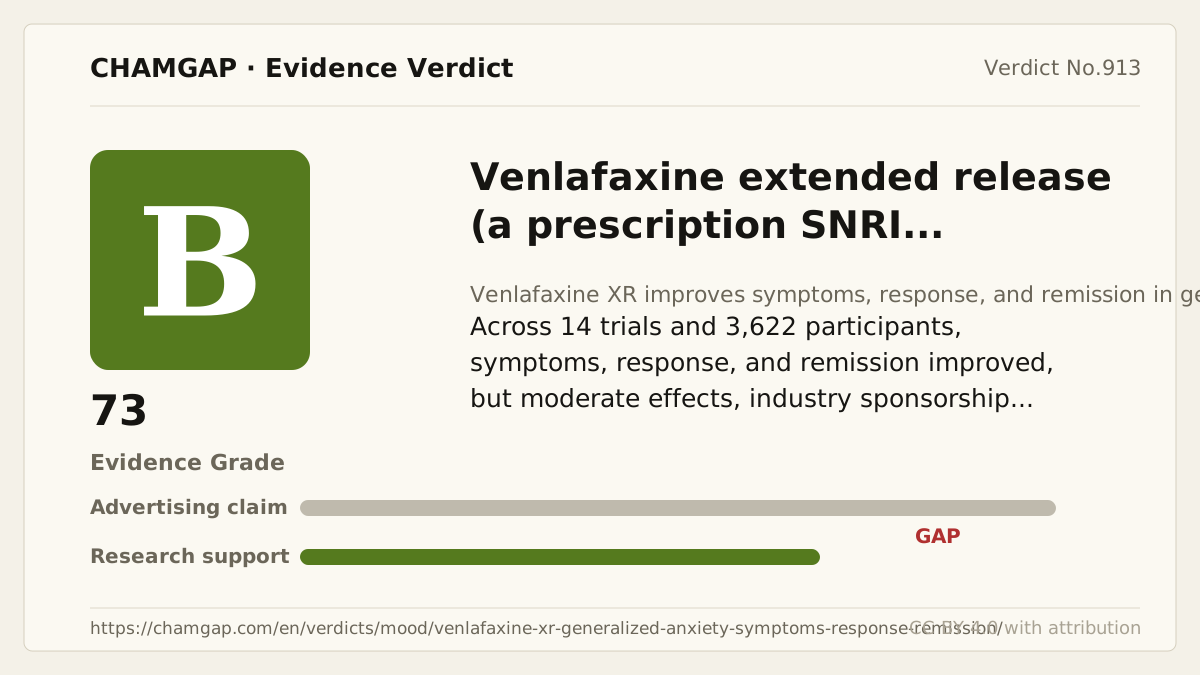
[Chamgap] Venlafaxine extended release x reduced anxiety symptoms and increased response and remission in generalized anxiety disorder — Evidence Grade B·73. 3 cited sources checked. Source: https://chamgap.com/en/verdicts/mood/venlafaxine-xr-generalized-anxiety-symptoms-response-remission/ · CC BY 4.0CC BY 4.0 — free to use with attribution; do not distort grades, numbers, or verdict meaning.
What this document does and does not do
Chamgap is an information source. It reports what research has and has not confirmed; it does not tell readers what to take or buy. That decision belongs to readers and, when needed, medical or legal professionals. This verdict reflects literature available up to the search date and may change as new research appears. Nothing here is medical advice.