
Ultra-processed food,
does it really help with Increased incidence of depressive symptoms?
research showsThe grade is C. In 26,730 NutriNet-Sante participants followed for a mean 5.4 years, 2,221 developed CES-D depressive symptoms. Each 10-point higher ultra-processed energy share was associated with HR 1.21 (95% CI 1.15 to 1.27); adjustment including baseline CES-D and antidepressant use gave 1.14 (1.09 to 1.20). This large prospective cohort did not randomize diet, and both exposure and outcome were self-reported.
ads claimNOVA defines processing level, not risk magnitude. The exposure included industrial breads, breakfast cereals, flavored dairy, sauces, snacks, and beverages.
Useful facts when choosing a product
- This whole-diet percentage has no common serving size.
- Sodium, sugar, saturated fat, fiber, and protein vary by product.
- Verdict 877 is D with 24 points for omega-3 supplements preventing depression; this verdict concerns whole-diet NOVA share and incident CES-D symptoms.
Chamgap Semantic Classification Code
Candidate index · review held
D.proportion-of-total-dietary-energy-classified.dietary.incidence-of-depressive-symptoms.increase.UNKDietary patterns and eating practices > proportion of total dietary energy classified > Dietary regimen > incidence of depressive symptoms > Increase claim > Unknown
An automated migration candidate, not an issued permanent code; exact claim scope remains under review. This machine-generated migration candidate helps retrieval but is not a permanent assignment. The original verdict ID and URL remain authoritative.
What the research actually shows
Adjibade analyzed 20,380 women and 6,350 men after excluding baseline depressive symptoms and antidepressant users. Repeated 24-hour records estimated NOVA share, sex-specific CES-D thresholds identified incident symptoms over 5.4 years, and baseline CES-D was adjusted. No analysis excluding the first few years of events was confirmed. Public funding was verified; a prospectively registered primary outcome for this analysis was not.
Why this is classified as C (54)
A precise association in a large public prospective cohort is limited by self-reported exposure and outcome plus unregistered multiple exploration, giving C with 54 points.
Counterpoint. C means intermediate evidence for the association, not intermediate depression risk.
Rejudgment record. Cross-check applied — Assessed adjusted cohort hazard ratios, baseline-symptom sensitivity analysis, self-report, and unregistered exploratory limitations
| Endpoint | P | Symptom or function itself is the target - including patient reports and performance tests |
| Replication | R1 | Single confirmatory trial |
| Independence | I2 | Decisive evidence is publicly or non-profit funded |
| Effect size | E+ | Meets the clinically important threshold |
Stored derived and displayed grades match; this is not a current recalculation or validity check (C).
Sub-claim grades by effect
This ingredient is marketed for several effects. A single overall grade blends strong and weak claims together, so each effect is graded separately here. The overall grade reflects the strongest disconfirming or core claim.
| Effect (sub-claim) | Grade | Basis |
|---|---|---|
| Higher ultra-processed food share and incident depressive symptoms | C | The HR was precise, but the analysis was nonrandomized and self-reported. |
Cross-check — AI research and Codex final gate
Evidence Table
| Study | Design | Sample | Funding | Endpoint | Result | Weight |
|---|---|---|---|---|---|---|
| Adjibade M et al., 2019 NutriNet-Sante | Prospective cohort with repeated dietary records | 26,730 participants, mean 5.4 years, 2,221 incident cases | French public health and research agencies | Incident CES-D depressive symptoms using sex-specific thresholds | HR 1.21 (1.15 to 1.27) per 10-point higher energy share; 1.14 (1.09 to 1.20) after baseline CES-D and antidepressant adjustment | Large prospective cohort, but nonrandomized and self-reported |
Receipt — 1 References
All 1 cited sources were verified for existence at the original page (as of 2026-08-03).
Final verification and publication gate: Codex · Evidence date: 2026-08-03 · Corrections: none
Cite this verdict
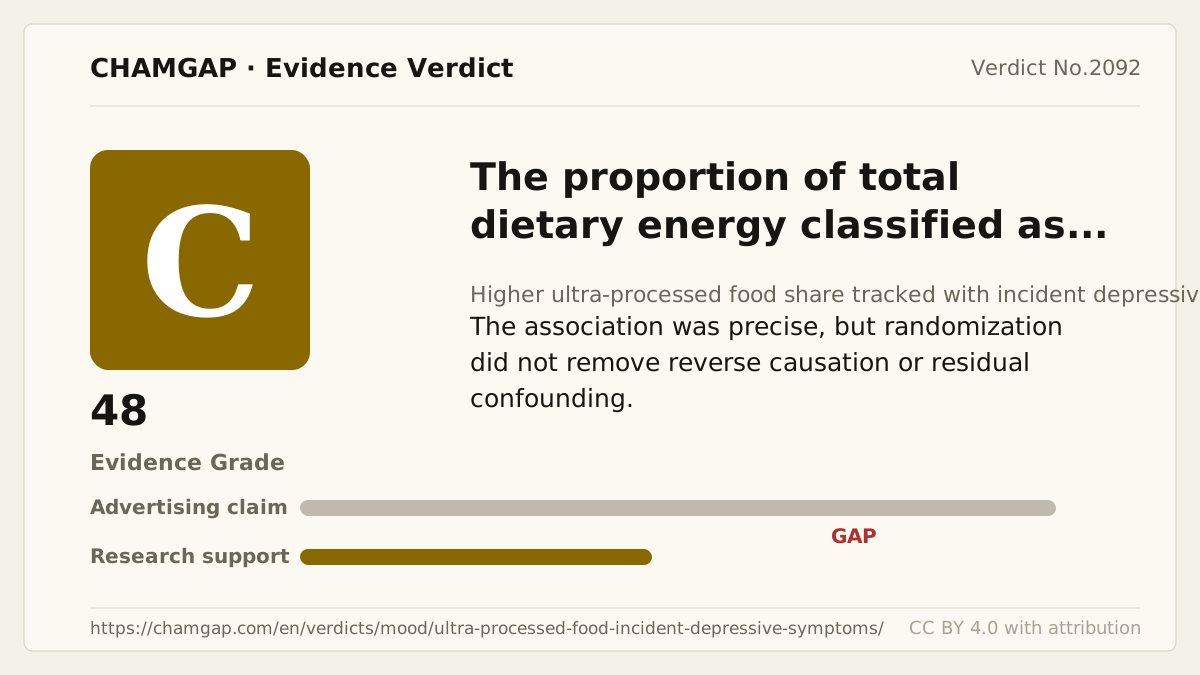
[Chamgap] Ultra-processed food x incident depressive symptoms — Evidence Grade C·54. 1 cited sources checked. Source: https://chamgap.com/en/verdicts/mood/ultra-processed-food-incident-depressive-symptoms/ · CC BY 4.0CC BY 4.0 — free to use with attribution; do not distort grades, numbers, or verdict meaning.
What this document does and does not do
Chamgap is an information source. It reports what research has and has not confirmed; it does not tell readers what to take or buy. That decision belongs to readers and, when needed, medical or legal professionals. This verdict reflects literature available up to the search date and may change as new research appears. Nothing here is medical advice.