
Smartphone use limited to two hours daily,
does it really help with Reduced depressive symptoms?
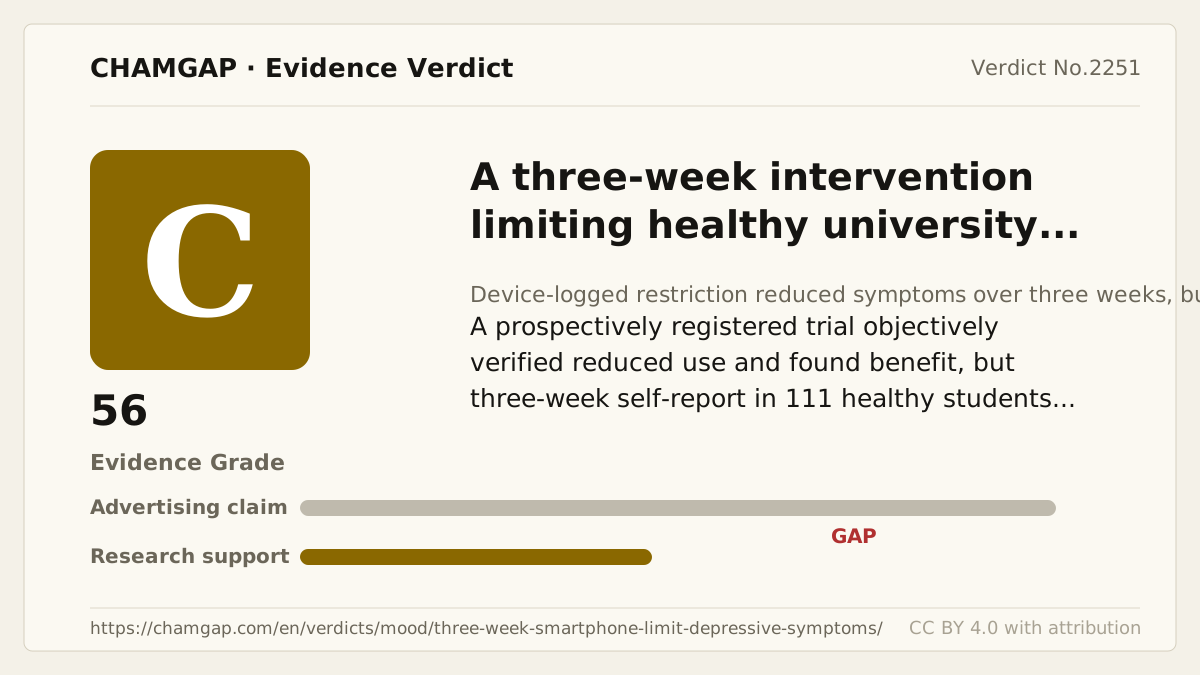
research showsThe grade is C. A three-week trial randomized 111 healthy students to restriction, 58, or usual use, 53. Endpoint PHQ-9 scores were 5.65 versus 7.76, a 2.11-point difference, 95% CI 0.87-3.36. Weekly screenshots of built-in phone logs are an unusual strength, but this was one short, unblinded trial using self-reported symptoms in students without depressive disorders.
ads claimVerified reduction in phone use is not the same as proven treatment of depressive disorder. Verdict 2200 is C with 54 points for stopping phone use 30 minutes before bed and sleep onset; verdict 2215 is C with 46 points for a mindfulness app and worker stress. This verdict concerns all-day restriction and three-week depressive symptoms in healthy students.
Useful facts when choosing a product
- Baseline smartphone use averaged 276.84 minutes per day and was documented with weekly screenshots of built-in phone logs.
- During the intervention, mean use was 129.46 minutes per day with restriction versus 264.19 with usual use.
- Only 24 of 58 restricted participants met the two-hour target in all three weeks, and the between-group use difference disappeared from week seven.
- OSF A9K76 was prospectively registered on November 8, 2023; ClinicalTrials.gov NCT06353451 was posted after study start.
Chamgap Semantic Classification Code
Candidate index · review held
UNK.intervention-limiting-healthy-university-students-smartphone-screen-time-to-no-more-than.UNK.depressive-symptoms.reduce.UNKUnknown > intervention limiting healthy university students' smartphone screen time to no more than > Unknown > depressive symptoms > Reduction claim > Unknown
An automated migration candidate, not an issued permanent code; exact claim scope remains under review. This machine-generated migration candidate helps retrieval but is not a permanent assignment. The original verdict ID and URL remain authoritative.
What the research actually shows
Of 125 screened people, 111 eligible participants were randomized and analyzed, 58 to restriction and 53 to usual use. Mean age was 22.68 years, and diagnosed or treated mental illness was excluded. Baseline smartphone time was 276.84 minutes per day. Both groups uploaded weekly screenshots from built-in Screen Time or Digital Wellbeing logs. Prospective OSF registration A9K76 prespecified depression, stress, well-being, and sleep as main outcomes without naming one exclusive primary endpoint. All four were significant at three weeks, while no follow-up hypothesis was prespecified. The study itself received no funding; fitness trackers were supported by a university journal club and a Lower Austria research-fund project.
Why this is classified as C (54)
Prospective registration, randomization, device-log exposure measurement, and a medium standardized difference are strengths. A single 111-person, three-week, unblinded self-report trial has multiple avoidable limitations, giving C with 54 points.
Counterpoint. C does not mean no effect. It means the three-week symptom difference cannot establish durable benefit or treatment of clinical depression beyond healthy students.
Rejudgment record. Cross-check applied — Prospectively registered randomized device-log exposure and the PHQ-9 between-group effect, balanced against small sample, three-week duration, and unblinded self-report
| Endpoint | P | Symptom or function itself is the target - including patient reports and performance tests |
| Replication | R1 | Single confirmatory trial |
| Independence | I2 | Decisive evidence is publicly or non-profit funded |
| Effect size | E+ | Meets the clinically important threshold |
Stored derived and displayed grades match; this is not a current recalculation or validity check (C).
Sub-claim grades by effect
This ingredient is marketed for several effects. A single overall grade blends strong and weak claims together, so each effect is graded separately here. The overall grade reflects the strongest disconfirming or core claim.
| Effect (sub-claim) | Grade | Basis |
|---|---|---|
| Reduced depressive symptoms over three weeks in healthy university students | C | The PHQ-9 difference was 2.11 points, approximately 0.64 SD. |
| Adherence to the two-hour daily target | C | Only 24 of 58 restricted participants met the target in all three weeks. |
| Long-term treatment benefit for depressive disorder | ? | People with treated depressive disorder were excluded, and the use difference disappeared from week seven. |
Cross-check — AI research and Codex final gate
Evidence Table
| Study | Design | Sample | Funding | Endpoint | Result | Weight |
|---|---|---|---|---|---|---|
| Pieh et al. 2025 Digital Detox Study | Unblinded parallel-group randomized trial | 111 randomized and analyzed by intention to treat, 58 restriction and 53 usual use | No funding for the study itself; fitness trackers supported by a university journal club and a Lower Austria research-fund project | PHQ-9 depressive symptoms after three weeks | Endpoint 5.65 SD 3.052 versus 7.76 SD 3.563; difference 2.11 points, 95% CI 0.87-3.36; time-by-group partial eta-squared 0.109 | Prospectively registered, device-log verified exposure, and successful prespecified main outcome |
Receipt — 3 References
All 3 cited sources were verified for existence at the original page (as of 2026-08-05).
Final verification and publication gate: Codex · Evidence date: 2026-08-05 · Corrections: none
Cite this verdict
[Chamgap] Smartphone use limited to two hours daily x depressive symptoms — Evidence Grade C·54. 3 cited sources checked. Source: https://chamgap.com/en/verdicts/mood/three-week-smartphone-limit-depressive-symptoms/ · CC BY 4.0CC BY 4.0 — free to use with attribution; do not distort grades, numbers, or verdict meaning.
What this document does and does not do
Chamgap is an information source. It reports what research has and has not confirmed; it does not tell readers what to take or buy. That decision belongs to readers and, when needed, medical or legal professionals. This verdict reflects literature available up to the search date and may change as new research appears. Nothing here is medical advice.