
Stellate ganglion block,
does it really help with Short-term relief of overall PTSD symptoms, hyperarousal, and anxiety?
research showsStellate ganglion block has a short-term signal for PTSD symptom improvement but is rated C. A 2020 military trial randomized 113 participants and analyzed all 113 by intention to treat with multiple imputation; 108 completed week 8. The primary CAPS-5 change succeeded, minus 12.6 versus minus 6.1 points, P=0.01. However, an independent 2016 sham-controlled trial in 42 participants found no significant between-group CAPS difference. Patient symptoms are not a surrogate, but small samples, military concentration, eight-week follow-up, and conflicting results invoke rule ①-ⓒ and support C with 48 points.
ads claimMarketing may describe one or two injections as resetting PTSD, but the evidence concerns an eight-week adjunctive effect and does not establish long-term replacement of standard trauma-focused treatment.
Useful facts when choosing a product
- This is a medical procedure injecting local anesthetic around a cervical sympathetic ganglion.
- Ultrasound guidance and an experienced clinician are required; rare serious complications can include intravascular injection, pneumothorax, nerve injury, and seizure.
- The evidence does not justify stopping standard psychotherapy or medication for PTSD.
Chamgap Semantic Classification Code
Candidate index · review held
P.stellate-ganglion-block.procedural.short-term-relief-of-overall-ptsd-symptoms-hyperarousal-and-anxiety.relieve.shamProcedures, devices and tests > Stellate ganglion block > Procedural > Short-term relief of overall PTSD symptoms, hyperarousal, and anxiety > Symptom-relief claim > Sham procedure or device
An automated migration candidate, not an issued permanent code; exact claim scope remains under review. This machine-generated migration candidate helps retrieval but is not a permanent assignment. The original verdict ID and URL remain authoritative.
What the research actually shows
Rae Olmsted 2020 randomized 113 participants to right-sided stellate ganglion block, 74, or sham, 39. The primary analysis used all 113 by intention to treat with multiple imputation, and 108 completed week 8. The CAPS-5 change was minus 12.6 versus minus 6.1 (P=.01), but the 6.5-point between-group difference missed the 10-point target. Hanling 2016 randomized 42 military participants in a double-blind sham trial, followed them through three months, and found no significant between-group CAPS difference. Positive symptom-cluster analyses do not override the conflicting overall evidence.
Why this is classified as C (48)
The positive PTSD-symptom primary endpoint is accepted, but an independent small negative trial, military concentration, short follow-up, and failure to reach the prespecified target difference support C with 48 points.
Counterpoint. It may be discussed as a specialist adjunct for selected patients needing rapid short-term relief, but evidence does not establish it as a long-term standard treatment.
Rejudgment record. Cross-check applied — Accepted the positive primary endpoint in the 113-participant intention-to-treat analysis while applying rule ①-ⓒ for an effect below the prespecified target difference, failure in an independent 42-participant trial, military concentration, and eight-week follow-up
Sub-claim grades by effect
This ingredient is marketed for several effects. A single overall grade blends strong and weak claims together, so each effect is graded separately here. The overall grade reflects the strongest disconfirming or core claim.
| Effect (sub-claim) | Grade | Basis |
|---|---|---|
| Relief of overall PTSD symptoms at eight weeks | C | The 113-participant trial succeeded, but an independent 42-participant trial failed, creating conflict. |
| Relief of hyperarousal and anxiety symptoms | C | Secondary symptom scales favored treatment in the positive trial but do not overcome conflict and short follow-up. |
| Maintenance of PTSD symptom improvement beyond eight weeks | D | The Hanling sham-controlled randomized trial followed participants through three months and was null, so this is unproven human evidence rated D rather than an evidence gap. |
Cross-check — AI research and Codex final gate
Evidence Table
| Study | Design | Sample | Funding | Endpoint | Result | Weight |
|---|---|---|---|---|---|---|
| Rae Olmsted KL et al. 2020 | Multicenter randomized blinded sham-procedure-controlled trial | 113 randomized and included in the intention-to-treat primary analysis; 108 completed week 8 | Public funding from the US Department of Defense Defense Medical Research and Development Program | Change in total CAPS-5 symptoms at week 8 | Primary endpoint succeeded: minus 12.6 versus minus 6.1 points, P=0.01; the observed difference was smaller than the prespecified 10-point target. | Key positive short-term trial |
| Hanling SR et al. 2016 | Randomized double-blind sham-controlled trial | 42 military participants randomized | Naval Medical Center study; no manufacturer funding reported | CAPS-based PTSD symptoms | Primary efficacy result failed: both groups improved without a significant between-group difference. | Independent conflicting trial |
Receipt — 2 References
All 2 cited sources were verified for existence at the original page (as of 2026-07-24).
Final verification and publication gate: Codex · Evidence date: 2026-07-24 · Corrections: none
Cite this verdict
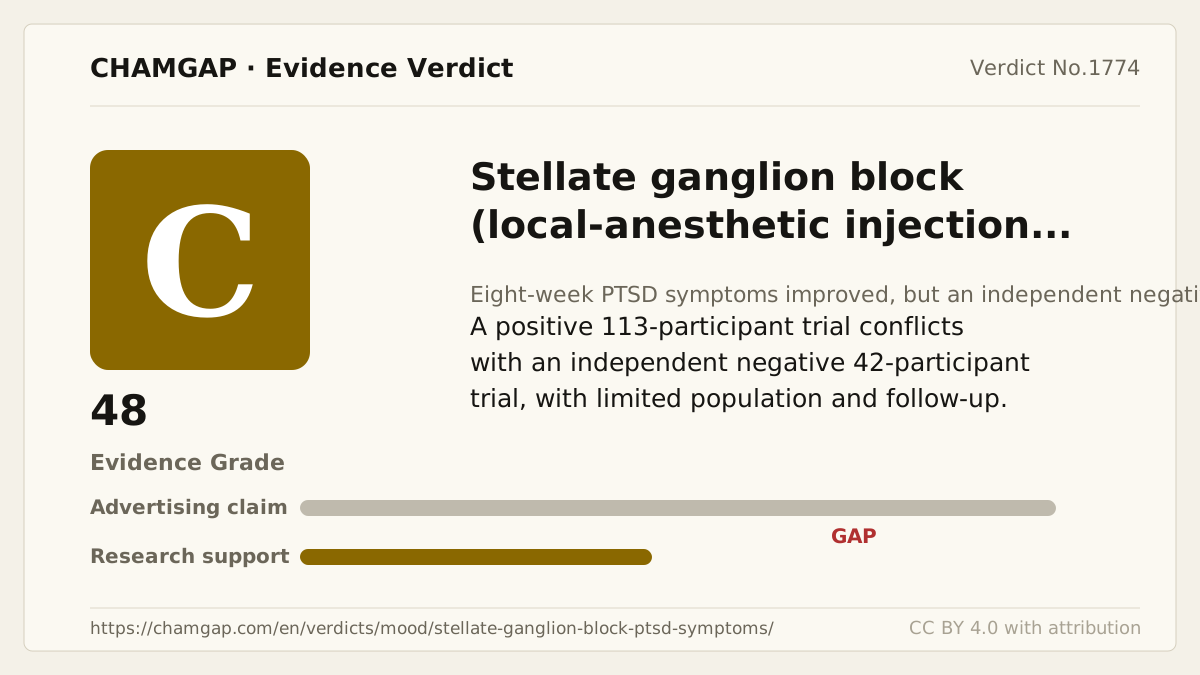
[Chamgap] Stellate ganglion block x Short-term relief of overall PTSD symptoms, hyperarousal, and anxiety — Evidence Grade C·48. 2 cited sources checked. Source: https://chamgap.com/en/verdicts/mood/stellate-ganglion-block-ptsd-symptoms/ · CC BY 4.0CC BY 4.0 — free to use with attribution; do not distort grades, numbers, or verdict meaning.
What this document does and does not do
Chamgap is an information source. It reports what research has and has not confirmed; it does not tell readers what to take or buy. That decision belongs to readers and, when needed, medical or legal professionals. This verdict reflects literature available up to the search date and may change as new research appears. Nothing here is medical advice.