
See title and evidence table for the studied intervention.,
does it really help with The stated clinical outcome in the title.?
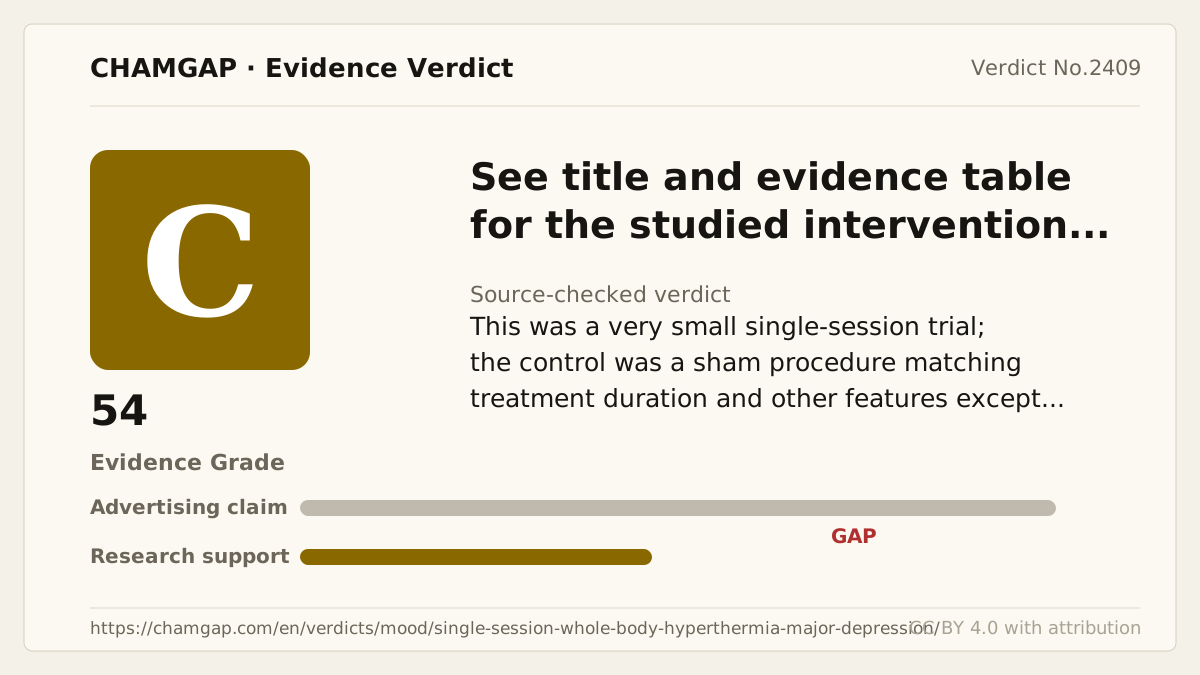
research showsThe grade is C with 54 points. In a 34-person sham-controlled trial, the adjusted HDRS difference was -6.53 (95% CI -9.90 to -3.16) at week 1 and -4.27 (-7.94 to -0.61) at week 6.
ads claimMarketing should stay within the studied population, intervention, comparator, endpoint, and duration.
Useful facts when choosing a product
- The comparator was a sham procedure matching treatment duration and other features except intense heat.
- No validated minimal clinically important difference for the 17-item HDRS was provided.
Chamgap Semantic Classification Code
Candidate index · review held
P.whole-body-hyperthermia.procedural.major-depression-symptoms.reduce.shamProcedures, devices and tests > Whole-body hyperthermia > Procedural > Major depressive disorder symptoms > Reduction claim > Sham procedure or device
An automated migration candidate, not an issued permanent code; exact claim scope remains under review. This machine-generated migration candidate helps retrieval but is not a permanent assignment. The original verdict ID and URL remain authoritative.
What the research actually shows
Thirty-four adults were randomized, 30 treated, and 29 included in modified intention-to-treat analysis. The comparator was sham treatment. Funding came from nonprofit foundations and private donations. The disclosure listed Raison's Merck speakers' bureau role; no device-manufacturer equity was reported, while patent interests could not be verified.
Why this is classified as C (54)
No device-manufacturer equity was reported, patent interests could not be verified, and the very small sham-controlled trial gives C with 54 points.
Counterpoint. Important limitations and alternative evidence are reported in the Korean text.
Rejudgment record. Cross-check applied — Merck speakers' bureau disclosure, no device-manufacturer equity, unverified patent interests, sham comparator, and small sample
| Endpoint | P | Symptom or function itself is the target - including patient reports and performance tests |
| Replication | R1 | Single confirmatory trial |
| Independence | I2 | Decisive evidence is publicly or non-profit funded |
| Effect size | E+ | Meets the clinically important threshold |
Stored derived and displayed grades match; this is not a current recalculation or validity check (C).
Sub-claim grades by effect
This ingredient is marketed for several effects. A single overall grade blends strong and weak claims together, so each effect is graded separately here. The overall grade reflects the strongest disconfirming or core claim.
| Effect (sub-claim) | Grade | Basis |
|---|---|---|
| Primary claim | C | The grade is C with 52 points; this was a 34-person sham-controlled trial. |
Cross-check — AI research and Codex final gate
Evidence Table
| Study | Design | Sample | Funding | Endpoint | Result | Weight |
|---|---|---|---|---|---|---|
| Janssen CW et al. 2016 | Double-blind sham-controlled randomized trial | 34 randomized; 29 in modified intention-to-treat analysis | Nonprofit foundations including the Brain & Behavior Research Foundation and private donations | Between-group HDRS difference through six weeks | Week 1 -6.53 (95% CI -9.90 to -3.16); week 6 -4.27 (-7.94 to -0.61) | Pivotal evidence |
Receipt — 1 References
All 1 cited sources were verified for existence at the original page (as of 2026-08-07).
Final verification and publication gate: Codex · Evidence date: 2026-08-07 · Corrections: none
Cite this verdict
[Chamgap] Verdict 2409: single session whole body hyperthermia major depression — Evidence Grade C·54. 1 cited sources checked. Source: https://chamgap.com/en/verdicts/mood/single-session-whole-body-hyperthermia-major-depression/ · CC BY 4.0CC BY 4.0 — free to use with attribution; do not distort grades, numbers, or verdict meaning.
What this document does and does not do
Chamgap is an information source. It reports what research has and has not confirmed; it does not tell readers what to take or buy. That decision belongs to readers and, when needed, medical or legal professionals. This verdict reflects literature available up to the search date and may change as new research appears. Nothing here is medical advice.