
Quetiapine fumarate,
does it really help with Improvement in eight-week depressive symptoms, response, and remission during acute major depressive episodes of bipolar I or II disorder?
research showsQuetiapine is rated B because it improves eight-week depressive symptoms, response, and remission in adults with acute major depressive episodes of bipolar I or II disorder. In the 542-participant BOLDER I trial, response rates with 300 and 600 mg/day were 57.6% and 58.2% versus 36.1% with placebo, while remission was 52.9% with either dose versus 28.4%. The 509-participant BOLDER II trial replicated symptom, response, and remission benefits with both doses. A meta-analysis of 11 randomized trials and 3,488 participants also found a mean depression-scale difference of -4.66 points versus placebo. The pivotal studies came from the same manufacturer-sponsored development program and used eight-week scale outcomes, while metabolic and sedative burdens are substantial, so the evidence supports B rather than A. This axis is entirely different from the F rating for low-dose quetiapine used for insomnia.
ads claimMessaging that the drug improves both sleep and mood can confuse sedation with antidepressant efficacy or borrow bipolar-depression trial evidence for low-dose insomnia use. Demonstrated efficacy concerns correctly diagnosed acute bipolar I or II depression, principally with at least 300 mg/day evaluated for eight weeks, not general insomnia or nonspecific low mood.
Useful facts when choosing a product
- Quetiapine is a prescription atypical antipsychotic, and adult bipolar-depression trials used 300 or 600 mg/day; clinicians individualize formulation, titration, and maintenance dose according to diagnosis, concomitant medicines, and tolerability.
- Low-dose use solely for sleep has a different indication, dose, and therapeutic goal from the BOLDER bipolar-depression trials, so this B rating cannot be transferred to insomnia treatment.
- Weight, waist circumference, blood pressure, fasting glucose or hemoglobin A1c, and lipids should be monitored before and during treatment, alongside somnolence, orthostatic hypotension, falls, extrapyramidal symptoms, and QT risk.
- Suicidal thoughts or behavior, mania or mixed symptoms, agitation, and functional change require monitoring during initiation and dose changes, while discontinuation should be planned with a clinician to reduce withdrawal and relapse risk.
Chamgap Semantic Classification Code
Candidate index · review held
M.quetiapine-fumarate.UNK.depressive-symptoms-response-and-remission-during-acute-major-depressive-episodes-of-bipolar-i-or-ii-disorder.improve.placeboMedicinal interventions > Quetiapine fumarate > Unknown > depressive symptoms, response, and remission during acute major depressive episodes of bipolar I or II disorder > Improvement claim > Placebo
An automated migration candidate, not an issued permanent code; exact claim scope remains under review. This machine-generated migration candidate helps retrieval but is not a permanent assignment. The original verdict ID and URL remain authoritative.
What the research actually shows
BOLDER I randomized 542 participants to quetiapine 300 mg/day, 600 mg/day, or placebo. Eight-week response rates were 57.6%, 58.2%, and 36.1%, while remission rates were 52.9%, 52.9%, and 28.4%, favoring both doses. BOLDER II assigned 509 participants to the same three groups, 59% completed the trial, and both doses replicated greater MADRS improvement and higher response and remission from week one through week eight. The Suttajit meta-analysis of 11 randomized trials and 3,488 participants estimated a mean depression-scale difference of -4.66 points versus placebo (95% CI -5.59 to -3.73), while extrapyramidal effects, sedation, somnolence, dizziness, fatigue, constipation, dry mouth, increased appetite, and weight gain were more frequent.
Why this is classified as B (76)
BOLDER I and II, totaling 1,051 participants with the same randomized design, repeatedly improved depressive symptoms, response, and remission, and an 11-trial meta-analysis confirmed efficacy. Concentration in one manufacturer development program, short scale-based endpoints, and subgroup uncertainty support B with 76 points rather than A. Metabolic, sedative, orthostatic, extrapyramidal, and QT risks remain independent safety issues.
Counterpoint. Proven efficacy in bipolar depression still requires individual balancing against metabolic disease, obesity, cardiovascular risk, falls, and daytime impairment. Diagnostic uncertainty, suicide risk, or mixed features call for specialist mood-disorder evaluation and follow-up rather than using sleep improvement as the treatment target.
Rejudgment record. New verdict — Accepted repeated eight-week improvement in depressive symptoms, response, and remission across 1,051 participants in BOLDER I and II and confirmation in an 11-trial meta-analysis, while reflecting concentration in one manufacturer program, short rating-scale endpoints, and subgroup uncertainty
Sub-claim grades by effect
This ingredient is marketed for several effects. A single overall grade blends strong and weak claims together, so each effect is graded separately here. The overall grade reflects the strongest disconfirming or core claim.
| Effect (sub-claim) | Grade | Basis |
|---|---|---|
| Reduction in depressive symptoms over eight weeks | B | MADRS and HAM-D improvement replicated from week one in BOLDER I and II, and the meta-analytic mean difference was significant. |
| Improvement in eight-week treatment response | B | BOLDER I response was 57.6% and 58.2% with 300 and 600 mg/day versus 36.1% with placebo, with significant replication in BOLDER II. |
| Improvement in eight-week remission | B | BOLDER I remission was 52.9% with either dose versus 28.4% with placebo and was also significantly higher in BOLDER II. |
Cross-check — AI research and Codex final gate
Evidence Table
| Study | Design | Sample | Funding | Endpoint | Result | Weight |
|---|---|---|---|---|---|---|
| Calabrese JR et al. 2005 BOLDER I | Eight-week multicenter randomized double-blind three-arm placebo-controlled trial | 542 participants: 360 with bipolar I and 182 with bipolar II disorder | AstraZeneca-supported development trial | Eight-week change in MADRS; response, remission, and additional depression measures | Response was 57.6% and 58.2% with 300 and 600 mg/day versus 36.1% with placebo; remission was 52.9% with either dose versus 28.4%. | Pivotal large direct symptom, response, and remission randomized evidence |
| Thase ME et al.; BOLDER II Study Group. 2006 | Eight-week multicenter randomized double-blind three-arm placebo-controlled replication trial | 509 patients with acute bipolar I or II depression; 59% completed | AstraZeneca-supported development trial | Eight-week MADRS change; HAM-D, response, and remission | Both 300 and 600 mg/day improved MADRS and HAM-D from week one through week eight and increased response and remission versus placebo. | Same-design replication in an independent patient sample |
| Suttajit S et al. 2014 | Systematic review and meta-analysis of randomized trials in acute bipolar depression | 11 randomized trials and 3,488 participants, including two pediatric trials | Academic meta-analysis; many included trials were manufacturer development studies | Depression-scale change, response, remission, discontinuation, and adverse effects | The mean depression-scale difference versus placebo was -4.66 points (95% CI -5.59 to -3.73), while several adverse effects including sedation and weight gain were more frequent. | Synthesis of efficacy replication and safety burden |
Receipt — 3 References
All 3 cited sources were verified for existence at the original page (as of 2026-07-21).
Final verification and publication gate: Codex · Evidence date: 2026-07-21 · Corrections: none
Cite this verdict
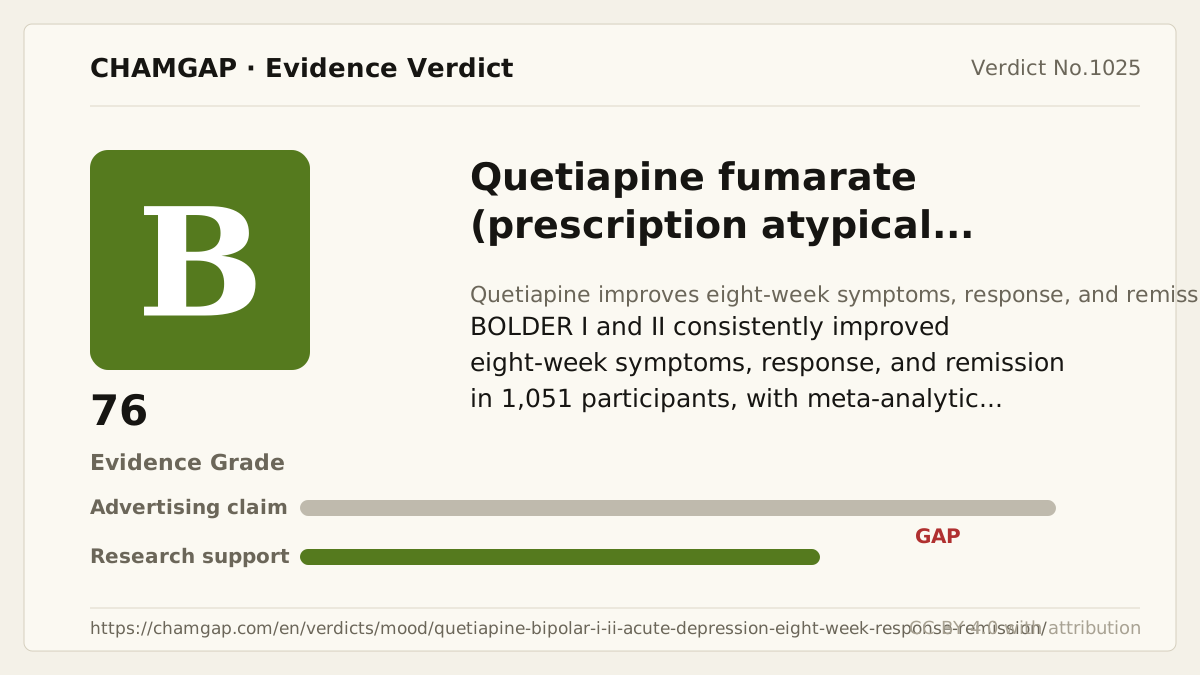
[Chamgap] Quetiapine fumarate x eight-week symptom, response, and remission improvement in acute bipolar I or II depression — Evidence Grade B·76. 3 cited sources checked. Source: https://chamgap.com/en/verdicts/mood/quetiapine-bipolar-i-ii-acute-depression-eight-week-response-remission/ · CC BY 4.0CC BY 4.0 — free to use with attribution; do not distort grades, numbers, or verdict meaning.
What this document does and does not do
Chamgap is an information source. It reports what research has and has not confirmed; it does not tell readers what to take or buy. That decision belongs to readers and, when needed, medical or legal professionals. This verdict reflects literature available up to the search date and may change as new research appears. Nothing here is medical advice.