
Propranolol,
does it really help with Sustained treatment of core symptoms in panic disorder, social anxiety disorder, and other anxiety disorders rather than one-time performance anxiety?
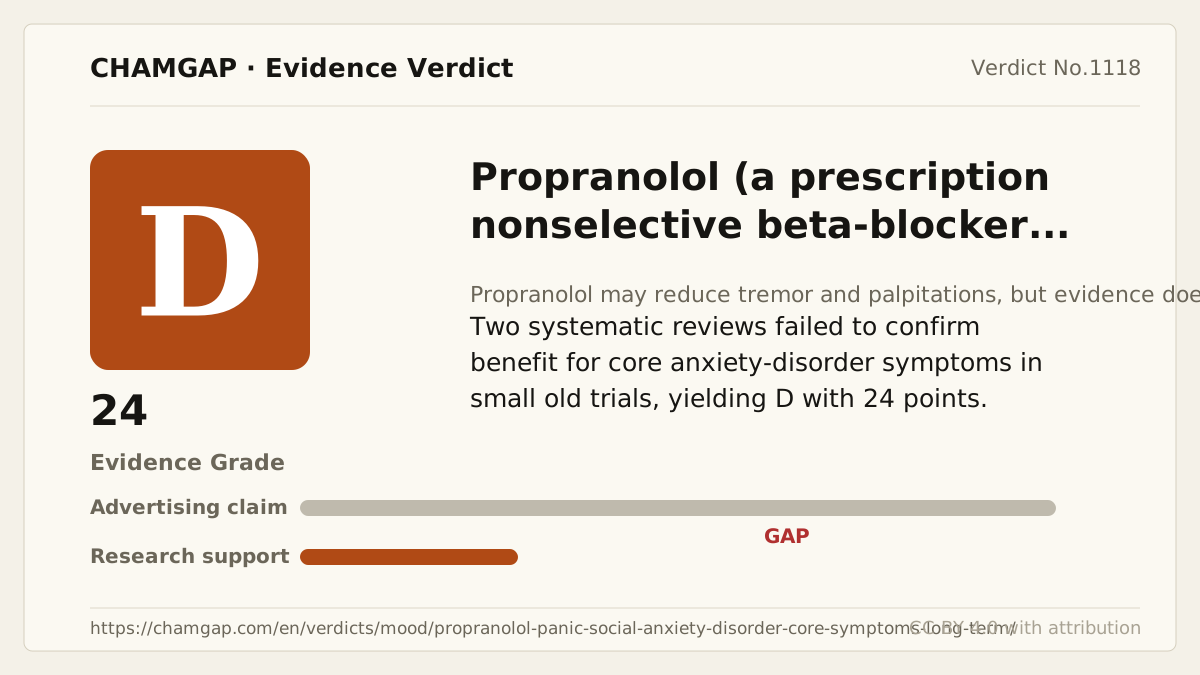
research showsPropranolol receives a D for sustained treatment of core symptoms in panic disorder, social anxiety disorder, and related anxiety disorders. A 2016 propranolol-specific systematic review found only eight small trials and concluded that evidence quality was insufficient to support routine use. A 2025 systematic review and meta-analysis of beta-blockers could pool only five of ten studies, with 179 participants, and found no benefit over placebo or benzodiazepines in social phobia or panic disorder with or without agoraphobia. Reducing peripheral symptoms such as palpitations or tremor is possible but differs from sustained treatment of fear, avoidance, anticipatory anxiety, and relapse. The small, old, high-risk evidence warrants D with 24 points rather than F.
ads claimOnline prescribing claims turn lower heart rate and less tremor into switching off anxiety itself or long-term treatment of panic and social anxiety. Relief of peripheral physical signs is not the same as improvement in fear cognition, avoidance, functioning, or relapse, and evidence from one-time performance anxiety cannot be transferred to chronic anxiety disorders.
Useful facts when choosing a product
- Propranolol is a prescription nonselective beta-blocker that blocks beta receptors in both the heart and lungs. Immediate- and extended-release products exist, and formulation or dose should not be changed without medical direction.
- Cognitive behavioral therapy and selective serotonin or serotonin-norepinephrine reuptake inhibitors are evidence-based first-line options for sustained treatment of panic and social anxiety disorders; propranolol is not established as a long-term core-symptom treatment.
- Bradycardia, hypotension, dizziness, fatigue, and sleep disturbance can occur, and asthma or another bronchospastic condition can make it hazardous. It can also mask adrenergic warning signs of hypoglycemia in people with diabetes.
- Abrupt discontinuation after ongoing use can produce rebound tachycardia, hypertension, or worsening angina, so tapering should follow the prescriber's instructions.
Chamgap Semantic Classification Code
Candidate index · review held
M.propranolol.UNK.sustained-treatment-of-core-symptoms-in-panic-disorder-social-anxiety-disorder-and-other-anxiety-disorders-rather-than-one-time-performance-anxiety.treat.MULTIMedicinal interventions > Propranolol > Unknown > Sustained treatment of core symptoms in panic disorder, social anxiety disorder, and other anxiety disorders rather than one-time performance anxiety > Treatment or remission claim > Multiple: primary unresolved
An automated migration candidate, not an issued permanent code; exact claim scope remains under review. This machine-generated migration candidate helps retrieval but is not a permanent assignment. The original verdict ID and URL remain authoritative.
What the research actually shows
The 2016 review included eight trials comparing propranolol with placebo or another drug. A short-term pooling of three panic-disorder trials found no statistically significant difference from benzodiazepines, but the very small samples, risk of bias, and reporting limitations did not establish equivalence. Inhibition of memory reconsolidation also did not improve post-traumatic-stress symptom severity. The 2025 update screened 3,068 records, included ten studies, and meta-analyzed five with 179 participants, finding no benefit in social phobia or panic disorder, with all comparative p values at least 0.54. The 2022 German guideline drew on 495 randomized trials and centered cognitive behavioral therapy, selective serotonin reuptake inhibitors, and serotonin-norepinephrine reuptake inhibitors.
Why this is classified as D (24)
A propranolol-specific review of eight trials and a 2025 beta-blocker update of ten studies both found small, old evidence that failed to confirm credible benefit for core anxiety-disorder symptoms. Only five studies with 179 participants could be meta-analyzed in the update, with no benefit over placebo or benzodiazepines in social phobia or panic disorder. There is no independent large trial, but current comparative evidence is unsupported and low quality, yielding D with 24 points. Palpitations, tremor, and one-time performance anxiety are separate efficacy axes; bradycardia, bronchospasm, and withdrawal rebound are separate safety issues.
Counterpoint. Adjunctive use may be considered for selected situations dominated by physical symptoms, but asthma, low blood pressure or heart rate, conduction disease, diabetes, and possible athletic-performance impairment should be reviewed first. Sustained anxiety disorders warrant accurate diagnosis and a plan centered on cognitive behavioral therapy and evidence-based medicines.
Rejudgment record. New verdict — Applied D because the 2016 propranolol review and the 2025 beta-blocker update found only small high-risk trials in panic and social anxiety and did not confirm benefit over placebo or benzodiazepines for core symptoms; peripheral physical symptoms and one-time performance anxiety were kept separate
Sub-claim grades by effect
This ingredient is marketed for several effects. A single overall grade blends strong and weak claims together, so each effect is graded separately here. The overall grade reflects the strongest disconfirming or core claim.
| Effect (sub-claim) | Grade | Basis |
|---|---|---|
| Sustained treatment of core symptoms in panic disorder | D | Small short-term trials and meta-analyses did not confirm credible benefit over placebo or benzodiazepines. |
| Sustained treatment of core symptoms in social anxiety disorder | D | Direct trials are extremely sparse, and the current beta-blocker meta-analysis found no benefit. |
| Improved fear, avoidance, anticipatory anxiety, and relapse in anxiety disorders | D | This differs from relief of peripheral symptoms such as palpitations or tremor, and long-term core-symptom or relapse evidence is absent. |
Cross-check — AI research and Codex final gate
Evidence Table
| Study | Design | Sample | Funding | Endpoint | Result | Weight |
|---|---|---|---|---|---|---|
| Archer C et al. 2025 | Systematic review and meta-analysis of beta-blockers for adult anxiety disorders | 3,068 records screened, ten studies included, and five studies with 179 participants meta-analyzed | Academic systematic review; the authors reported no competing interests | Self- or clinician-reported anxiety symptoms | No benefit over placebo or benzodiazepines was found in social phobia or panic disorder with or without agoraphobia. | Key current null synthesis |
| Steenen SA et al. 2016 | Systematic review and meta-analysis of propranolol for anxiety disorders | Eight trials; 130 participants with panic disorder, 37 with specific phobia, 16 with social phobia, and 19 with post-traumatic stress disorder | Academic research; the authors reported no conflicts of interest | State and trait anxiety, panic attacks, Hamilton Anxiety Rating Scale, and post-traumatic-stress symptom severity | Evidence quality was insufficient to support routine propranolol use for any anxiety disorder. | Direct assessment confirming low-quality propranolol evidence |
| Bandelow B et al. 2022 | Evidence-based revision of the German anxiety-disorder guideline | Review of 403 previous randomized trials plus 92 additional randomized trials | German multisociety guideline development; conflicts were disclosed and relevant abstention procedures were reported | Acute and maintenance psychological and pharmacological treatment of anxiety disorders | The guideline identified cognitive behavioral therapy as the best-supported psychotherapy and recommended selective serotonin and serotonin-norepinephrine reuptake inhibitors as first-line drugs. | Context for evidence-based standard treatment |
Receipt — 3 References
All 3 cited sources were verified for existence at the original page (as of 2026-07-22).
Final verification and publication gate: Codex · Evidence date: 2026-07-22 · Corrections: none
Cite this verdict
[Chamgap] Propranolol x sustained treatment of core symptoms in panic and social anxiety disorders — Evidence Grade D·24. 3 cited sources checked. Source: https://chamgap.com/en/verdicts/mood/propranolol-panic-social-anxiety-disorder-core-symptoms-long-term/ · CC BY 4.0CC BY 4.0 — free to use with attribution; do not distort grades, numbers, or verdict meaning.
What this document does and does not do
Chamgap is an information source. It reports what research has and has not confirmed; it does not tell readers what to take or buy. That decision belongs to readers and, when needed, medical or legal professionals. This verdict reflects literature available up to the search date and may change as new research appears. Nothing here is medical advice.