
Paroxetine,
does it really help with Reduction of panic attacks and anticipatory anxiety and achievement of panic-free status in adults with panic disorder?
research showsParoxetine is rated B because direct randomized evidence repeatedly shows fewer panic attacks and a higher probability of becoming panic-free in adults with panic disorder. In a 278-person, 10-week fixed-dose trial, 86.0% of the 40-mg/day group versus 50.0% of the placebo group had no full panic attack during the final two weeks, and a meta-analysis of 13 trials also favored paroxetine for the number of full attacks and panic-free status. The response did not increase cleanly across doses, however, nearly all drug trials in panic disorder carry risk-of-bias concerns, and early studies were concentrated in the manufacturer development program. Importantly, the meta-analysis found no clear benefit for intensity of anticipatory anxiety, so that subclaim is lowered to D. Sexual dysfunction, discontinuation syndrome, weight change, early worsening of anxiety, and the warning about suicidal thoughts and behaviors in younger people are prescription-safety issues separate from efficacy.
ads claimPromotion and testimonials may simplify the finding into eliminating panic completely or resolving all anxiety. The strongest evidence concerns average reductions in panic attacks and a greater probability of panic-free status, not guaranteed complete recovery, disappearance of anticipatory anxiety, or adverse-effect-free long-term use.
Useful facts when choosing a product
- Paroxetine is a prescription SSRI. Treatment of panic disorder usually starts at a low dose and is increased gradually according to response and tolerability; the prescription and product label take priority.
- The clearest superiority in the fixed-dose trial occurred at 40 mg/day, but this does not mean that 40 mg is optimal for every patient or that lower doses never work.
- Abrupt cessation can cause a discontinuation syndrome that includes dizziness, sensory disturbances, anxiety, insomnia, and influenza-like symptoms, so tapering should be managed with a clinician.
- Sexual dysfunction, nausea, sweating, tremor, sleepiness or insomnia, and weight change can occur, and anxiety may transiently worsen early in treatment. Warnings about suicidal thoughts and behaviors in adolescents and young adults, serotonin syndrome, and drug interactions also require review.
Chamgap Semantic Classification Code
Candidate index · review held
M.paroxetine.UNK.panic-attacks-and-anticipatory-anxiety-and-achievement-of-panic-free-status-with-panic-disorder.reduce.MULTIMedicinal interventions > Paroxetine > Unknown > panic attacks and anticipatory anxiety and achievement of panic-free status with panic disorder > Reduction claim > Multiple: primary unresolved
An automated migration candidate, not an issued permanent code; exact claim scope remains under review. This machine-generated migration candidate helps retrieval but is not a permanent assignment. The original verdict ID and URL remain authoritative.
What the research actually shows
Ballenger and colleagues randomized 278 adults with DSM-III-R panic disorder to placebo or paroxetine 10, 20, or 40 mg/day for ten weeks under double masking. The 40-mg group improved attack frequency and intensity, fear, and overall severity, and 86.0% had no full attack in the final two weeks. Lecrubier and Judge followed 176 satisfactory completers for up to 36 additional weeks and reported maintained advantages for attack reduction and panic-free status, although this was a selected extension sample. Zhang in 2020 pooled 13 paroxetine trials and confirmed benefits for full attacks, 50% response, and panic-free status but no clear difference in anticipatory-anxiety intensity. The 2022 network meta-analysis by Chawla also found higher remission with SSRIs than placebo, but 86 of 87 trials had some concern or high risk of bias.
Why this is classified as B (69)
Multiple randomized placebo-controlled trials and a 13-trial meta-analysis consistently support direct clinical symptom outcomes of fewer panic attacks and panic-free status. A simple dose response is absent, however, and manufacturer concentration, a selected long-term extension, broad risk-of-bias concerns, a strong placebo response, and a pooled null anticipatory-anxiety outcome remain. The result is B with 69 points rather than A, with safety assessed separately from efficacy.
Counterpoint. Recurrent attacks or expanding avoidance call for diagnosis and monitored treatment rather than self-medication. Paroxetine can take time to work, and a low starting dose, cognitive behavioral therapy, an adequate maintenance period, and a planned taper can be discussed with the prescriber.
Rejudgment record. Cross-verification incorporated — Applied B because multiple placebo-controlled trials and meta-analysis repeatedly confirmed direct clinical outcomes of fewer panic attacks and panic-free status, while deducting for manufacturer concentration, trial bias, selected long-term extension, and the pooled null result for anticipatory-anxiety intensity and grading that subclaim D
Sub-claim grades by effect
This ingredient is marketed for several effects. A single overall grade blends strong and weak claims together, so each effect is graded separately here. The overall grade reflects the strongest disconfirming or core claim.
| Effect (sub-claim) | Grade | Basis |
|---|---|---|
| Reduction of panic attacks in adults with panic disorder | B | Direct attack outcomes improved consistently across multiple placebo-controlled trials and a 13-trial meta-analysis. |
| Reduction of anticipatory anxiety in adults with panic disorder | D | Unlike broader anxiety improvements in individual trials, anticipatory-anxiety intensity did not clearly differ from placebo in the 13-trial meta-analysis. |
| Achievement of panic-free status in adults with panic disorder | B | The 86.0% versus 50.0% result in the 278-person trial and a pooled odds ratio of 1.70 support this direct remission-like outcome. |
Cross-check — AI research and Codex final gate
Evidence Table
| Study | Design | Sample | Funding | Endpoint | Result | Weight |
|---|---|---|---|---|---|---|
| Ballenger JC et al. 1998 | Multicenter randomized double-blind fixed-dose placebo-controlled trial | 278 adults with panic disorder; 69 placebo, 67 paroxetine 10 mg, 70 paroxetine 20 mg, and 72 paroxetine 40 mg | SmithKline Beecham development program with company investigators | Ten-week panic-attack frequency and intensity, panic-free status, CGI severity, fear, and anxiety | Paroxetine 40 mg/day was superior on most outcomes and produced an 86.0% versus 50.0% panic-free rate in the final two weeks; the 10- and 20-mg doses were not comparably consistent. | Core direct short-term efficacy evidence with industry linkage |
| Lecrubier Y and Judge R. 1997 | Thirty-six-week extension of a randomized double-blind placebo- and active-controlled trial | 176 satisfactory completers of the 12-week trial | Collaborative Paroxetine Panic Study development program with an industry-linked author | Panic-attack diary, panic-free proportion, anxiety, phobia, and disability scales | Attack reduction and the final panic-free proportion favored paroxetine during long-term follow-up, but the sample consisted of completers who elected to continue. | Supportive long-term persistence evidence with selection bias |
| Zhang B et al. 2020 | Systematic review and meta-analysis of randomized paroxetine-versus-placebo trials | Thirteen randomized trials; analyzed sample varied by outcome | No external funding reported for the meta-analysis; many included trials arose from industry development | Number of full panic attacks, 50% response, panic-free status, anticipatory anxiety, and adverse events | The number of full attacks favored paroxetine by MD -1.96 and panic-free status by OR 1.70, but anticipatory-anxiety intensity did not clearly differ from placebo. | Core synthesis and counterevidence for a subclaim |
| Chawla N et al. 2022 | Systematic review and network meta-analysis of randomized drug trials for panic disorder | Eighty-seven trials and 12,800 participants | Academic research; funding details not stated in the public abstract | Remission, dropout, and adverse events | The remission risk ratio for SSRIs was 1.38 versus placebo and paroxetine was among effective individual SSRIs, but 86 of 87 trials had some concern or high risk of bias. | Large independent synthesis with certainty limitations |
Receipt — 5 References
All 5 cited sources were verified for existence at the original page (as of 2026-07-21).
Final verification and publication gate: Codex · Evidence date: 2026-07-21 · Corrections: none
Cite this verdict
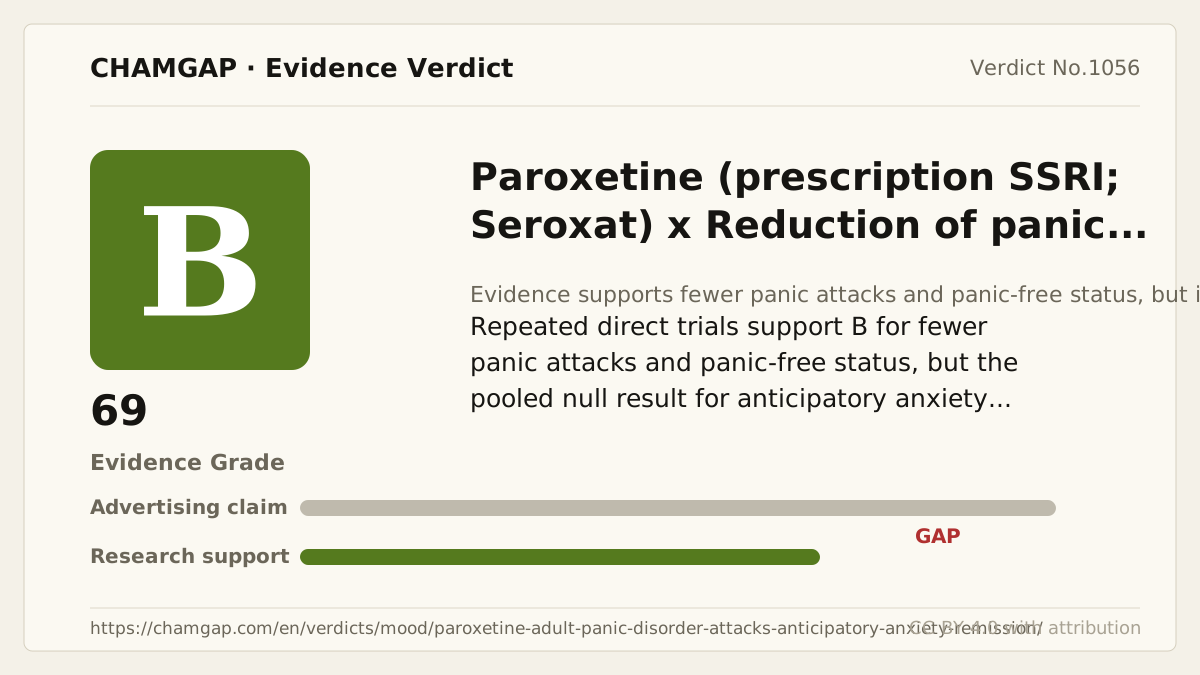
[Chamgap] Paroxetine x reduced panic attacks and anticipatory anxiety and panic-free status in adult panic disorder — Evidence Grade B·69. 5 cited sources checked. Source: https://chamgap.com/en/verdicts/mood/paroxetine-adult-panic-disorder-attacks-anticipatory-anxiety-remission/ · CC BY 4.0CC BY 4.0 — free to use with attribution; do not distort grades, numbers, or verdict meaning.
What this document does and does not do
Chamgap is an information source. It reports what research has and has not confirmed; it does not tell readers what to take or buy. That decision belongs to readers and, when needed, medical or legal professionals. This verdict reflects literature available up to the search date and may change as new research appears. Nothing here is medical advice.