
Paliperidone palmitate,
does it really help with Delayed psychotic relapse and related hospitalization in stabilized adults with schizophrenia?
research showsGrade B evidence shows that once-monthly paliperidone palmitate delays relapse in stabilized adults with schizophrenia. In the final 408-participant analysis of Hough and colleagues' randomized double-blind withdrawal trial, relapse hazard with placebo was 3.60 times that with paliperidone palmitate (95% CI 2.45 to 5.28). A randomized trial in recently diagnosed patients also prolonged time to relapse versus oral antipsychotics over 24 months and reported relapse in 14.8% versus 20.9%. However, only responders stabilized on the drug entered the maintenance-withdrawal randomization, and hospitalization was one component of the relapse composite rather than a precisely estimated standalone hospitalization endpoint. Manufacturer concentration and design limitations support B with 74 points, aligned with quetiapine B.
ads claimThe statement that one injection a month prevents relapse and hospitalization is too broad. Trials delayed and reduced relapse but did not eliminate it; hospitalization was mainly assessed within a composite relapse definition, and individual response, persistence, and adverse effects vary.
Useful facts when choosing a product
- Once-monthly paliperidone palmitate is a prescription antipsychotic given on a regular schedule after an initiation regimen, with an individualized maintenance dose.
- For patients without prior exposure to paliperidone or risperidone, oral tolerability is established before injection, and the local product label governs the exact initiation and maintenance schedule.
- Weight, waist circumference, blood pressure, glucose, lipids, extrapyramidal symptoms, prolactin-related symptoms, and orthostatic hypotension require regular assessment.
- Injection-site pain or reactions can occur, and the dose cannot be promptly removed after injection, so efficacy, adverse effects, and patient preference should be reviewed together.
Chamgap Semantic Classification Code
Candidate index · review held
M.paliperidone-palmitate.UNK.delayed-psychotic-relapse-and-related-hospitalization-in-stabilized-adults-with-schizophrenia.reduce.MULTIMedicinal interventions > Paliperidone palmitate > Unknown > Delayed psychotic relapse and related hospitalization in stabilized adults with schizophrenia > Reduction claim > Multiple: primary unresolved
An automated migration candidate, not an issued permanent code; exact claim scope remains under review. This machine-generated migration candidate helps retrieval but is not a permanent assignment. The original verdict ID and URL remain authoritative.
What the research actually shows
Hough and colleagues transitioned patients from prior antipsychotics to paliperidone palmitate, stabilized them during a 24-week maintenance phase, and then randomized stable patients to continue injections or receive placebo. Relapse was a composite of psychiatric hospitalization, PANSS worsening, clinically significant unsafe behavior, or worsening of specified core symptoms; the final 408-participant placebo-to-drug hazard ratio was 3.60. Schreiner and colleagues randomized patients diagnosed within one to five years to paliperidone palmitate or oral antipsychotics; during the core phase, the time by which 85% remained relapse-free was 469 versus 249 days and relapse occurred in 14.8% versus 20.9%. Weight and metabolic effects, extrapyramidal symptoms, hyperprolactinemia, and injection-site reactions remain separate from efficacy.
Why this is classified as B (74)
A 408-participant randomized withdrawal trial showed a direct clinical relapse effect with a placebo-to-drug hazard ratio of 3.60, supported by a 24-month trial showing delayed relapse versus oral antipsychotics in recently diagnosed patients. Enriched responder withdrawal, hospitalization embedded in a composite, Janssen funding concentration, and mixed adherence effects support B with 74 points, aligned with quetiapine B.
Counterpoint. Real-world value depends on previous response, preference for injections, ability to attend visits, adverse effects, and adherence to oral alternatives.
Rejudgment record. New verdict — Applied grade B for a placebo-to-drug relapse hazard ratio of 3.60 in the final 408-participant randomized paliperidone-palmitate stabilization-withdrawal trial and relapse of 14.8% versus 20.9% with delayed time to relapse in a 24-month rater-blinded trial versus oral antipsychotics, while deducting for enriched responder withdrawal, hospitalization as one component of a composite relapse definition, Janssen funding concentration, and mixed adherence effects; aligned with quetiapine B
Sub-claim grades by effect
This ingredient is marketed for several effects. A single overall grade blends strong and weak claims together, so each effect is graded separately here. The overall grade reflects the strongest disconfirming or core claim.
| Effect (sub-claim) | Grade | Basis |
|---|---|---|
| Delayed psychotic relapse in stabilized schizophrenia | B | The final 408-participant analysis showed a placebo-to-drug relapse hazard ratio of 3.60, but the trial used an enriched responder withdrawal design. |
| Delayed relapse-related psychiatric hospitalization | B | Hospitalization was included in a clinically important relapse composite, but a standalone hospitalization effect was not estimated precisely. |
| Delayed relapse versus oral antipsychotics in recently diagnosed schizophrenia | B | A 24-month rater-blinded trial found relapse of 14.8% versus 20.9% and longer time to relapse. |
Cross-check — AI research and Codex final gate
Evidence Table
| Study | Design | Sample | Funding | Endpoint | Result | Weight |
|---|---|---|---|---|---|---|
| Hough D et al. 2010 paliperidone-palmitate maintenance trial | Randomized double-blind placebo-controlled withdrawal trial after transition and stabilization | 408 in the final analysis; 312 in the prespecified interim analysis | Johnson & Johnson/Janssen development program; all authors company-affiliated | Primary time to relapse; relapse was a composite of hospitalization, PANSS worsening, unsafe behavior, and worsening core symptoms | Time to relapse significantly favored treatment, with a final placebo-to-drug hazard ratio of 3.60 (95% CI 2.45 to 5.28). | Pivotal direct relapse trial with an enriched withdrawal design |
| Schreiner A et al. 2015 recently diagnosed schizophrenia trial | Twenty-four-month randomized rater-blinded trial of paliperidone palmitate versus oral antipsychotics | 764 initially randomized; 715 in the core treatment phase | Janssen Pharmaceutica NV | Time to relapse, relapse rate, symptoms, functioning, and quality of life | The time by which 85% remained relapse-free was 469 versus 249 days (P=0.019), and relapse occurred in 14.8% versus 20.9% (P=0.032). | Active-comparator support for delayed relapse; rater-blinded and manufacturer-funded |
Receipt — 2 References
All 2 cited sources were verified for existence at the original page (as of 2026-07-22).
Final verification and publication gate: Codex · Evidence date: 2026-07-22 · Corrections: none
Cite this verdict
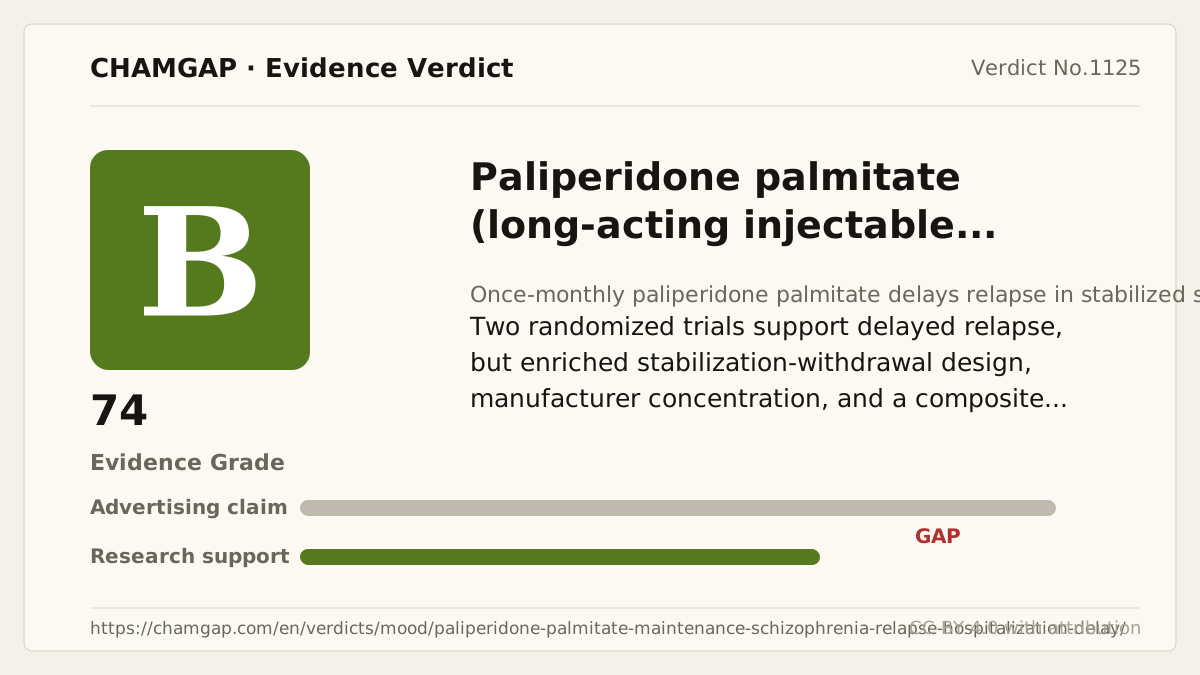
[Chamgap] Paliperidone palmitate x delayed relapse and related hospitalization in stabilized schizophrenia — Evidence Grade B·74. 2 cited sources checked. Source: https://chamgap.com/en/verdicts/mood/paliperidone-palmitate-maintenance-schizophrenia-relapse-hospitalization-delay/ · CC BY 4.0CC BY 4.0 — free to use with attribution; do not distort grades, numbers, or verdict meaning.
What this document does and does not do
Chamgap is an information source. It reports what research has and has not confirmed; it does not tell readers what to take or buy. That decision belongs to readers and, when needed, medical or legal professionals. This verdict reflects literature available up to the search date and may change as new research appears. Nothing here is medical advice.