
Lion's mane mushroom,
does it really help with Clinically meaningful treatment of depressive and anxiety symptoms?
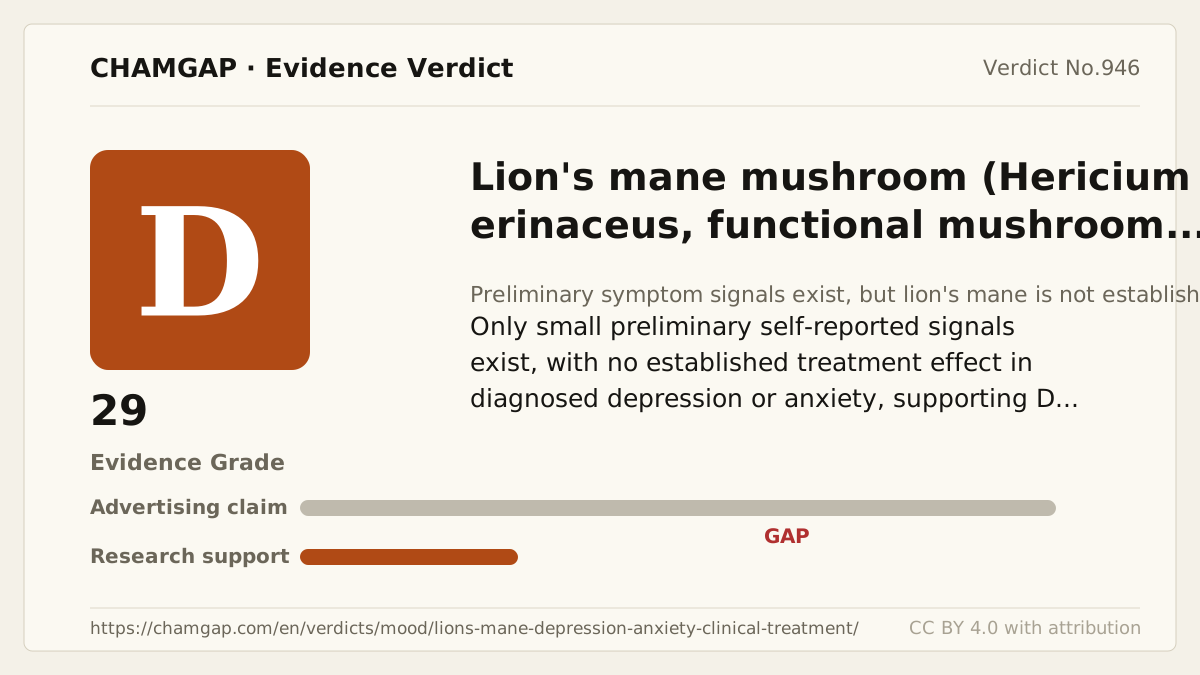
research showsLion's mane receives a D for clinical treatment of depression and anxiety. A 30-woman perimenopausal trial found signals on a depression scale and selected anxiety-related items, but between-group differences were limited. A 77-person study in adults with overweight or obesity combined a specific product with a low-calorie diet without placebo masking, and a 41-person pilot in healthy young adults found only a trend for stress after 28 days (p=0.051). Adequate controlled trials have not shown response or remission in diagnosed depressive or anxiety disorders, so a clinically meaningful treatment effect is not established. This is a different efficacy axis from the C verdict for cognition and memory in item 084.
ads claimMarketing can connect NGF or BDNF mechanisms and small self-rating changes to claims such as natural antidepressant, anxiety treatment, or mood restoration. Cell and animal mechanisms, stress in healthy people, and symptom scales in nonclinical populations are not equivalent to treatment response or remission in diagnosed disorders.
Useful facts when choosing a product
- Human trials used materially different products, including fruiting-body powder cookies, capsules containing 80% mycelium and 20% fruiting-body extract, and 1.8 g/day of powder.
- Marketed supplements vary in fruiting-body-to-mycelium ratio, hericenone and erinacine content, and extraction method, so they cannot be assumed identical to trial products.
- Short human studies were generally tolerated, but gastrointestinal discomfort, headache, skin reactions, or rare allergic reactions may occur.
- Depression and anxiety disorders can involve major impairment and suicide risk, so a supplement should not replace assessment, psychotherapy, or standard medication.
Chamgap Semantic Classification Code
Candidate index · review held
S.lions-mane-mushroom.UNK.clinically-meaningful-treatment-of-depressive-and-anxiety-symptoms.treat.placeboSupplements and nutraceuticals > Lion's mane mushroom > Unknown > Clinically meaningful treatment of depressive and anxiety symptoms > Treatment or remission claim > Placebo
An automated migration candidate, not an issued permanent code; exact claim scope remains under review. This machine-generated migration candidate helps retrieval but is not a permanent assignment. The original verdict ID and URL remain authoritative.
What the research actually shows
Nagano 2010 randomized 30 women to lion's mane cookies or placebo for four weeks, with 26 completing the study. CES-D and nonspecific complaint scores declined within the active group, but significant placebo comparisons were confined to selected nonspecific complaint items and the anxiety item showed only a trend. Vigna 2019 gave 40 of 77 adults with overweight or obesity a low-calorie diet plus 1.5 g/day of a product and gave 37 the diet alone. Self-rated depression and anxiety improved, but there was no placebo or masking and a specific commercial formulation was used. Docherty 2023 was a 41-person pilot randomized trial of 1.8 g/day for 28 days in healthy young adults; the stress reduction was p=0.051 and the study was not a treatment trial in clinical depression or anxiety. These data explore plausibility but do not establish clinically meaningful treatment.
Why this is classified as D (29)
Human mood research exists, but it is small, preliminary, and dominated by self-report, with no adequate independent trial of response or remission in a clinically diagnosed population. The perimenopausal trial had limited between-group findings, the 77-person study lacked placebo masking and used a specific product, and the healthy-adult pilot stress result was not significant. Therefore, separate from the C cognition and memory verdict in item 084, the clinical depression and anxiety treatment claim receives D with 29 points. Tolerability and possible allergy are assessed separately from efficacy.
Counterpoint. This does not mean every symptom signal is absent. Repeated independent trials using a standardized formulation, adequately sized diagnosed populations, and preregistered response, remission, function, and adverse-event outcomes could change the grade.
Rejudgment record. New verdict — Accepted small preliminary self-reported human signals but applied D to the clinical-treatment claim because no adequate independent randomized trial has verified clinical response, remission, or functional recovery in diagnosed depressive or anxiety disorders
Sub-claim grades by effect
This ingredient is marketed for several effects. A single overall grade blends strong and weak claims together, so each effect is graded separately here. The overall grade reflects the strongest disconfirming or core claim.
| Effect (sub-claim) | Grade | Basis |
|---|---|---|
| Clinical relief of depressive symptoms | D | Small self-reported signals in nonclinical populations exist, but response or remission in diagnosed depressive disorder is not established. |
| Clinical relief of anxiety symptoms | D | Anxiety findings come from selected scales or trends in small studies rather than treatment trials in anxiety disorders. |
| Induction of response or remission in diagnosed depressive or anxiety disorders | D | No adequate independent randomized trial has tested this direct clinical efficacy. |
Cross-check — AI research and Codex final gate
Evidence Table
| Study | Design | Sample | Funding | Endpoint | Result | Weight |
|---|---|---|---|---|---|---|
| Nagano M et al. 2010 | Randomized double-blind placebo-controlled preliminary trial | 30 women randomized and 26 completed | Limited reporting; cookies used a specific lion's mane powder | CES-D, KMI, PSQI, and an indefinite-complaints index | Some depression- and anxiety-related signals appeared after four weeks, but there was no clear between-group CES-D treatment effect and significant differences were confined to selected nonspecific complaints. | Core but very small and indirect population |
| Vigna L et al. 2019 | Non-placebo parallel-group controlled study | 77 adults with overweight or obesity; 40 product and 37 control | A.V.D. Reform supplied the specific product; other support was incompletely reported | Zung and SCL-90 self-rated depression and anxiety plus pro-BDNF/BDNF | Self-rated symptoms improved with the product plus a low-calorie diet, but the study lacked placebo masking and did not assess clinical response or remission. | Supportive preliminary signal |
| Docherty S et al. 2023 | Randomized double-blind placebo-controlled pilot | 41 healthy adults aged 18 to 45 years | Reported no external funding | Acute cognition and 28-day stress and mood | Subjective stress showed only a trend after 28 days (p=0.051), and the healthy population does not directly address clinical depression or anxiety treatment. | Indirect supportive evidence |
Receipt — 3 References
All 3 cited sources were verified for existence at the original page (as of 2026-07-21).
Final verification and publication gate: Codex · Evidence date: 2026-07-21 · Corrections: none
Cite this verdict
[Chamgap] Lion's mane mushroom x clinically meaningful treatment of depressive and anxiety symptoms — Evidence Grade D·29. 3 cited sources checked. Source: https://chamgap.com/en/verdicts/mood/lions-mane-depression-anxiety-clinical-treatment/ · CC BY 4.0CC BY 4.0 — free to use with attribution; do not distort grades, numbers, or verdict meaning.
What this document does and does not do
Chamgap is an information source. It reports what research has and has not confirmed; it does not tell readers what to take or buy. That decision belongs to readers and, when needed, medical or legal professionals. This verdict reflects literature available up to the search date and may change as new research appears. Nothing here is medical advice.