
Intravenous racemic ketamine,
does it really help with Rapid reduction of depressive symptoms within 24 hours in treatment-resistant depression?
research showsIntravenous racemic ketamine is rated B because it rapidly reduces symptoms of treatment-resistant depression within 24 hours. The multicenter active-placebo trial randomized 73 participants and included 72 in the modified intention-to-treat analysis (47 ketamine, 25 midazolam); the prespecified primary 24-hour MADRS endpoint favored ketamine by 7.95 points and response was 64% versus 28%. A meta-analysis of 49 studies and 3,299 participants also supported acute efficacy. Depression scales measure the symptom being treated rather than a surrogate, but the pivotal trial was small, a single-dose effect often lasts days rather than indefinitely, and maintenance, relapse prevention, and long-term safety remain separate questions. The verdict is B with 70 points.
ads claimPromotion can expand rapid relief into a one-dose cure, immediate durable recovery, or suicide prevention. The core evidence concerns 24-hour symptom reduction after a supervised intravenous infusion, not durable remission or prevention of suicidal behavior.
Useful facts when choosing a product
- A common research regimen for depression is racemic ketamine 0.5 mg/kg infused intravenously over about 40 minutes, but specialist clinicians determine dosing and monitoring.
- Blood pressure, pulse, consciousness, and dissociation require observation during and after administration, and driving or hazardous activity should wait until clinicians advise it is safe.
- Intravenous racemic ketamine is not the same product as intranasal esketamine, and regulatory status for depression differs by country.
- Repeated exposure raises concerns about abuse, dependence, cognition, and urinary toxicity, so self-administration and nonmedical use fall outside this evidence.
Chamgap Semantic Classification Code
Candidate index · review held
M.racemic-ketamine.intravenous.rapid-reduction-of-depressive-symptoms-within-in-treatment-resistant-depression.reduce.placeboMedicinal interventions > Racemic ketamine > Intravenous > Rapid reduction of depressive symptoms within in treatment-resistant depression > Reduction claim > Placebo
An automated migration candidate, not an issued permanent code; exact claim scope remains under review. This machine-generated migration candidate helps retrieval but is not a permanent assignment. The original verdict ID and URL remain authoritative.
What the research actually shows
The two-site trial randomized 73 people with treatment-resistant major depression and included 72 in the modified intention-to-treat analysis (47 ketamine, 25 midazolam) after dosing and 24-hour assessment. It compared ketamine 0.5 mg/kg infused over 40 minutes with active-placebo midazolam. The prespecified primary 24-hour MADRS endpoint succeeded: the adjusted score was 7.95 points lower with ketamine and response was 64% versus 28%. A 2023 meta-analysis included 49 studies and 3,299 participants, including 45 peer-reviewed randomized trials plus registry data, and supported acute efficacy while showing heterogeneity in formulation, dose, schedule, and follow-up. Single-infusion benefit is typically a 24-hour-to-days phenomenon; repeated dosing and maintenance require separate evidence.
Why this is classified as B (70)
An active-placebo trial randomized 73 participants, included 72 in the modified intention-to-treat analysis (47 ketamine, 25 midazolam), and met the 24-hour MADRS primary endpoint by 7.95 points; a 49-study, 3,299-participant synthesis supports acute efficacy. Depression symptoms are not a surrogate, but the pivotal confirmatory analysis had only 72 participants with an imbalanced 47-to-25 allocation and remains single-dose and short-term, with maintenance efficacy unestablished. This supports B with 70 points.
Counterpoint. A supervised option may be useful for selected patients needing rapid symptom reduction, but the evidence does not justify stopping established therapy or repeating infusions without a long-term treatment plan.
Rejudgment record. Cross-check applied — Evaluated the prespecified 24-hour MADRS primary endpoint and the 72 participants in the modified intention-to-treat analysis (47 ketamine, 25 midazolam) of 73 randomized in the active-placebo trial, together with the 49-study synthesis, while separating single-dose acute efficacy from maintenance. The pivotal confirmatory analysis included only 72 participants and had an imbalanced 47-to-25 allocation.
Sub-claim grades by effect
This ingredient is marketed for several effects. A single overall grade blends strong and weak claims together, so each effect is graded separately here. The overall grade reflects the strongest disconfirming or core claim.
| Effect (sub-claim) | Grade | Basis |
|---|---|---|
| Reduction in depressive symptoms 24 hours after one intravenous infusion | B | The prespecified MADRS primary endpoint succeeded in an active-placebo trial, and meta-analysis supports acute efficacy. |
| Rapid reduction in suicidal ideation | C | Human randomized and meta-analytic signals exist, but largely use scale items, heterogeneous populations, and short follow-up without proving prevention of suicidal behavior. |
| Long-term maintenance and relapse prevention | C | Human repeated-dose studies exist, but they are small, short, and heterogeneous and do not establish a durable maintenance strategy or relapse prevention. |
Cross-check — AI research and Codex final gate
Evidence Table
| Study | Design | Sample | Funding | Endpoint | Result | Weight |
|---|---|---|---|---|---|---|
| Murrough JW et al. 2013 | Two-site double-blind randomized active-placebo-controlled trial | 73 randomized; 72 in the modified intention-to-treat analysis (47 ketamine, 25 midazolam) | Public and academic support including NIMH; author patent and industry relationships disclosed | Primary: change in MADRS 24 hours after infusion | Among 73 randomized, 72 were included in the modified intention-to-treat analysis (47 ketamine, 25 midazolam); the primary endpoint was met with an adjusted between-group difference of 7.95 points (95% CI 3.20 to 12.71) and response of 64% versus 28%. | Key active-placebo acute-efficacy evidence |
| Nikolin S et al. 2023 | Systematic review and meta-analysis | 49 studies and 3,299 participants, including 45 peer-reviewed randomized trials | Public and academic support; conflicts disclosed | Depressive-symptom response acutely and during ongoing treatment | Supported rapid acute efficacy of racemic ketamine, with substantial heterogeneity in studies, formulations, and follow-up. | Breadth and consistency evidence |
Receipt — 3 References
All 3 cited sources were verified for existence at the original page (as of 2026-07-24).
Final verification and publication gate: Codex · Evidence date: 2026-07-24 · Corrections: none
Cite this verdict
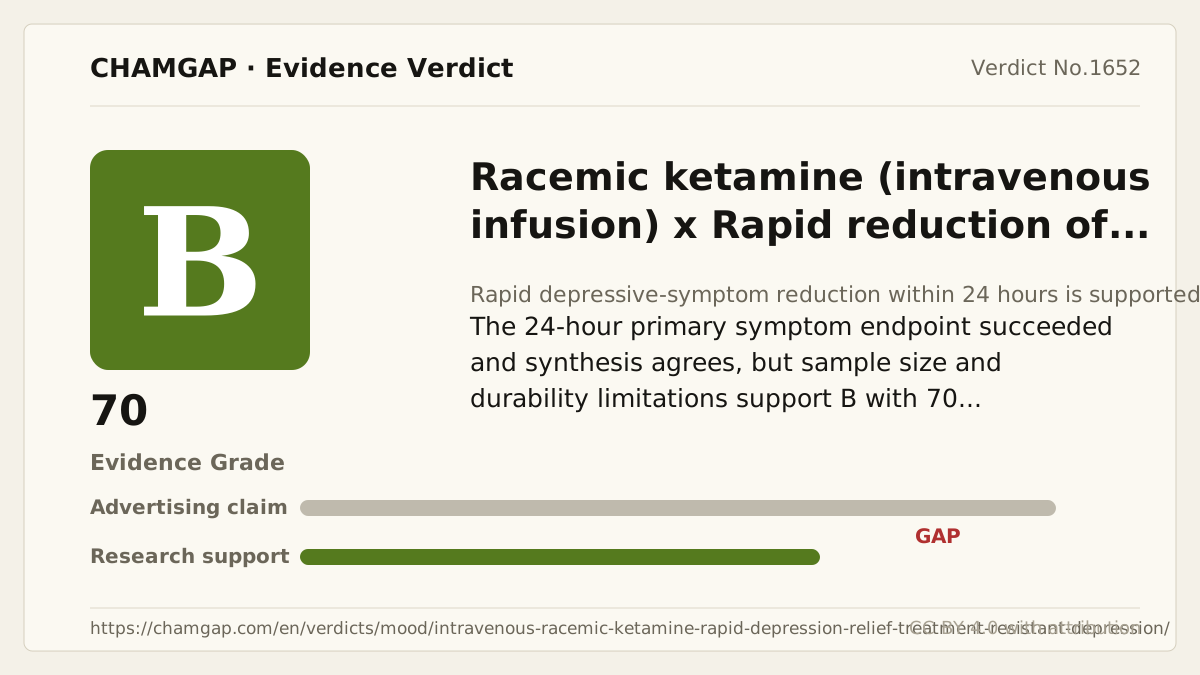
[Chamgap] Intravenous racemic ketamine x symptom reduction within 24 hours in treatment-resistant depression — Evidence Grade B·70. 3 cited sources checked. Source: https://chamgap.com/en/verdicts/mood/intravenous-racemic-ketamine-rapid-depression-relief-treatment-resistant-depression/ · CC BY 4.0CC BY 4.0 — free to use with attribution; do not distort grades, numbers, or verdict meaning.
What this document does and does not do
Chamgap is an information source. It reports what research has and has not confirmed; it does not tell readers what to take or buy. That decision belongs to readers and, when needed, medical or legal professionals. This verdict reflects literature available up to the search date and may change as new research appears. Nothing here is medical advice.