
Interpersonal psychotherapy,
does it really help with Reduction in depressive symptoms and persistence of major depression after childbirth?
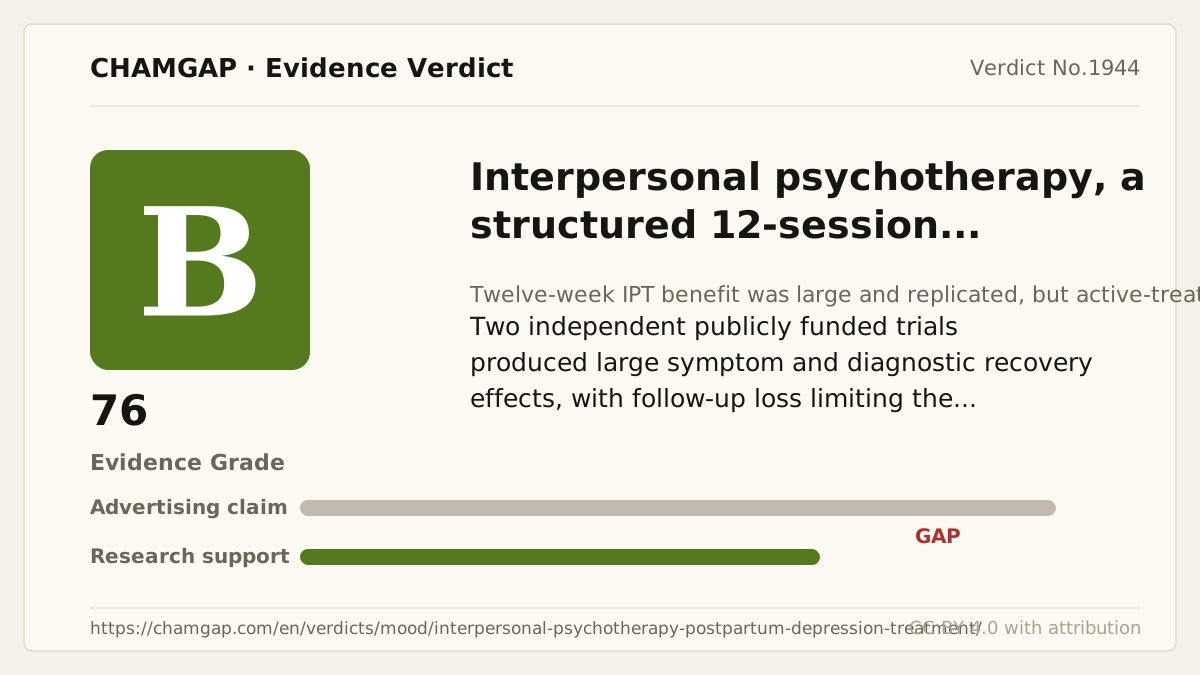
research showsThe grade is B. O'Hara randomized 120 and found intention-to-treat HRSD recovery in 31.7% versus 15.0%, P=0.03. A nationwide Canadian trial randomized 241 and, among 204 assessed at 12 weeks, found persistent depression in 11/104 (10.6%) versus 35/100 (35.0%), OR 0.22 (95% CI 0.10 to 0.46). Independent publicly funded trials replicated large symptom and diagnostic effects, but at least about 15% follow-up loss in both gives B with 72 points.
ads claimClaims that 12 sessions produce a lasting cure overstate the evidence. Twelve-week benefit was large and some separation persisted to 24 weeks, but diagnostic separation was absent at 36 weeks and active psychotherapies were not compared.
Useful facts when choosing a product
- O’Hara used a waiting list, whereas Dennis used standard community care, so comparator strength differed.
- Recovery and major-depressive-episode status are binary events and need no separate minimal-important-difference threshold.
- Dennis masked outcome assessors; O’Hara’s primary evaluator knew allocation.
Chamgap Semantic Classification Code
Candidate index · review held
X.interpersonal-psychotherapy.behavioral.depressive-symptoms-and-persistence-of-major-depression-after-childbirth.reduce.UNKBehaviors, exposures and policies > Interpersonal psychotherapy > Behavioral delivery > depressive symptoms and persistence of major depression after childbirth > Reduction claim > Unknown
An automated migration candidate, not an issued permanent code; exact claim scope remains under review. This machine-generated migration candidate helps retrieval but is not a permanent assignment. The original verdict ID and URL remain authoritative.
What the research actually shows
O’Hara randomized 120, 60 to IPT and 60 to waiting list, with 99 completers, 48 versus 51. HRSD recovery by intention-to-treat analysis was 31.7% versus 15.0%, P=0.03; BDI recovery was 38.3% versus 18.3%, P=0.02. NIMH funded the trial, but the primary evaluator knew allocation and only some recorded interviews were reassessed by a separate masked evaluator. Dennis randomized 241, 120 to telephone IPT and 121 to standard community care. The 12-week diagnostic analysis included 204, 104 versus 100, and major depressive episode was 11/104 versus 35/100, OR 0.22 (95% CI 0.10 to 0.46). Outcome assessors were masked and CIHR funded the study.
Why this is classified as B (72)
Large symptom and diagnostic effects replicated in independent public-funding trials, with shared follow-up loss limiting the grade to B with 72 points.
Counterpoint. Active psychotherapy was not directly compared, and diagnostic separation did not persist at 36 weeks.
Rejudgment record. Cross-check applied — Large symptom and diagnostic effects replicated by separately publicly funded teams, with at least about 15% follow-up loss
| Endpoint | P | Symptom or function itself is the target - including patient reports and performance tests |
| Replication | R2 | Independently replicated across trials |
| Independence | I2 | Decisive evidence is publicly or non-profit funded |
| Effect size | E+ | Meets the clinically important threshold |
Stored derived and displayed grades match; this is not a current recalculation or validity check (B).
Sub-claim grades by effect
This ingredient is marketed for several effects. A single overall grade blends strong and weak claims together, so each effect is graded separately here. The overall grade reflects the strongest disconfirming or core claim.
| Effect (sub-claim) | Grade | Basis |
|---|---|---|
| Improved postpartum depression symptoms and diagnosis at 12 weeks | B | Independent publicly funded trials replicated a large effect. |
| Diagnostic superiority sustained through 36 weeks | D | The 2020 SCID difference persisted at 24 weeks but not 36 weeks. |
Cross-check — AI research and Codex final gate
Evidence Table
| Study | Design | Sample | Funding | Endpoint | Result | Weight |
|---|---|---|---|---|---|---|
| O'Hara et al. 2000 | Randomized waiting-list-controlled 12-week IPT trial with all-participant depression analyses | 120 randomized, 60 per arm, all 120 in depression analyses; 99 completers, 48 versus 51 | US NIMH grant MH50524 | HRSD and BDI symptoms, response, recovery, and persistent major depressive episode | Intention-to-treat HRSD recovery 31.7% versus 15.0%, P=0.03; completer HRSD 19.4 to 8.3 versus 19.8 to 16.8, P<0.001 | Initial direct publicly funded efficacy trial |
| Dennis et al. 2020 | Nationwide multiregion randomized usual-care-controlled masked-assessor 12-week telephone-IPT trial | 241 randomized, 120 versus 121; 204 analyzed at 12 weeks, 104 versus 100 | Canadian Institutes of Health Research grant MCT 82332 | Primary persistent SCID major depression at 12 weeks | 11/104 (10.6%) versus 35/100 (35.0%), OR 0.22 (0.10 to 0.46) | Independent nationwide replication |
Receipt — 2 References
All 2 cited sources were verified for existence at the original page (as of 2026-08-02).
Final verification and publication gate: Codex · Evidence date: 2026-08-02 · Corrections: none
Cite this verdict
[Chamgap] Interpersonal psychotherapy x treatment of postpartum depression — Evidence Grade B·72. 2 cited sources checked. Source: https://chamgap.com/en/verdicts/mood/interpersonal-psychotherapy-postpartum-depression-treatment/ · CC BY 4.0CC BY 4.0 — free to use with attribution; do not distort grades, numbers, or verdict meaning.
What this document does and does not do
Chamgap is an information source. It reports what research has and has not confirmed; it does not tell readers what to take or buy. That decision belongs to readers and, when needed, medical or legal professionals. This verdict reflects literature available up to the search date and may change as new research appears. Nothing here is medical advice.