
H7-coil deep transcranial magnetic stimulation,
does it really help with Reduced six-week YBOCS score in treatment-resistant obsessive-compulsive disorder?
research showsThe grade is C. In the 99-patient trial, the prespecified six-week YBOCS change favored active H7 dTMS over sham by 2.8 points (P=.01), effect size 0.69. At least 30% response occurred in 38.1% versus 11.1%, an absolute difference of 27.0 points. The primary endpoint was a symptom-rating score, functional disability did not differ significantly, and this was one Brainsway-funded trial under 200 patients and under 12 weeks, giving C with 50 points.
ads claimrTMS is used mainly for depression in Korea and discussed or offered for OCD, but the National Center for Mental Health lists QZ962 as noncovered at KRW 40,000 per session in 2026. Coverage and H7 OCD authorization therefore require institution-specific verification.
Useful facts when choosing a product
- Six-week full response was 16/42 (38.1%) versus 5/45 (11.1%).
- Sheehan disability improved by 3.8 versus 3.0 points without a significant between-group difference.
- Headache was 37.5% versus 35.3%; no seizure occurred, but seizure screening remains necessary.
Chamgap Semantic Classification Code
Candidate index · review held
P.h7-coil-deep-transcranial-magnetic-stimulation.device.ybocs-score-in-treatment-resistant-obsessive-compulsive-disorder.reduce.shamProcedures, devices and tests > H7-coil deep transcranial magnetic stimulation > Device delivered > YBOCS score in treatment-resistant obsessive-compulsive disorder > Reduction claim > Sham procedure or device
An automated migration candidate, not an issued permanent code; exact claim scope remains under review. This machine-generated migration candidate helps retrieval but is not a permanent assignment. The original verdict ID and URL remain authoritative.
What the research actually shows
Eleven sites enrolled 100 people and the ITT sample included 99. Allocation used "a stratified randomization scheme using the random number generator in SAS, version 9.4" with a central web code. Sham used identical parameters and scalp sensation, and "Patients, operators, and raters were blind to treatment condition." Defect name: Small study. Listed item: Small study, total under 200. Original evidence that the requirement was met: "The ITT sample included 99 patients." Avoidability: Avoidable - enrollment could have exceeded 200. Defect name: Short study. Listed item: Short study, under 12 weeks. Original evidence that the requirement was met: the primary treatment phase was six weeks. Avoidability: Avoidable - at least 12 weeks of maintenance and functional follow-up could have been prespecified. Brainsway Ltd supported the study, and multiple authors disclosed company grants, roles, or financial interests.
Why this is classified as C (50)
YBOCS measures the OCD symptoms targeted by treatment. A moderate effect and response difference are limited by the 99-patient and six-week defects, manufacturer-only funding, and no independent replication, giving C with 50 points.
Counterpoint. Sham blinding was credible and the response signal was substantial. Independent replication and durable functional outcomes are still needed.
Rejudgment record. Direct source verification — Treatment-target OCD symptoms measured by YBOCS, credible sham blinding, moderate effect, 99 patients over six weeks, and one Brainsway-funded trial
| Endpoint | P | Symptom or function itself is the target - including patient reports and performance tests |
| Replication | R1 | Single confirmatory trial |
| Independence | I0 | Evidence comes only from manufacturer studies |
| Effect size | E+ | Meets the clinically important threshold |
Stored derived and displayed grades match; this is not a current recalculation or validity check (C).
Sub-claim grades by effect
This ingredient is marketed for several effects. A single overall grade blends strong and weak claims together, so each effect is graded separately here. The overall grade reflects the strongest disconfirming or core claim.
| Effect (sub-claim) | Grade | Basis |
|---|---|---|
| Six-week YBOCS reduction | C | The between-group change difference was 2.8 points, effect size 0.69. |
| Improved daily functioning | D | The between-group Sheehan Disability Scale difference was not significant. |
Cross-check — AI research and Codex final gate
Evidence Table
| Study | Design | Sample | Funding | Endpoint | Result | Weight |
|---|---|---|---|---|---|---|
| Carmi L et al. 2019 H7 OCD trial | Eleven-center randomized double-blind sham-controlled trial | 100 enrolled; 99 in ITT; 94 in prespecified primary modified ITT | Supported by Brainsway Ltd, with company grants, roles, and financial interests disclosed | Change in YBOCS score from baseline to the six-week posttreatment assessment | Between-group change difference 2.8 points (P=.01), effect size 0.69; 30% response 38.1% versus 11.1%, absolute difference 27.0 points | Positive sham-blinded evidence limited by small short manufacturer-only study and a score endpoint |
Receipt — 2 References
All 2 cited sources were verified for existence at the original page (as of 2026-08-18).
Final verification and publication gate: Codex · Evidence date: 2026-08-18 · Corrections: none
Cite this verdict
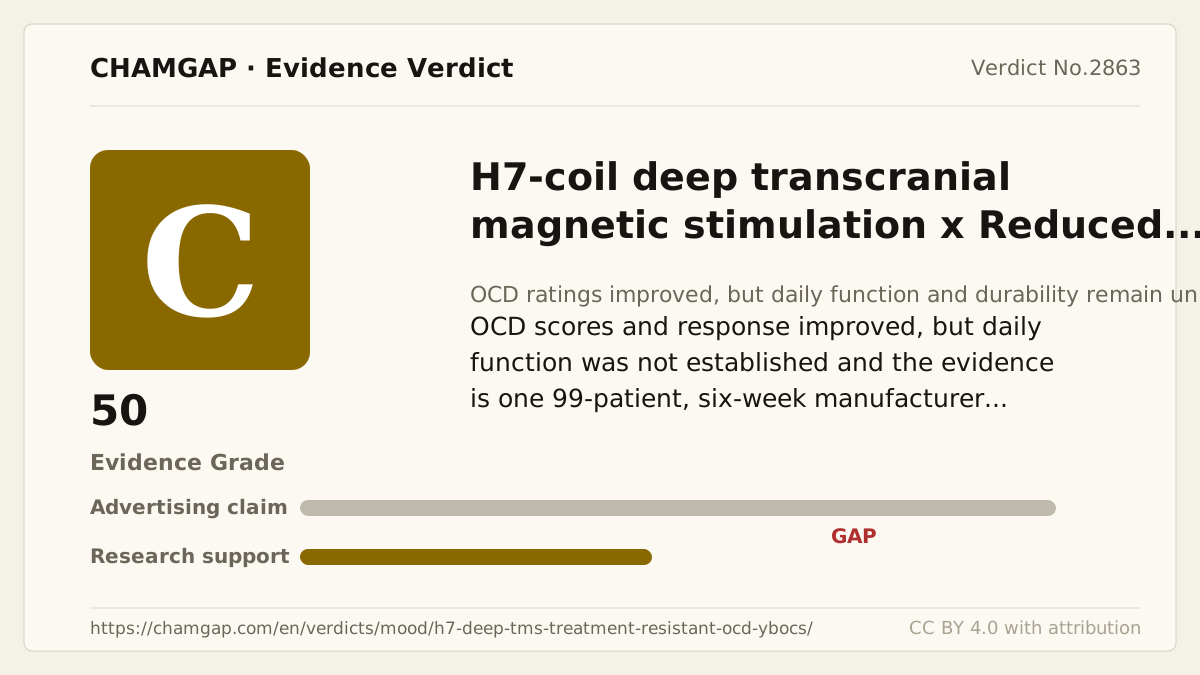
[Chamgap] H7 Deep Transcranial Magnetic Stimulation Benefits Treatment-Resistant Obsessive-Compulsive Disorder by Reducing YBOCS Scores — Evidence Grade C·50. 2 cited sources checked. Source: https://chamgap.com/en/verdicts/mood/h7-deep-tms-treatment-resistant-ocd-ybocs/ · CC BY 4.0CC BY 4.0 — free to use with attribution; do not distort grades, numbers, or verdict meaning.
What this document does and does not do
Chamgap is an information source. It reports what research has and has not confirmed; it does not tell readers what to take or buy. That decision belongs to readers and, when needed, medical or legal professionals. This verdict reflects literature available up to the search date and may change as new research appears. Nothing here is medical advice.