
Guided web CBT self-help,
does it really help with Reduced onset of major depressive disorder over 12 months?
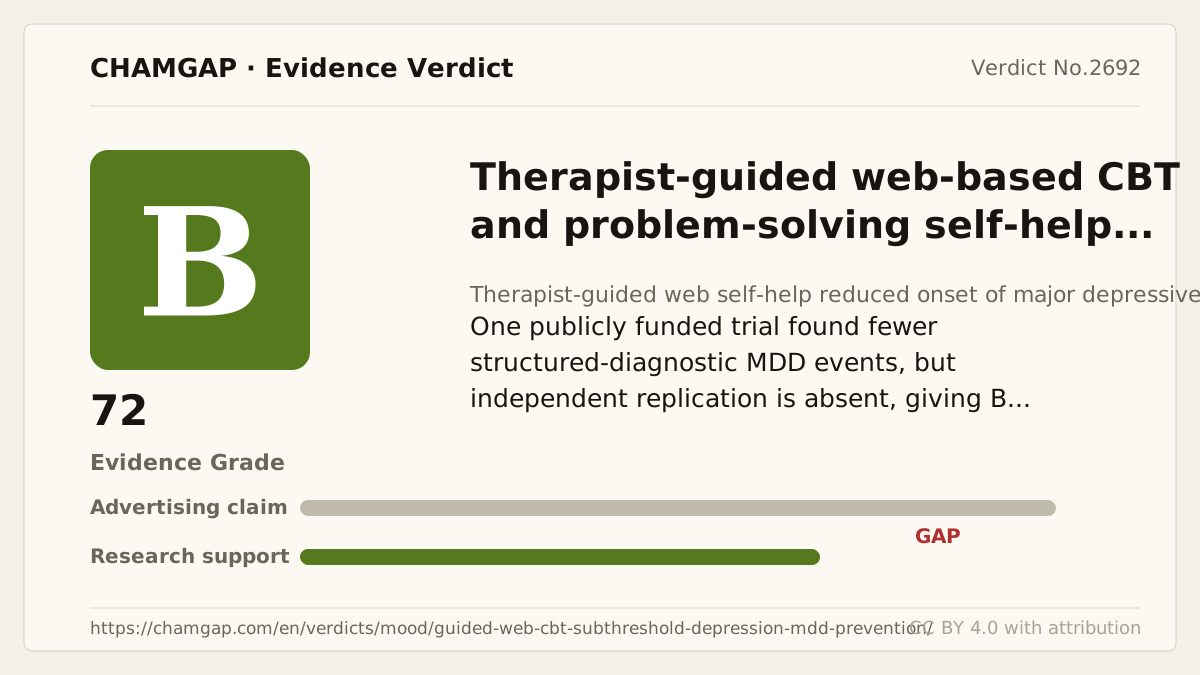
research showsThe grade is B with 72 points. MDD occurred in 55/202 (27.2%) with guided self-help versus 84/204 (41.2%) with web psychoeducation, adjusted HR 0.59 (95% CI 0.42 to 0.82).
ads claimThe tested program combined six structured sessions with individualized online trainer feedback; it was not a screening quiz or automated content alone.
Useful facts when choosing a product
- Participants had CES-D scores of at least 16 but no current MDD.
- Controls retained usual-care access and received web psychoeducation.
- The registration is DRKS00004709.
Chamgap Semantic Classification Code
Candidate index · review held
X.therapist-guided-web-based-cbt-and-problem-solving-self-help.behavioral.onset-of-major-depressive-disorder-over.reduce.UNKBehaviors, exposures and policies > Therapist-guided web-based CBT and problem-solving self-help > Behavioral delivery > onset of major depressive disorder over > Reduction claim > Unknown
An automated migration candidate, not an issued permanent code; exact claim scope remains under review. This machine-generated migration candidate helps retrieval but is not a permanent assignment. The original verdict ID and URL remain authoritative.
What the research actually shows
An independent researcher used central automated computer randomization linked only to trial IDs, keeping recruiters unable to influence allocation. SCID interviewers were masked and replaced for the next interview if masking broke. All 406 randomized participants entered assigned-group analysis, with multiple-imputation survival sensitivity analysis. DRKS00004709 prespecified 12-month MDD onset, matching the paper. SCID follow-up was completed by 335/406 (82.5%), so 17.5% loss counts as one avoidable limitation. The European Union and German statutory health insurance funded the study. Separate disclosures described intervention rights and author ownership in a licensing institute.
Why this is classified as B (72)
A publicly funded randomized trial substantially reduced diagnosed MDD, but one trial and follow-up loss above 15% give B with 72 points.
Counterpoint. People with suicidality, marked impairment, or worsening depression need professional assessment rather than self-help alone.
Rejudgment record. Cross-check applied — Cross-checked the JAMA paper and DRKS00004709 for the primary outcome, central allocation, SCID assessor masking, intention-to-treat and missing-data methods, attrition, and funding
| Endpoint | H | Hard endpoint - actual events such as death |
| Replication | R1 | Single confirmatory trial |
| Independence | I2 | Decisive evidence is publicly or non-profit funded |
| Effect size | E+ | Meets the clinically important threshold |
Stored derived and displayed grades match; this is not a current recalculation or validity check (B).
Sub-claim grades by effect
This ingredient is marketed for several effects. A single overall grade blends strong and weak claims together, so each effect is graded separately here. The overall grade reflects the strongest disconfirming or core claim.
| Effect (sub-claim) | Grade | Basis |
|---|---|---|
| Guided web self-help reduces 12-month MDD onset | B | The adjusted HR was 0.59 (0.42 to 0.82). |
Cross-check — AI research and Codex final gate
Evidence Table
| Study | Design | Sample | Funding | Endpoint | Result | Weight |
|---|---|---|---|---|---|---|
| Buntrock C, Ebert DD, Lehr D, Smit F, Riper H, Berking M, Cuijpers P. 2016 | Assessor-masked randomized clinical trial | 406 randomized and included in intention-to-treat analysis (202/204); 335 completed SCID follow-up | European Union EFRE and BARMER GEK statutory health insurance | Time to onset of MDD over 12 months | 55/202 (27.2%) versus 84/204 (41.2%); adjusted HR 0.59 (95% CI 0.42 to 0.82), P=.002 | Pivotal single publicly funded trial |
Receipt — 1 References
All 1 cited sources were verified for existence at the original page (as of 2026-08-15).
Final verification and publication gate: Codex · Evidence date: 2026-08-15 · Corrections: none
Cite this verdict
[Chamgap] Guided web CBT self-help x prevention of major depressive disorder — Evidence Grade B·72. 1 cited sources checked. Source: https://chamgap.com/en/verdicts/mood/guided-web-cbt-subthreshold-depression-mdd-prevention/ · CC BY 4.0CC BY 4.0 — free to use with attribution; do not distort grades, numbers, or verdict meaning.
What this document does and does not do
Chamgap is an information source. It reports what research has and has not confirmed; it does not tell readers what to take or buy. That decision belongs to readers and, when needed, medical or legal professionals. This verdict reflects literature available up to the search date and may change as new research appears. Nothing here is medical advice.