
Gratitude writing,
does it really help with Reduction in depressive symptoms?
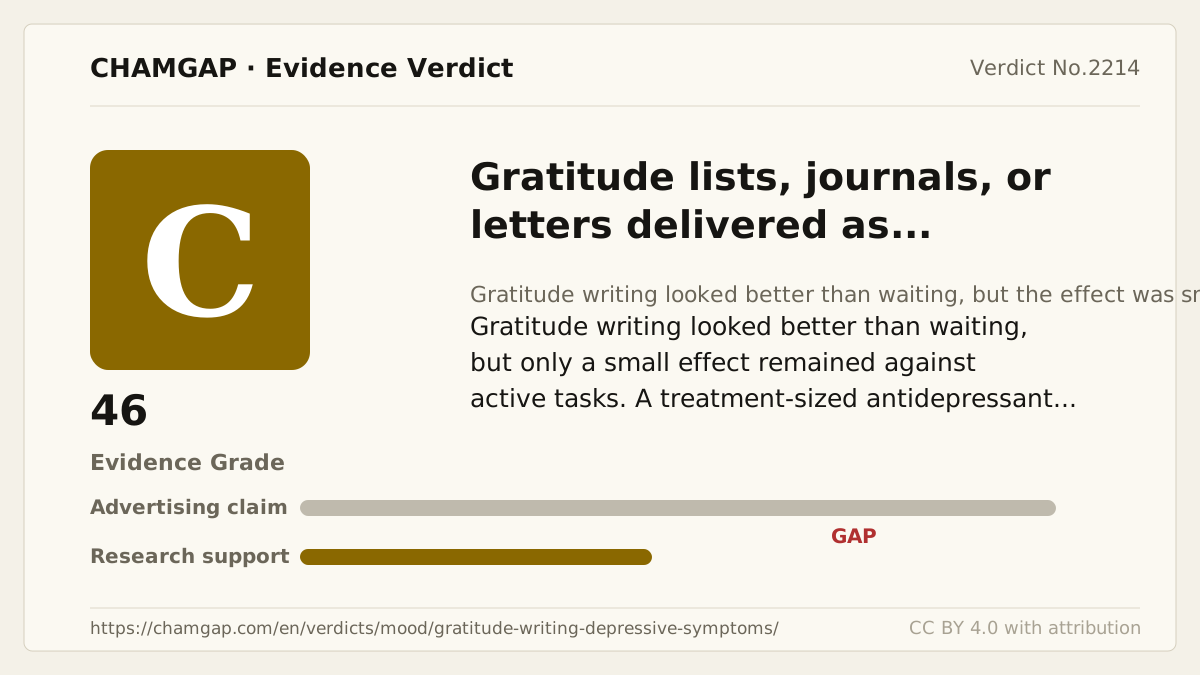
research showsThe grade is C with 46 points. Across 24 studies and 3,400 participants, the pooled post-test depression effect was Hedges g=-0.23 (95% CI -0.33 to -0.13). Yet across the broader symptom analysis, 18 active-control studies produced g=-0.18 (SE 0.06), compared with -0.51 (SE 0.15) in nine waitlist studies. The effect shrank when time and activity were matched.
ads claimThis does not deny the personal or reflective value of gratitude journaling. It does not support marketing it as a substitute for established treatment of major depression.
Useful facts when choosing a product
- Included exercises varied across gratitude lists, journals, and letters and lasted no more than eight weeks.
- The contrast between active-control g=-0.18 and waitlist g=-0.51 shows strong dependence on control choice.
- Fail-safe N was 560 at post-test and 122 at follow-up, while cumulative analysis suggested larger post-test effects in smaller studies.
Chamgap Semantic Classification Code
Candidate index · review held
UNK.gratitude-lists.UNK.depressive-symptoms.reduce.activeUnknown > Gratitude lists > Unknown > depressive symptoms > Reduction claim > Active comparator
An automated migration candidate, not an issued permanent code; exact claim scope remains under review. This machine-generated migration candidate helps retrieval but is not a permanent assignment. The original verdict ID and URL remain authoritative.
What the research actually shows
Cregg and Cheavens synthesized 27 studies and 3,675 participants; depression data covered 24 studies and 3,400 people at post-test and 12 studies and 2,232 at follow-up. For overall symptoms, active controls yielded g=-0.18 post-test and -0.16 at follow-up, while waitlists yielded -0.51 and -0.63. Risk-of-bias counts conflict within the source: the text reports six low-, 12 medium-, and nine high-risk studies, while the table reports seven, 13, and seven; the final true counts could not be verified. Only nine studies adequately reported sequence generation. The review authors declared no conflicts, but funding of all included trials could not be verified, so independently funded replication was not assumed.
Why this is classified as C (46)
Multiple randomized studies retained a small statistical benefit, but active-control g=-0.18 plus short, small, unmasked self-report trials and possible small-study effects give C with 46 points.
Counterpoint. Most samples were nonclinical and only two studies used clinical samples, so the findings should not be generalized to treatment of diagnosed depression.
Rejudgment record. Cross-check applied — Separated active and waitlist controls and accounted for the small active-control standardized effect, short unmasked self-report trials, risk-of-bias profile, and possible small-study effects
| Endpoint | P | Symptom or function itself is the target - including patient reports and performance tests |
| Replication | R1 | Single confirmatory trial |
| Independence | I1 | Mixed funding sources |
| Effect size | E~ | Statistically positive but below the threshold |
Stored derived and displayed grades match; this is not a current recalculation or validity check (C).
Sub-claim grades by effect
This ingredient is marketed for several effects. A single overall grade blends strong and weak claims together, so each effect is graded separately here. The overall grade reflects the strongest disconfirming or core claim.
| Effect (sub-claim) | Grade | Basis |
|---|---|---|
| Reduction of depressive symptoms with gratitude writing | C | The active-control effect was small at g=-0.18. |
| Gratitude journaling replaces treatment for major depression | D | Most samples were nonclinical and treatment substitution was not established. |
Cross-check — AI research and Codex final gate
Evidence Table
| Study | Design | Sample | Funding | Endpoint | Result | Weight |
|---|---|---|---|---|---|---|
| Cregg and Cheavens meta-analysis 2021 | Meta-analysis of randomized and comparative gratitude-intervention studies | 27 studies and 3,675 participants overall; 24 studies and 3,400 for post-test depression | No review funding statement was identified and authors declared no conflicts; funding of included trials was not fully verified | Post-test and follow-up depressive symptoms | Post-test depression g=-0.23 (-0.33 to -0.13); overall symptoms g=-0.18 with active controls and -0.51 with waitlists. | Pivotal multi-study synthesis |
Receipt — 1 References
All 1 cited sources were verified for existence at the original page (as of 2026-08-04).
Final verification and publication gate: Codex · Evidence date: 2026-08-04 · Corrections: none
Cite this verdict
[Chamgap] Gratitude writing x reduced depressive symptoms — Evidence Grade C·46. 1 cited sources checked. Source: https://chamgap.com/en/verdicts/mood/gratitude-writing-depressive-symptoms/ · CC BY 4.0CC BY 4.0 — free to use with attribution; do not distort grades, numbers, or verdict meaning.
What this document does and does not do
Chamgap is an information source. It reports what research has and has not confirmed; it does not tell readers what to take or buy. That decision belongs to readers and, when needed, medical or legal professionals. This verdict reflects literature available up to the search date and may change as new research appears. Nothing here is medical advice.