
Folic acid plus vitamins B6 and B12,
does it really help with Prevention of new-onset depression in middle-aged and older women without a history of depression?
research showsFolic acid 2.5 mg plus vitamin B6 50 mg and vitamin B12 1 mg is rated D because long-term use did not prevent new depression in middle-aged and older women without a prior history. A randomized placebo-controlled trial followed 4,331 women for an average of seven years, observed 524 cases, and found an adjusted risk ratio of 1.02 (95% CI 0.86 to 1.21). Homocysteine fell significantly while clinical depression risk did not, separating the surrogate from the clinical outcome. A separate trial in 909 at-risk older adults also found no reduction in depressive symptoms over 24 months with folic acid plus B12, and a meta-analysis of 16 trials involving 6,276 participants found no overall effect on depression measures in people without overt deficiency. Treatment of deficiency is a different question, and chronic high-dose B6 neuropathy remains a separate safety issue.
ads claimMarketing converts lower homocysteine and the biochemical role of B vitamins in neurotransmitter synthesis directly into depression prevention. The large trial shows that homocysteine can fall without reducing new depression.
Useful facts when choosing a product
- The key prevention trial used folic acid 2.5 mg, vitamin B6 50 mg, and vitamin B12 1 mg each day for about seven years, doses generally above those in routine multivitamins.
- Replacement for confirmed folate, B12, or B6 deficiency is distinct from long-term high-dose use to prevent depression in a nutritionally sufficient person.
- Long-term high-dose vitamin B6 can cause sensory neuropathy. Tingling, sensory loss, or gait instability warrants review of the total dose and clinical evaluation.
- High-dose folic acid can mask the hematologic signs of untreated vitamin B12 deficiency. Total exposure and drug interactions should be checked when several products are combined.
Chamgap Semantic Classification Code
Candidate index · review held
S.folic-acid-plus-vitamins-b6-and-b12.UNK.new-onset-depression-in-middle-aged-and-older-women-without-a-history-of-depression.prevent.MULTISupplements and nutraceuticals > Folic acid plus vitamins B6 and B12 > Unknown > new-onset depression in middle-aged and older women without a history of depression > Occurrence-prevention claim > Multiple: primary unresolved
An automated migration candidate, not an issued permanent code; exact claim scope remains under review. This machine-generated migration candidate helps retrieval but is not a permanent assignment. The original verdict ID and URL remain authoritative.
What the research actually shows
The depression analysis of the Women's Antioxidant and Folic Acid Cardiovascular Study compared folic acid plus vitamins B6 and B12 with placebo for an average of seven years in 4,331 women without prior depression. Risk was unchanged across 524 composite depression cases, and age or vitamin C interaction analyses were multiple or borderline findings that did not overturn the overall null result. Walker and colleagues gave 909 psychologically distressed adults aged 60 to 74 years folic acid 400 micrograms plus vitamin B12 100 micrograms daily for 24 months and found no PHQ-9 symptom reduction at any time. Markun and colleagues reviewed 16 trials with 6,276 participants receiving B12 alone or with folic acid and optional B6 in the absence of overt B12 deficiency or major neurologic disease and found no overall effect on depression measures.
Why this is classified as D (22)
A 4,331-person long-term randomized trial that directly matches the claim was null for incident clinical depression at a risk ratio of 1.02, even though the homocysteine surrogate fell. An at-risk older-adult trial and a 16-trial synthesis in people without overt deficiency also do not support depressive-symptom benefit. The large direct null rule yields D with 22 points, with deficiency treatment and safety kept separate.
Counterpoint. Persistent low mood or loss of interest should prompt assessment of sleep, medicines, thyroid disease, anemia, B12 deficiency, and depression rather than reliance on preventive supplements. A confirmed deficiency should be corrected, but taking more B vitamins at normal status is not established prevention.
Rejudgment record. Cross-verification incorporated — Applied D for a large direct null because the average seven-year prevention trial in 4,331 middle-aged and older women without prior depression found incident-depression RR 1.02 despite lower homocysteine, and a 909-person at-risk trial plus a 16-trial meta-analysis did not support depressive-symptom benefit
Sub-claim grades by effect
This ingredient is marketed for several effects. A single overall grade blends strong and weak claims together, so each effect is graded separately here. The overall grade reflects the strongest disconfirming or core claim.
| Effect (sub-claim) | Grade | Basis |
|---|---|---|
| Prevention of new clinician-diagnosed depression in middle-aged and older women without prior depression | D | Overall depression risk in the 4,331-person long-term trial was equivalent to placebo at RR 1.02. |
| Prevention of incident clinically significant depressive symptoms in middle-aged and older women without prior depression | D | The direct large trial's composite outcome was null, and a separate 909-person trial did not reduce PHQ-9 symptoms. |
| Reduction of depressive symptoms in middle-aged and older adults without overt deficiency | D | A meta-analysis of 16 trials with 6,276 participants found no overall effect on depression measures. |
Cross-check — AI research and Codex final gate
Evidence Table
| Study | Design | Sample | Funding | Endpoint | Result | Weight |
|---|---|---|---|---|---|---|
| Okereke OI et al. 2015 | Prespecified depression analysis of a large long-term randomized double-blind placebo-controlled trial | 4,331 women without prior depression; mean age 63.6 years | Public funding from the U.S. National Institutes of Health; Women's Antioxidant and Folic Acid Cardiovascular Study | Incident clinician-diagnosed depression or clinically significant depressive symptoms | There were 524 cases over an average of seven years; adjusted RR was 1.02 (95% CI 0.86 to 1.21; P = 0.81), while homocysteine fell significantly. | Decisive large direct null evidence |
| Walker JG et al. 2010 | Fully crossed factorial randomized placebo-controlled trial | 909 community-dwelling adults aged 60 to 74 years with elevated psychological distress | Australian public and academic mental-health research | PHQ-9 depressive symptoms at six weeks and 6, 12, and 24 months | Folic acid 400 micrograms plus B12 100 micrograms daily did not reduce depressive symptoms versus placebo at any time point. | Supportive direct null evidence without B6 |
| Markun S et al. 2021 | Systematic review, meta-analysis, and meta-regression of randomized trials | Sixteen randomized trials and 6,276 participants | No external funding or conflicts of interest reported | Depression measures, cognition, and fatigue with B12 alone or combined with folic acid and optional B6 | There was no overall effect on depression measures in people without overt B12 deficiency or major neurologic disease. | Confirmatory null synthesis |
Receipt — 3 References
All 3 cited sources were verified for existence at the original page (as of 2026-07-21).
Final verification and publication gate: Codex · Evidence date: 2026-07-21 · Corrections: none
Cite this verdict
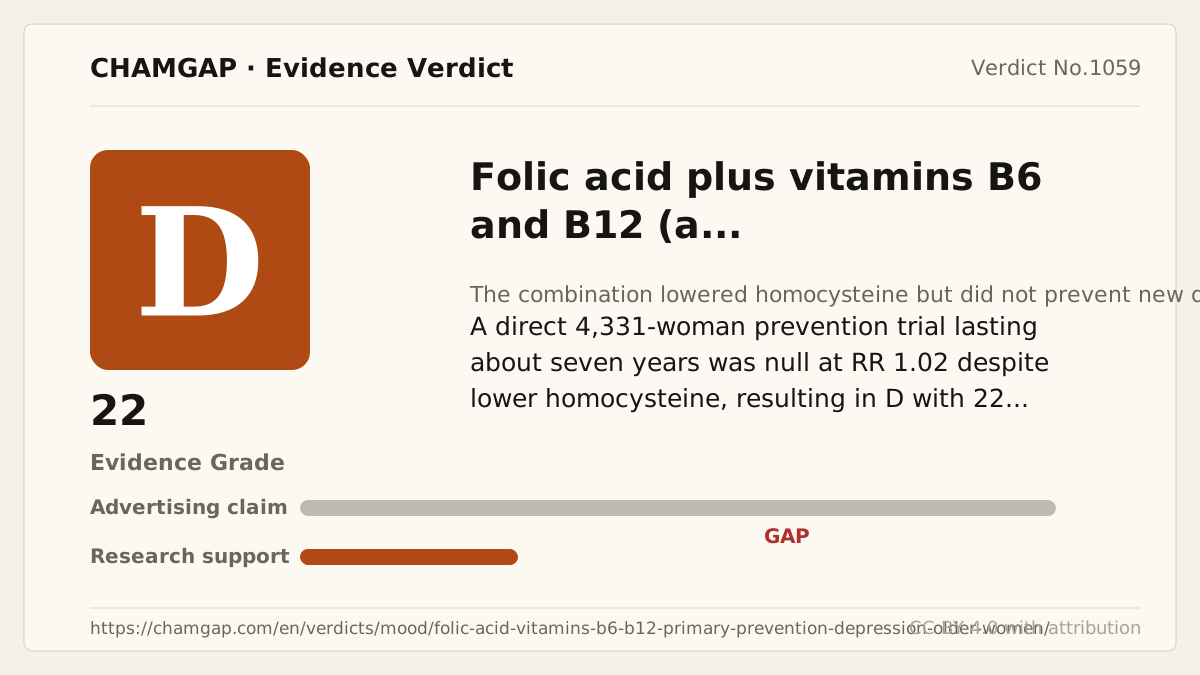
[Chamgap] Folic acid plus vitamins B6 and B12 x prevention of new depression in middle-aged and older women — Evidence Grade D·22. 3 cited sources checked. Source: https://chamgap.com/en/verdicts/mood/folic-acid-vitamins-b6-b12-primary-prevention-depression-older-women/ · CC BY 4.0CC BY 4.0 — free to use with attribution; do not distort grades, numbers, or verdict meaning.
What this document does and does not do
Chamgap is an information source. It reports what research has and has not confirmed; it does not tell readers what to take or buy. That decision belongs to readers and, when needed, medical or legal professionals. This verdict reflects literature available up to the search date and may change as new research appears. Nothing here is medical advice.