
Fluoxetine,
does it really help with Acute symptom response and remission in adults with major depressive disorder?
research showsFluoxetine is rated B because it increases acute response and remission versus placebo in adults with major depressive disorder. In the 2018 Cipriani network meta-analysis, fluoxetine beat placebo but had a small pooled effect and ranked among the relatively less efficacious drugs in active-drug head-to-head comparisons. Acceptability was favorable, with fewer all-cause dropouts than placebo (OR 0.88). Matching the B score of 68 for escitalopram in verdict 603 would be excessive because escitalopram had better head-to-head efficacy and separate relapse-prevention evidence; fluoxetine remains above duloxetine's C score of 58 in verdict 774. B with 65 points is therefore the equitable placement.
ads claimPromotion can simplify treatment into normalization of brain chemistry, rapid benefit, or a cure for everyone. In practice, fluoxetine raises the probability of response and remission for some patients over several weeks and requires diagnosis, follow-up, dose adjustment, and an individualized plan that can include psychotherapy.
Useful facts when choosing a product
- Fluoxetine is a prescription SSRI, and adult major depressive disorder treatment should follow assessment of diagnosis, suicide risk, possible bipolar disorder, and interacting medicines.
- Benefit may take several weeks, while activation, insomnia, nausea, headache, and sexual dysfunction can appear earlier.
- Children, adolescents, and young adults require close monitoring for worsening suicidal thoughts or behavior early in treatment, and sudden deterioration at any age needs prompt care.
- Fluoxetine should not be stopped abruptly without guidance. Important interactions include monoamine oxidase inhibitors, other serotonergic drugs, and tamoxifen; discontinuation symptoms can still occur despite its long half-life.
Chamgap Semantic Classification Code
Candidate index · review held
M.fluoxetine.UNK.acute-symptom-response-and-remission-with-major-depressive-disorder.treat.placeboMedicinal interventions > Fluoxetine > Unknown > Acute symptom response and remission with major depressive disorder > Treatment or remission claim > Placebo
An automated migration candidate, not an issued permanent code; exact claim scope remains under review. This machine-generated migration candidate helps retrieval but is not a permanent assignment. The original verdict ID and URL remain authoritative.
What the research actually shows
Cipriani and colleagues synthesized 522 published and unpublished double-blind trials involving 116,477 adults across 21 antidepressants, comparing acute response at about eight weeks and all-cause discontinuation. Every antidepressant was more efficacious than placebo; fluoxetine had favorable acceptability but ranked among the less efficacious agents in active-drug head-to-head comparisons. Bech and colleagues' 2000 direct meta-analysis of short-term fluoxetine trials also found superiority to placebo while concluding that effect size was low. A pooled analysis of five double-blind trials involving 1,454 patients found higher response and remission with fluoxetine than placebo, although venlafaxine performed better. Together these findings establish an average acute effect while defining its limits.
Why this is classified as B (65)
The 2018 Cipriani network meta-analysis found that fluoxetine beat placebo but ranked among the relatively less efficacious drugs in head-to-head comparisons, while its pooled effect was small. Acceptability was favorable, with an all-cause dropout OR of 0.88 versus placebo. A score equal to escitalopram's B 68 in verdict 603 would be excessive given escitalopram's better comparative efficacy and separate relapse-prevention evidence; fluoxetine remains above duloxetine's C 58 in verdict 774, yielding B with 65 points.
Counterpoint. No response after an adequate dose and duration, mania or hypomania, severe activation, or suicidal thinking requires prompt reassessment. Medication is not the only treatment and can be combined with psychotherapy according to severity and preference.
Rejudgment record. Cross-check revision — Cross-check: adjusted downward within B because head-to-head efficacy was inferior to escitalopram. Retained placebo superiority and favorable acceptability, accounted for the small pooled effect and relatively weak active-drug comparisons, and placed fluoxetine above duloxetine at C 58
Sub-claim grades by effect
This ingredient is marketed for several effects. A single overall grade blends strong and weak claims together, so each effect is graded separately here. The overall grade reflects the strongest disconfirming or core claim.
| Effect (sub-claim) | Grade | Basis |
|---|---|---|
| Acute symptom response in adults with major depressive disorder | B | A large network meta-analysis and direct meta-analysis favor fluoxetine over placebo, but average benefit is low to moderate. |
| Acute remission in adults with major depressive disorder | B | Pooled randomized data show more remission than placebo, but individual variation is large and some trials are negative. |
| Reduction of acute symptom severity in adults with major depressive disorder | B | Validated depression scales show average improvement, but this does not imply immediate benefit or universal cure. |
Cross-check — AI research and Codex final gate
Evidence Table
| Study | Design | Sample | Funding | Endpoint | Result | Weight |
|---|---|---|---|---|---|---|
| Cipriani A et al. 2018 | Systematic review and network meta-analysis | 522 double-blind randomized trials and 116,477 participants | Public and academic funding from the United Kingdom NIHR and Japan JSPS | Acute response at about eight weeks and all-cause discontinuation | All 21 antidepressants, including fluoxetine, produced higher response than placebo, and fluoxetine had favorable acceptability. | Key comprehensive synthesis |
| Bech P et al. 2000 | Meta-analysis of short-term fluoxetine randomized trials | Major-depression trials of fluoxetine versus placebo or tricyclics | Some authors were affiliated with Eli Lilly | Depression-scale change, response, and discontinuation | Fluoxetine was superior to placebo, but the effect size was low. | Direct drug-specific effect-size evidence |
| Davidson JRT et al. 2002 | Pooled patient-level analysis of five double-blind randomized trials | 1,454 outpatients with major depression | Industry-associated support from Wyeth-Ayerst | HAM-D response and remission | Fluoxetine produced higher response and remission than placebo but lower rates than venlafaxine. | Direct supporting evidence for response and remission |
Receipt — 3 References
All 3 cited sources were verified for existence at the original page (as of 2026-07-20).
Final verification and publication gate: Codex · Evidence date: 2026-07-20 · Corrections: none
Cite this verdict
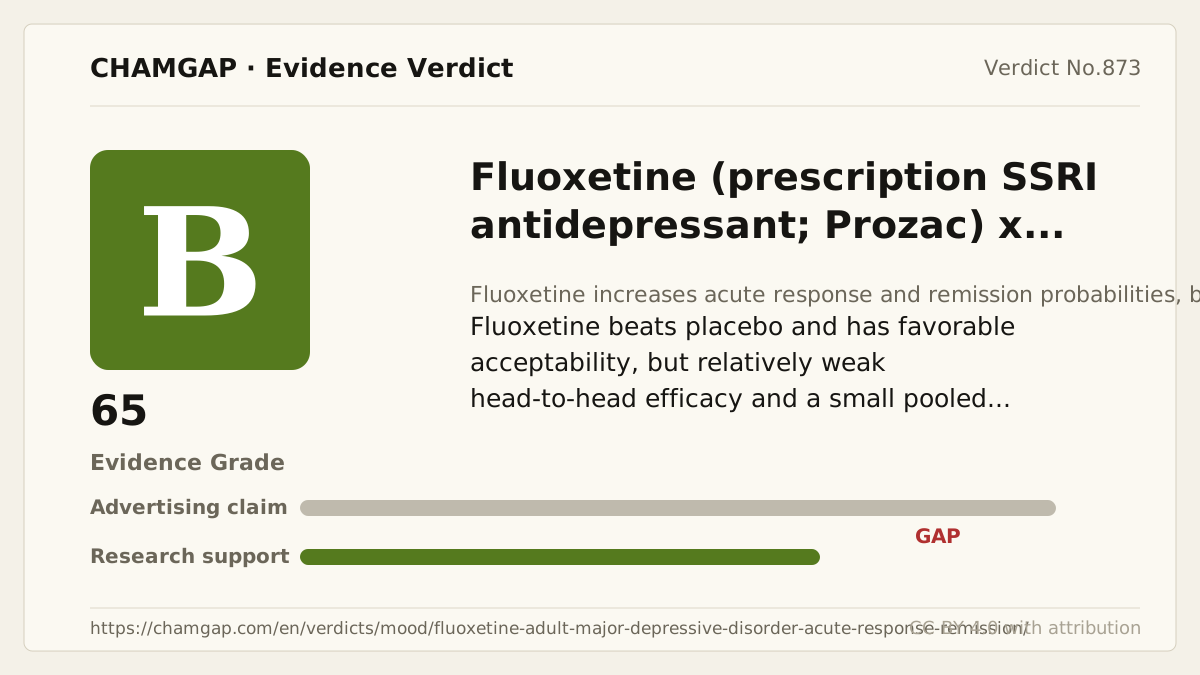
[Chamgap] Fluoxetine x acute symptom response and remission in adults with major depressive disorder — Evidence Grade B·65. 3 cited sources checked. Source: https://chamgap.com/en/verdicts/mood/fluoxetine-adult-major-depressive-disorder-acute-response-remission/ · CC BY 4.0CC BY 4.0 — free to use with attribution; do not distort grades, numbers, or verdict meaning.
What this document does and does not do
Chamgap is an information source. It reports what research has and has not confirmed; it does not tell readers what to take or buy. That decision belongs to readers and, when needed, medical or legal professionals. This verdict reflects literature available up to the search date and may change as new research appears. Nothing here is medical advice.