
Energy drink mixed with alcohol,
does it really help with Masked subjective intoxication and added risk-taking?
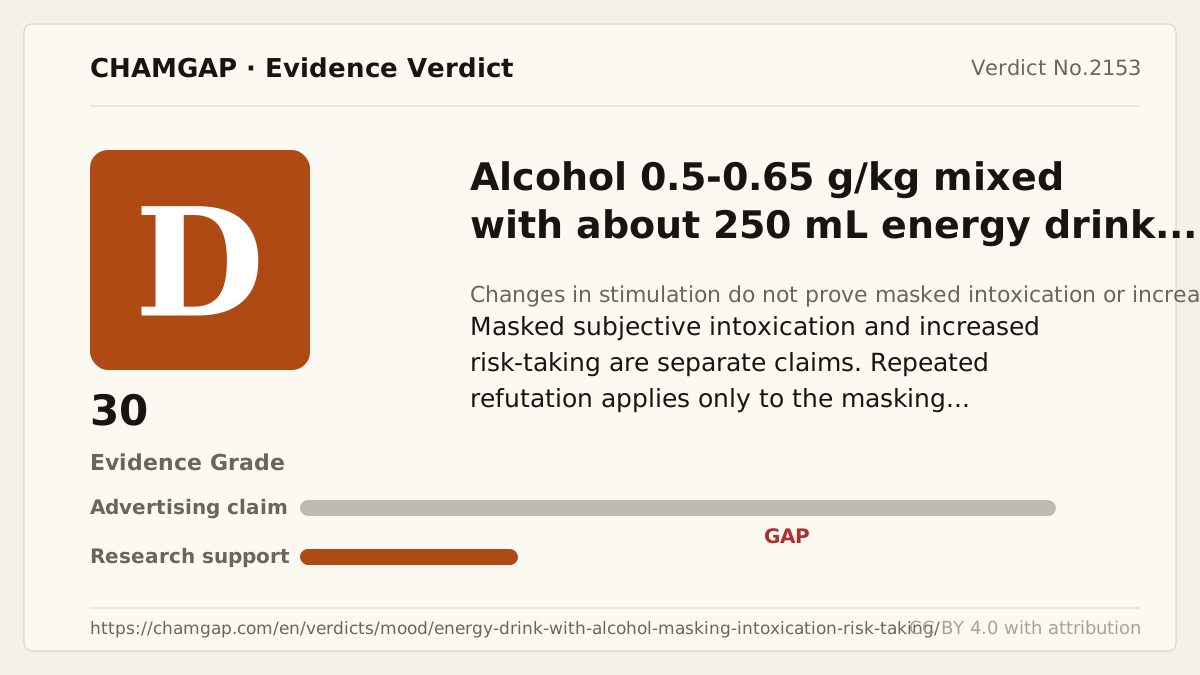
research showsThe grade is D. Experiments adding energy drink to the same alcohol dose preserved blood alcohol and alcohol-related impairment but repeatedly failed to show lower subjective intoxication or added laboratory risk-taking. The six-study pooled intoxication effect was -0.021 (95% CI -0.310 to 0.268). Because that interval does not exclude a medium-sized change, this is D rather than F, with 30 points.
ads claimAlcohol impairs performance and energy drinks can increase stimulation. Those two facts do not establish an additional causal effect that masks intoxication and increases risk-taking at an equal alcohol dose.
Useful facts when choosing a product
- Mean peak blood alcohol was 0.051%, with intoxication ratings of 5.0 for alcohol alone and 5.8 for the mixture, without a significant difference.
- The six-study pooled masking effect was -0.021, 95% CI -0.310 to 0.268.
- At breath alcohol levels of 0.046% and 0.087%, reaction time and memory were impaired; the immediate-recall alcohol effect was F(1,18)=23.8, P=.001.
- The 28-person Balloon Analogue Risk Task showed no added mixture effect; this was distinct from subjective masking.
Chamgap Semantic Classification Code
Candidate index · review held
F.alcohol-mixed-with-about-energy-drink-containing-roughly-caffeine.oral.masked-subjective-intoxication-and-added-risk-taking.assess.placeboFoods and beverages > Alcohol mixed with about energy drink containing roughly caffeine > Oral > Masked subjective intoxication and added risk-taking > Association or change assessment > Placebo
An automated migration candidate, not an issued permanent code; exact claim scope remains under review. This machine-generated migration candidate helps retrieval but is not a permanent assignment. The original verdict ID and URL remain authoritative.
What the research actually shows
In Benson and Scholey's 24-person crossover trial, mean peak blood alcohol was 0.051% and intoxication ratings were 5.0 with alcohol alone versus 5.8 with the mixture, without a significant difference. The six-study pooled masking effect was -0.021, 95% CI -0.310 to 0.268; repeated refutation applies only to subjective masking. In Alford et al.'s 20-person study, measured breath alcohol was 0.046% and 0.087%; reaction time and memory were impaired, with immediate-recall alcohol effect F(1,18)=23.8, P=.001. Thus objective impairment remained. Peacock et al.'s 28-person study found no added Balloon Analogue Risk Task effect, a separate endpoint. Alford's paper states that the study itself had no sponsor, while disclosing that Chris Alford received funding from the UK Ministry of Defence, Red Bull GmbH, and Sanofi-Aventis and advised Red Bull and Sanofi-Aventis; Joris Verster received Takeda and Red Bull funding and advised Red Bull and others. The 2018 review likewise disclosed Red Bull support and consultancy. Original funding language for the Benson and Peacock trials could not be confirmed.
Why this is classified as D (28)
Subjective masking was repeatedly null but imprecise. Risk-taking was a separate endpoint with a null laboratory result and confounded field associations, giving D with 28 points.
Counterpoint. D does not mean the mixture is safe. Alcohol-related poisoning and crash risk, plus caffeine adverse effects, remain.
Rejudgment record. Cross-check applied — Repeatedly null crossover trials and meta-analysis for masking, with a confidence interval that does not exclude a medium effect
| Endpoint | P | Symptom or function itself is the target - including patient reports and performance tests |
| Replication | RX | Repeatedly refuted in the same indication |
| Independence | I1 | Mixed funding sources |
| Effect size | E0 | Null |
| Precision | C0 | The confidence interval leaves room for benefit |
Stored derived and displayed grades match; this is not a current recalculation or validity check (D).
Sub-claim grades by effect
This ingredient is marketed for several effects. A single overall grade blends strong and weak claims together, so each effect is graded separately here. The overall grade reflects the strongest disconfirming or core claim.
| Effect (sub-claim) | Grade | Basis |
|---|---|---|
| Reduced subjective intoxication | D | The six-study pooled effect was -0.021. |
| Added laboratory risk-taking | D | The 28-person crossover BART result was null. |
Cross-check — AI research and Codex final gate
Evidence Table
| Study | Design | Sample | Funding | Endpoint | Result | Weight |
|---|---|---|---|---|---|---|
| Alford et al. 2012 | Double-blind placebo-controlled performance study | 20 participants | Study conducted at the university without a sponsor; Alford and Verster disclosed Red Bull funding and advisory relationships | Breath alcohol, reaction time, memory, Stroop, and subjective impairment | Reaction-time and memory impairment at 0.046% and 0.087%; immediate recall F(1,18)=23.8, P=.001 | Direct objective-impairment and conflict disclosure evidence |
| Benson and Scholey 2014 | Double-blind balanced crossover trial | 24 analyzed | Not confirmed in the public material reviewed | Blood alcohol, subjective intoxication, and performance | No difference in blood alcohol or subjective intoxication between alcohol-only and mixed conditions | Pivotal masking trial |
| Peacock et al. 2013 | Placebo-controlled single-blind four-condition crossover trial | 28 participants | Not confirmed in the public material reviewed | Subjective intoxication and Balloon Analogue Risk Task | The mixture did not add subjective intoxication or risk-taking versus alcohol alone | Direct risk-taking evidence |
| Verster et al. 2018 | Critical systematic review and meta-analysis | Six subjective-intoxication studies | Author Joris Verster disclosed Red Bull research support and consultancy, among other relationships | Subjective intoxication | Effect -0.021 (95% CI -0.310 to 0.268), P=.747 | Replication and precision evidence |
Receipt — 5 References
All 5 cited sources were verified for existence at the original page (as of 2026-08-04).
Final verification and publication gate: Codex · Evidence date: 2026-08-04 · Corrections: none
Cite this verdict
[Chamgap] Energy drink mixed with alcohol x masked intoxication and increased risk-taking — Evidence Grade D·28. 5 cited sources checked. Source: https://chamgap.com/en/verdicts/mood/energy-drink-with-alcohol-masking-intoxication-risk-taking/ · CC BY 4.0CC BY 4.0 — free to use with attribution; do not distort grades, numbers, or verdict meaning.
What this document does and does not do
Chamgap is an information source. It reports what research has and has not confirmed; it does not tell readers what to take or buy. That decision belongs to readers and, when needed, medical or legal professionals. This verdict reflects literature available up to the search date and may change as new research appears. Nothing here is medical advice.