
Duloxetine,
does it really help with Improvement of symptoms and induction of remission in adult major depressive disorder?
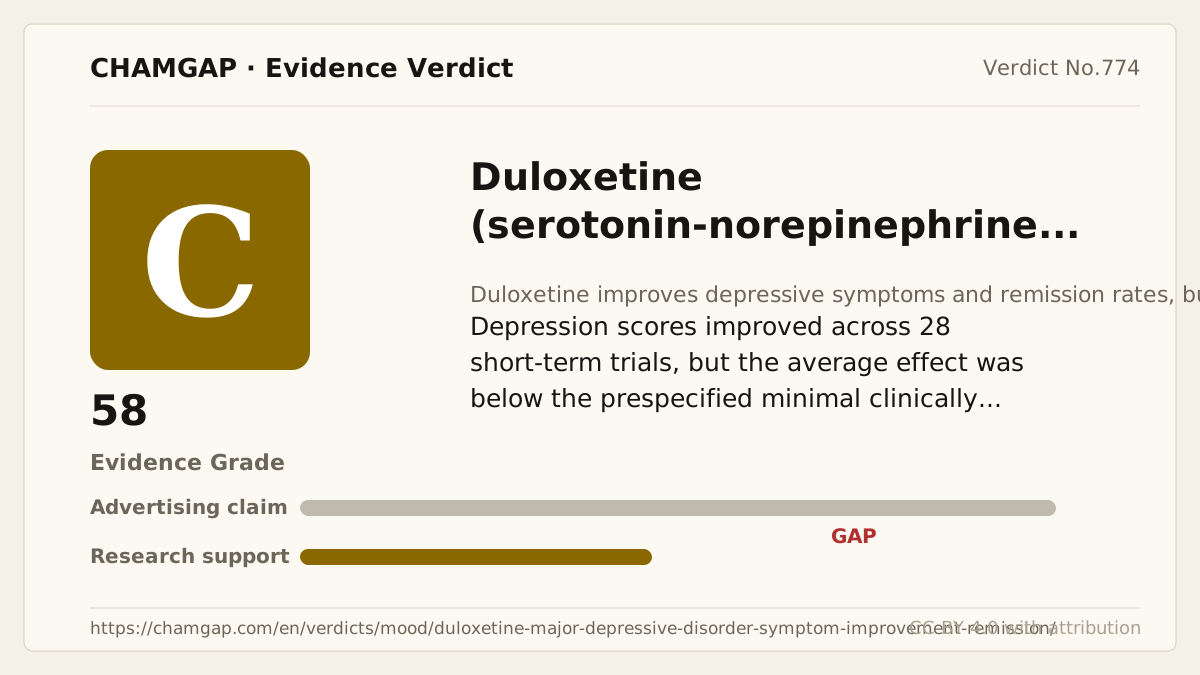
research showsB. Across 28 placebo-controlled randomized trials involving 7,872 participants, duloxetine consistently improved response and remission in adult major depressive disorder. In three direct escitalopram comparisons involving 1,120 participants, response and remission were noninferior. Depression scales and remission are direct patient outcomes and treatment targets rather than surrogates. However, the -1.81-point mean difference across 12 HDRS-17 trials was below the prespecified minimal clinically important difference, and heterogeneity, high placebo response, and manufacturer concentration remain. Evidence parity with peer selective serotonin reuptake inhibitors, including escitalopram B68, supports B, but only at the bottom of the band with 60 points.
ads claimPromotion can expand a statistically significant scale difference into rapid and complete remission for most patients. Average benefit is modest, response takes weeks, and a higher dose does not necessarily produce a better result. Pain and anxiety indications are separate from this major-depression verdict.
Useful facts when choosing a product
- Duloxetine is a prescription serotonin-norepinephrine reuptake inhibitor commonly taken once daily for major depressive disorder. Starting, titration, and maintenance doses depend on comorbidity and tolerability.
- Response is usually assessed over several weeks, and abrupt discontinuation can cause dizziness, sensory symptoms, anxiety, and insomnia. Tapering should be clinician-guided.
- Common adverse effects include nausea, dry mouth, constipation, increased sweating, and sleep changes. Blood pressure, liver disease or heavy alcohol use, and interactions with other serotonergic medicines should be reviewed.
- Worsening suicidal thoughts or behavior require monitoring, especially in younger patients after initiation or dose changes. A history of mania, severe liver disease, and risk of uncontrolled narrow-angle glaucoma also require assessment.
Chamgap Semantic Classification Code
Candidate index · review held
M.duloxetine.UNK.symptoms-and-induction-of-remission-major-depressive-disorder.improve.placeboMedicinal interventions > Duloxetine > Unknown > symptoms and induction of remission major depressive disorder > Improvement claim > Placebo
An automated migration candidate, not an issued permanent code; exact claim scope remains under review. This machine-generated migration candidate helps retrieval but is not a permanent assignment. The original verdict ID and URL remain authoritative.
What the research actually shows
Thase and colleagues pooled individual data from 1,833 participants in six phase II and III trials and reported HAMD-17 remission rates of 40.3% with duloxetine, 38.3% with comparator SSRIs, and 28.4% with placebo. Schueler and colleagues included unpublished manufacturer reports and concluded that duloxetine improved response and remission versus placebo but caused more discontinuation due to adverse events. Siddiqui and colleagues independently reviewed 12 randomized trials in 2025 and found a mean HDRS-17 difference of -1.81 points, with a 95% confidence interval from -2.34 to -1.28, below their prespecified minimal clinically important difference and with low-certainty evidence. Symptom scales and remission are standard psychiatric clinical outcomes, but mean change and individual experienced benefit are not identical.
Why this is classified as B (60)
B. Response and remission improved consistently across 28 placebo-controlled trials involving 7,872 participants, and three direct escitalopram comparisons involving 1,120 participants found noninferiority. Depression scales, response, and remission are direct patient outcomes and treatment targets rather than surrogates. The -1.81-point HDRS-17 difference was below the prespecified minimal clinically important difference, and heterogeneity, high placebo response, and manufacturer concentration preclude a strong B. Evidence parity with peer selective serotonin reuptake inhibitors such as escitalopram B68 supports the lowest B with 60 points. Adverse effects, discontinuation, and suicidality warnings remain independent safety issues.
Counterpoint. Even with a modest average effect, some patients achieve meaningful response or remission. Benefits and adverse effects should be followed over several weeks, and worsening or suicidal thoughts require prompt help.
Rejudgment record. Consistency recalibration (rule 1 clarification) — Treated depression scales, response, and remission as direct patient outcomes and treatment targets rather than surrogates; response and remission benefits across 28 trials involving 7,872 participants and noninferiority in three escitalopram comparisons involving 1,120 participants support B at parity with peer selective serotonin reuptake inhibitors, while the -1.81-point HDRS difference below the minimal clinically important difference limits the rating to the bottom of the band
Sub-claim grades by effect
This ingredient is marketed for several effects. A single overall grade blends strong and weak claims together, so each effect is graded separately here. The overall grade reflects the strongest disconfirming or core claim.
| Effect (sub-claim) | Grade | Basis |
|---|---|---|
| Symptom improvement and remission in major depressive disorder | B | Twenty-eight trials favored response and remission over placebo and direct comparisons found noninferiority to escitalopram, but the mean HDRS effect was below the minimal clinically important difference, limiting the result to the lowest B. |
| Effect size below the minimal clinically important difference and placebo response | ? | The -1.81-point HDRS-17 mean difference was below the prespecified threshold and placebo response was high, but this does not determine experienced benefit for every individual. |
| Extension to other indications such as pain or anxiety | ? | Pain, anxiety, and other indications require separate direct evidence and are not automatically covered by this major-depression verdict. |
Cross-check — AI research and Codex final gate
Evidence Table
| Study | Design | Sample | Funding | Endpoint | Result | Weight |
|---|---|---|---|---|---|---|
| Schueler YB et al. 2011 systematic review | Systematic review and meta-analysis of randomized trials including unpublished data | Adult major-depression trials of duloxetine and venlafaxine | Research from the German public institute IQWiG | Symptoms, response, remission, and discontinuation due to adverse events | Duloxetine produced higher response and remission than placebo but also more discontinuation due to adverse events. | Independent synthesis including unpublished data |
| Siddiqui F et al. 2025 | Systematic review, meta-analysis, and trial sequential analysis of randomized trials | Twelve trials in the HDRS-17 analysis | Danish public and academic research | Depressive symptoms, quality of life, and serious adverse events | The HDRS-17 mean difference of -1.81 points was statistically significant but below the prespecified minimal clinically important difference. | Recent independent assessment of effect size |
| Thase ME et al. 2007 individual-patient meta-analysis | Individual-patient meta-analysis of six phase II and III trials | 1,833 outpatients with major depressive disorder | Eli Lilly-affiliated authors and trial program | HAMD-17 remission | Remission rates were 40.3% with duloxetine, 38.3% with SSRIs, and 28.4% with placebo. | Direct remission analysis with manufacturer concentration |
Receipt — 3 References
All 3 cited sources were verified for existence at the original page (as of 2026-07-23).
Final verification and publication gate: Codex · Evidence date: 2026-07-23 · Corrections: none
Cite this verdict
[Chamgap] Duloxetine x symptom improvement and remission in adult major depressive disorder — Evidence Grade B·60. 3 cited sources checked. Source: https://chamgap.com/en/verdicts/mood/duloxetine-major-depressive-disorder-symptom-improvement-remission/ · CC BY 4.0CC BY 4.0 — free to use with attribution; do not distort grades, numbers, or verdict meaning.
What this document does and does not do
Chamgap is an information source. It reports what research has and has not confirmed; it does not tell readers what to take or buy. That decision belongs to readers and, when needed, medical or legal professionals. This verdict reflects literature available up to the search date and may change as new research appears. Nothing here is medical advice.