
Bright light therapy,
does it really help with Improvement of depressive symptoms and remission in nonseasonal major depressive disorder?
research showsBright light therapy is rated C because credible human trials show short-term improvement in depressive symptoms and remission in nonseasonal major depressive disorder. In Lam 2016, a 122-participant, eight-week sham-device-controlled trial, 10,000-lux light monotherapy produced a larger MADRS reduction than placebo, and light combined with fluoxetine significantly improved response and remission. A 2025 meta-analysis of 11 trials and 858 patients also found positive remission and response signals. Trials were nevertheless short, generally small, and heterogeneous in light prescription and concomitant treatment, while long-term evidence for stand-alone first-line treatment remains limited. This verdict concerns nonseasonal major depression, not seasonal affective disorder.
ads claimMarketing can turn a 10,000-lux specification into claims of replacing antidepressants, assuring remission, or preventing recurrence. Evidence supports a supervised short-term symptom and remission signal, not equivalence of every consumer device or long-term stand-alone first-line treatment.
Useful facts when choosing a product
- A representative research regimen used 10,000-lux white light for 30 minutes soon after waking, although timing and duration may need adjustment to the individual sleep schedule and clinical plan.
- Ordinary room lighting or screen brightness is not equivalent to a therapeutic 10,000-lux device. Illuminance, viewing distance, ultraviolet filtration, and posture determine actual exposure.
- Headache, eye strain, nausea, agitation, and sleep changes can occur, and people with bipolar vulnerability require monitoring for hypomania or mania.
- People with retinal disease or photosensitizing medicines should seek clinical advice, and severe depression or suicidal thoughts require professional care without delay.
Chamgap Semantic Classification Code
Candidate index · review held
P.bright-light-therapy.device.depressive-symptoms-and-remission-in-nonseasonal-major-depressive-disorder.improve.MULTIProcedures, devices and tests > Bright light therapy > Device delivered > depressive symptoms and remission in nonseasonal major depressive disorder > Improvement claim > Multiple: primary unresolved
An automated migration candidate, not an issued permanent code; exact claim scope remains under review. This machine-generated migration candidate helps retrieval but is not a permanent assignment. The original verdict ID and URL remain authoritative.
What the research actually shows
Lam and colleagues assigned 122 adults with nonseasonal major depressive disorder to 10,000-lux light plus placebo pill, sham device plus fluoxetine, both active treatments, or double placebo. Eight-week MADRS improvement favored light monotherapy and combination therapy, with the clearest response and remission results in the combination group. Menegaz de Almeida and colleagues combined 11 randomized trials and 858 patients from 2000 through 2024 and reported remission of 40.7% versus 23.5% and response of 60.4% versus 38.6%, although diagnoses, concomitant treatments, and follow-up varied. An earlier Cochrane review likewise described efficacy as promising but short-term and heterogeneous. The existing corpus has no verdict on light therapy or seasonal affective disorder; this item addresses nonseasonal major depressive disorder only.
Why this is classified as C (52)
A sham-controlled trial and randomized-trial meta-analysis provide positive short-term symptom, response, and remission signals in nonseasonal major depression. Small and brief individual trials, heterogeneous prescriptions and concomitant care, and little long-term stand-alone evidence limit the verdict to C with 52 points.
Counterpoint. It may be considered as an adjunct or short-term non-drug option for selected patients, with diagnosis, mania risk, response, sleep, and adverse effects monitored.
Rejudgment record. New verdict — Accepted positive short-term symptom and remission findings from a sham-controlled randomized trial and randomized-trial meta-analysis, while applying C for limited positive evidence because of small samples, brief follow-up, heterogeneous protocols and concomitant treatment, and absent long-term stand-alone evidence
Sub-claim grades by effect
This ingredient is marketed for several effects. A single overall grade blends strong and weak claims together, so each effect is graded separately here. The overall grade reflects the strongest disconfirming or core claim.
| Effect (sub-claim) | Grade | Basis |
|---|---|---|
| Reduced depressive symptoms in nonseasonal major depressive disorder | C | Positive in short-term sham-controlled randomized and meta-analytic evidence. |
| Improved remission in nonseasonal major depressive disorder | C | Positive in the combination trial and meta-analysis, but maintenance of remission is insufficiently studied. |
| Long-term stand-alone first-line treatment of nonseasonal major depression | C | Unlike the short-term efficacy signal, long-term monotherapy and recurrence-prevention evidence is limited. |
Cross-check — AI research and Codex final gate
Evidence Table
| Study | Design | Sample | Funding | Endpoint | Result | Weight |
|---|---|---|---|---|---|---|
| Lam RW et al. 2016 | Randomized double-blind sham-device and placebo-controlled 2-by-2 trial | 122 participants over eight weeks | Canadian Institutes of Health Research and other support; device-related interests reported | MADRS change, response, and remission | Light monotherapy and combination therapy improved MADRS more than placebo; combination significantly improved response and remission. | Key direct short-term randomized trial |
| Menegaz de Almeida A et al. 2025 | Systematic review and meta-analysis of randomized trials | 11 trials and 858 patients | Academic synthesis; conflicts as reported in the article | Remission, response, and depression scales | Remission OR was 2.42 and response OR was 2.34, with variation in treatment and duration across trials. | Positive synthesis limited by heterogeneity |
Receipt — 2 References
All 2 cited sources were verified for existence at the original page (as of 2026-07-23).
Final verification and publication gate: Codex · Evidence date: 2026-07-23 · Corrections: none
Cite this verdict
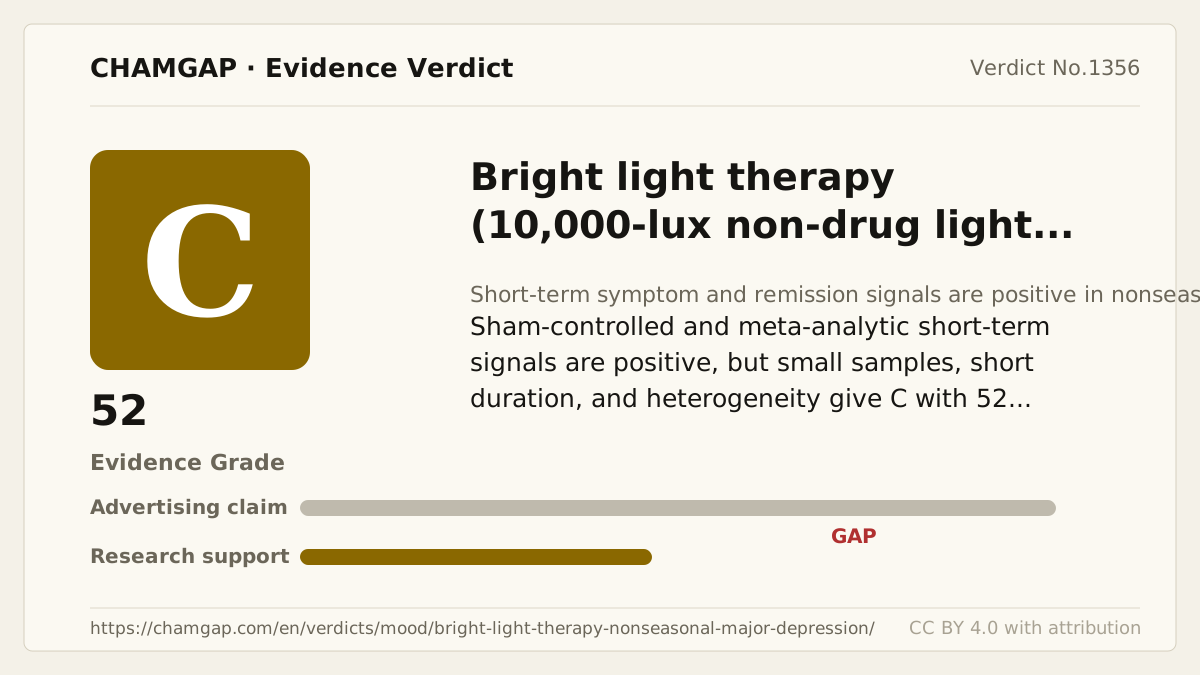
[Chamgap] Bright light therapy x Improvement of depressive symptoms and remission in nonseasonal major depressive disorder — Evidence Grade C·52. 2 cited sources checked. Source: https://chamgap.com/en/verdicts/mood/bright-light-therapy-nonseasonal-major-depression/ · CC BY 4.0CC BY 4.0 — free to use with attribution; do not distort grades, numbers, or verdict meaning.
What this document does and does not do
Chamgap is an information source. It reports what research has and has not confirmed; it does not tell readers what to take or buy. That decision belongs to readers and, when needed, medical or legal professionals. This verdict reflects literature available up to the search date and may change as new research appears. Nothing here is medical advice.