
Brexpiprazole,
does it really help with Adjunctive treatment of major depressive disorder with inadequate response to antidepressants?
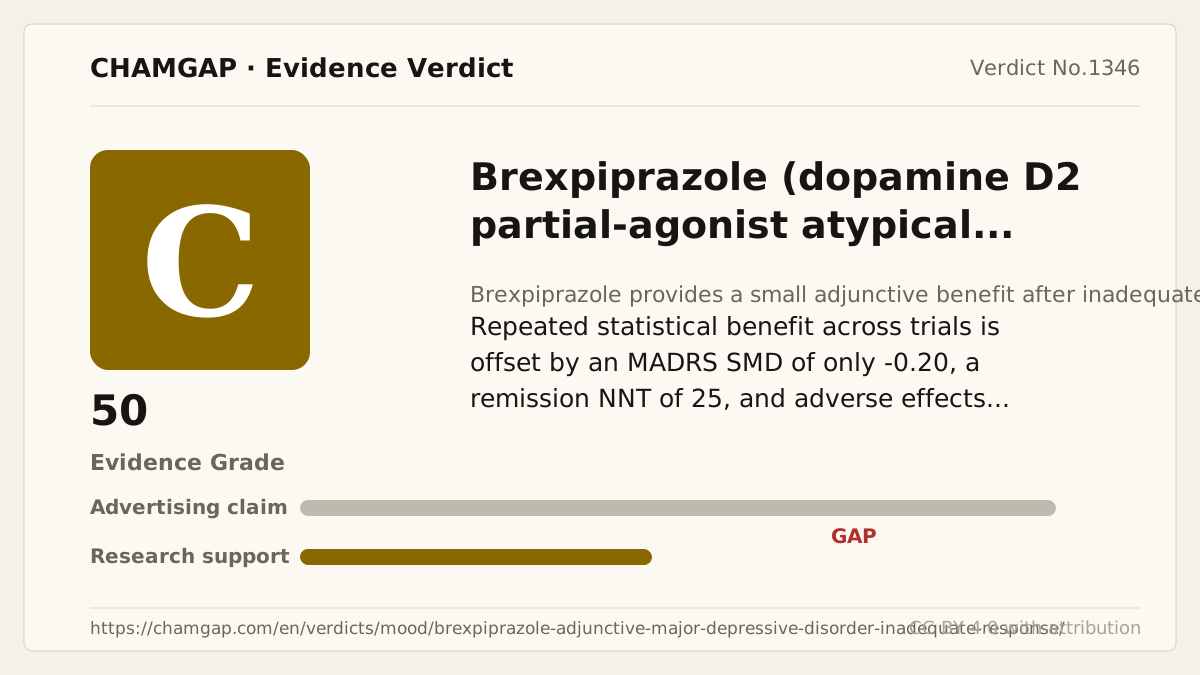
research showsBrexpiprazole is graded C because it improves depressive symptoms and remission over adjunctive placebo in major depressive disorder with inadequate antidepressant response, but the average benefit is small. A meta-analysis of nine double-blind randomized trials found a week-six MADRS effect size of SMD -0.20, an NNT of 17 for response, and an NNT of 25 for remission. Akathisia, restlessness, insomnia, weight gain, and other adverse effects increased, while long-term patient-centered benefit is less certain. This verdict is ingredient-specific and is lower than the B grade for adjunctive aripiprazole in verdict 1004 because the synthesized effect for brexpiprazole is smaller.
ads claimPromotion may expand an approved adjunctive indication into a claim of large remission benefit or replacement of antidepressants. The average effect is small, and this is a prescription add-on selected after weighing prior response and adverse effects.
Useful facts when choosing a product
- Brexpiprazole is a prescription adjunct to an antidepressant for major depressive disorder and should not be used to stop or replace antidepressant monotherapy without medical direction.
- Adjunctive treatment is started at a low dose and adjusted while monitoring akathisia, restlessness, somnolence, and extrapyramidal symptoms.
- Weight, glucose, and lipids may require monitoring, and weight gain should prompt reassessment of the treatment's net benefit.
- Abrupt discontinuation or unsupervised dose changes should be avoided; worsening suicidal thoughts, severe agitation, rigidity with fever, or abnormal movements require prompt medical review.
Chamgap Semantic Classification Code
Candidate index · review held
M.brexpiprazole.UNK.adjunctive-treatment-of-major-depressive-disorder-with-inadequate-response-to-antidepressants.treat.placeboMedicinal interventions > Brexpiprazole > Unknown > Adjunctive treatment of major depressive disorder with inadequate response to antidepressants > Treatment or remission claim > Placebo
An automated migration candidate, not an issued permanent code; exact claim scope remains under review. This machine-generated migration candidate helps retrieval but is not a permanent assignment. The original verdict ID and URL remain authoritative.
What the research actually shows
Kishi and colleagues synthesized nine double-blind trials in adults with major depressive disorder after antidepressant failure and assessed response, remission, MADRS symptoms, and function. At week six, remission favored brexpiprazole with an NNT of 25 and the MADRS SMD was -0.20. The phase 3 trial by Thase and colleagues prospectively treated patients with antidepressants for eight weeks, then randomized inadequate responders to six weeks of adjunctive brexpiprazole 1 mg, 3 mg, or placebo and found MADRS benefit at selected doses. Most evidence is short-term and comes from manufacturer development trials, while akathisia and weight gain recur; a large long-term gain in function, relapse prevention, or quality of life is not established.
Why this is classified as C (50)
Direct symptom trials and a nine-trial meta-analysis support benefit over placebo, but the average effect was small, with MADRS SMD -0.20 and remission NNT 25, while akathisia and weight gain increased. Ingredient-specific separation from adjunctive aripiprazole gives C with 50 points.
Counterpoint. For patients who remain symptomatic after adequate antidepressant treatment, brexpiprazole is an evidence-based specialist option, but its small average benefit and individual adverse effects require shared decision-making and follow-up.
Rejudgment record. Cross-check applied — Accepted direct symptom and remission benefits from a meta-analysis of nine double-blind trials, but incorporated the small MADRS SMD of -0.20, remission NNT of 25, akathisia, weight gain, and dominance of short manufacturer development trials, while keeping brexpiprazole distinct from aripiprazole
Sub-claim grades by effect
This ingredient is marketed for several effects. A single overall grade blends strong and weak claims together, so each effect is graded separately here. The overall grade reflects the strongest disconfirming or core claim.
| Effect (sub-claim) | Grade | Basis |
|---|---|---|
| Improvement in depressive symptoms with adjunctive brexpiprazole | C | The nine-trial meta-analysis was positive, but the average MADRS effect was small at SMD -0.20. |
| Increased response with adjunctive brexpiprazole | C | The week-six NNT for response was about 17, indicating limited incremental benefit. |
| Increased remission with adjunctive brexpiprazole | C | The week-six remission NNT was about 25, indicating a small absolute benefit. |
Cross-check — AI research and Codex final gate
Evidence Table
| Study | Design | Sample | Funding | Endpoint | Result | Weight |
|---|---|---|---|---|---|---|
| Kishi T et al. 2019 | Systematic review and meta-analysis of double-blind randomized placebo-controlled trials | Nine trials of brexpiprazole 0.5 to 3 mg/day | Academic meta-analysis; many included trials were Otsuka and Lundbeck development studies | Week-six response, remission, MADRS, function, discontinuation, and adverse events | Response NNT was 17, remission NNT 25, MADRS SMD -0.20, and function SMD -0.12; akathisia, insomnia, restlessness, and weight gain increased. | Key synthesized efficacy and harm evidence |
| Thase ME et al. 2015 | Phase 3 randomized double-blind placebo-controlled trial | Adults with inadequate response after prospective antidepressant treatment; randomized 1:1:1 to 1 mg, 3 mg, or placebo | Otsuka Pharmaceutical Development and Commercialization and H. Lundbeck | Six-week change in MADRS total score and safety | Adjunctive brexpiprazole improved MADRS over placebo at selected doses, while akathisia and weight gain were observed. | Representative direct phase 3 randomized trial |
Receipt — 2 References
All 2 cited sources were verified for existence at the original page (as of 2026-07-23).
Final verification and publication gate: Codex · Evidence date: 2026-07-23 · Corrections: none
Cite this verdict
[Chamgap] Brexpiprazole x adjunctive treatment of major depressive disorder with inadequate antidepressant response — Evidence Grade C·50. 2 cited sources checked. Source: https://chamgap.com/en/verdicts/mood/brexpiprazole-adjunctive-major-depressive-disorder-inadequate-response/ · CC BY 4.0CC BY 4.0 — free to use with attribution; do not distort grades, numbers, or verdict meaning.
What this document does and does not do
Chamgap is an information source. It reports what research has and has not confirmed; it does not tell readers what to take or buy. That decision belongs to readers and, when needed, medical or legal professionals. This verdict reflects literature available up to the search date and may change as new research appears. Nothing here is medical advice.